
Modular power systems deliver scalable, reliable, and cost-effective electricity for mining operations. Crews can deploy these units quickly and adapt them as site needs change. The main benefits for mining include scalability, uptime, cost savings, fast deployment, and easier maintenance.
Remote mines face shifting power demands, high fuel costs, and downtime risks. Fixed infrastructure struggles to address these challenges. A growing operation may need more capacity quickly. A aging generator may fail without warning. Fuel deliveries to isolated sites cost a premium. Modular systems solve these problems through flexible, right-sized power that moves with the operation. They reduce risk and keep equipment running.
Modular Power Systems: Core Benefits for Mining
What Modular Power Systems Are
Modular power systems are self-contained electricity generation units that operators can combine, expand, or relocate as needed. Each module functions independently while connecting to a shared control network. These systems typically range from 1 kW to 10,000 kW in capacity. They serve as either a primary power source or a supplement to existing infrastructure.
Distributed energy production, also called on-site generation, places power generation close to the load it serves. This approach reduces the amount of energy lost during transmission because electricity travels a short distance from source to equipment. A mining site with its own modular power system no longer depends entirely on distant grid connections.
A mining operation in Western Australia adopted a solar-diesel hybrid microgrid to provide energy to its remote site. This move resulted in significant cost savings and reduced the environmental impact of its operations. The integration of solar power during the day helped offset the need for diesel generators, reducing fuel consumption by 40%.
How They Differ from Fixed Infrastructure
Traditional fixed power infrastructure requires permanent construction, long transmission lines, and lengthy planning before delivering electricity. Modular units arrive pre-assembled and operational. Operators can install them quickly rather than after long construction timelines.
Grid-based power carries inherent risks for remote mining locations. Inefficiency in the grid leads to an average loss of 5% of electricity over transmission and distribution. Outages can occur due to equipment failure many miles away. The average U.S. power consumer experiences 8 hours of power interruptions each year. These disruptions halt production and cost mining companies significant revenue.
Decentralized energy production eliminates these vulnerabilities. Mining operations gain energy resilience through hybrid microgrids that combine renewable sources with backup generators. These systems deliver the reliability and scalability that critical industries demand. The benefits for mining include reduced fuel dependence, lower transmission losses, and greater control over power supply. Commercial and industrial sectors, particularly mining, oil, and gas, increasingly turn to remote microgrids because grid infrastructure is often lacking in these locations.
Scalability and Flexibility on Site
Adding Capacity as Operations Expand
Mining operations rarely stay the same size. A site may start with a single pit and grow into a multi-zone complex over time. Modular power systems handle this growth through incremental expansion. Operators add capacity by connecting additional units to a shared bus rather than rebuilding the entire power plant.
Becker Mining USA confirms this approach. The company states that E-House substations are modular power solutions designed to scale with mining operations. As power requirements increase, additional units can be added as necessary. This makes it easy to expand the electrical infrastructure as the mine develops. The result is a flexible, incremental approach to scalability that matches power capacity to overall growth.
Battery storage modules follow the same principle. The Foxtheon EnergyPack P500 illustrates how this works in practice.
| Feature | Specification |
|---|---|
| Core Capacity | 500 kW / 1.2 MWh |
| Modular Scalability | Up to 8 units paralleled via a common AC bus |
| Maximum System Capacity | 4 MW / 9.6 MWh |
| Redundancy | N+1 redundancy for critical loads |
| Incremental Addition | Yes — units added by paralleling additional P500 units |
An Andean copper project demonstrated this model. A 500 kW / 1 MWh containerized hybrid system replaced three 250 kVA gensets running 24/7. The hybrid solution reduced diesel consumption by 1.2 million liters annually. It cut CO₂ emissions by 3,200 tons and energy costs by 38%. The system also provided spinning reserve for crusher motors, preventing voltage sags. These results show that modular battery units can scale incrementally at active mining sites.
Compact, portable modular units with weather-resistant exteriors suit tough mining environments. Industry analysis indicates that technology maturity has been reached in IP65–IP68 ratings. These enclosures withstand extreme temperatures, dust infiltration, moisture ingress, and corrosive atmospheres. Baker Hughes supplies three-phase generator enclosures rated IP65–IP67 for harsh industrial sites including mining. Multi-layer gasket sealing technologies prevent dust, water, and corrosive substance ingress. Corrosion-resistant materials such as marine-grade stainless steel extend service life. Integrated thermal management maintains optimal operating temperatures in extreme conditions. These features deliver clear benefits for mining operations in remote or hostile locations.
Relocating Power When Mining Zones Shift
Mining zones move. A pit expands, a new seam opens, or a contractor receives a short-term drilling assignment. Fixed power infrastructure cannot follow these shifts. Modular units can.
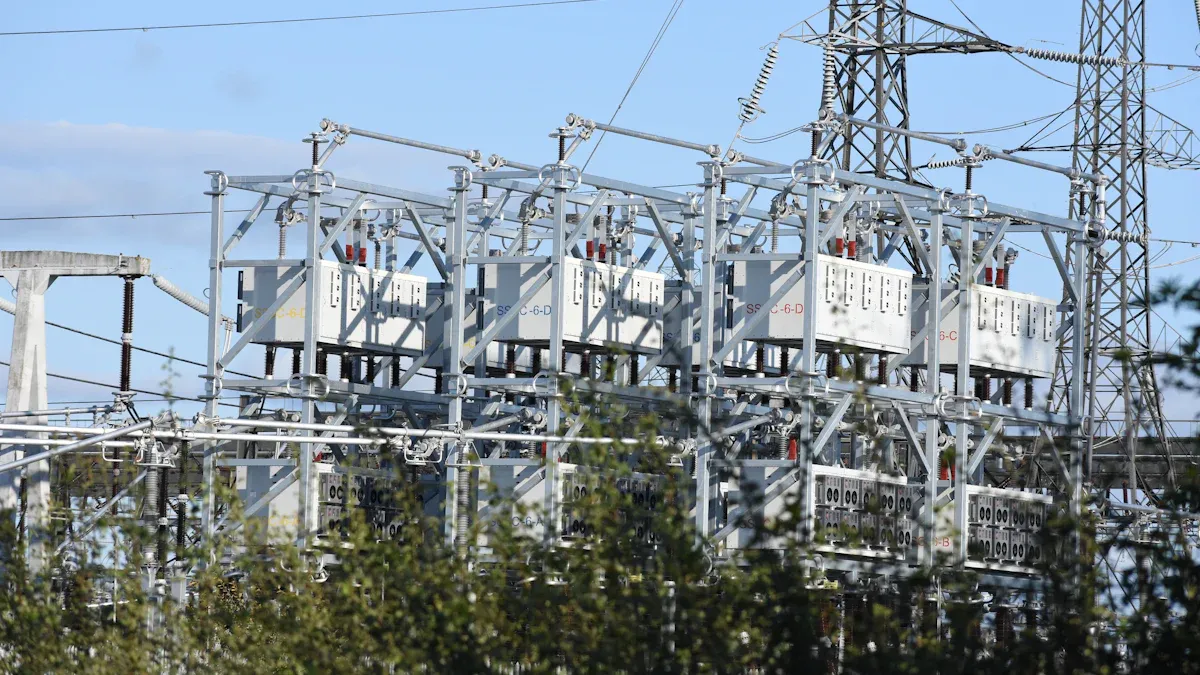
Portable substations are custom-engineered for rapid deployment and relocation at mining, tunneling, and dredging sites. Units are available in trailer, skid, track, and caterpillar-mounted configurations, enabling relocation as mining zones shift. Prefabricated power solutions include mobile substations, E-houses, and skid-mounted solutions. Portable E-houses are factory-assembled, self-contained enclosures suited to these deployments.
Their modular design allows them to be easily dismantled, moved, and re-erected as mining activity shifts, making them a movable asset.
A mobile modular power unit can be delivered to a new site and made operational quickly. Traditional charging infrastructure requires lengthy planning and construction. Mobile charging systems deploy rapidly. Redeployment to a new mining extraction area can occur almost immediately. A single unit can support operations at one mine and then redeploy to a different mine expansion. Over its operational lifespan, a single unit might support operations at many different mining sites. Redeployment is a routine, repeatable capability rather than a one-off event.
Reliability and Uptime Advantages
Modular power systems protect mining operations through redundancy and rapid replacement. These features keep crushers, conveyors, and ventilation running when a component fails. The benefits for mining extend beyond backup power.
Redundancy That Keeps Equipment Running
Redundancy design ensures no single point of failure stops production. The most common architecture is N+1 modular redundancy. Operators install one extra power module beyond the required N capacity. A failing module leaves the remaining units to carry the full load automatically during faults or maintenance.
Two mechanisms drive this approach. Parallel operation with load sharing synchronizes modules through control circuits. A faulty unit isolates itself, preventing cascading failures. Redundant power supplies transfer loads to an alternate source during faults. UPS integration with battery backup conditions power and bridges the switchover until generators start.
A fuel-flexible gas generator set exemplifies a reliable redundant module. Fuel flexibility matters for remote mining sites that lack pipeline access. Operators use locally available gas instead of depending on diesel deliveries.
Using mine-site gas provides a specific reliability advantage. Many mining sites produce methane as a byproduct. Operators feed this gas into a gas generator module to generate electricity instead of flaring it. This approach turns a safety hazard into a power source and reduces delivery dependence.
| Redundancy configuration | Mechanism | Uptime benefit |
|---|---|---|
| N+1 modular redundancy | Extra module operates in parallel; failed module bypasses automatically | Equipment continues running during module failure or maintenance |
| Parallel operation with load sharing | Modules share current; faulty modules isolate | Prevents cascading failures; supports live maintenance |
| Hybrid microgrids with backup generation | Combine renewable sources with backup generators or batteries | Reliability and scalability for critical industries |
| UPS with battery backup | Conditions power and bridges switchover | Zero-interruption power for sensitive controls |
A parallel-operated, double-conversion UPS architecture supplies critical loads with N+1 redundancy. Each module contains a rectifier, a DC link with battery storage, and an inverter on a shared output bus. The remaining units carry the full load if one module fails.
Modular component design adds a third layer. It allows maintenance without shutdown. Redundant systems provide fail-safe operation. Best practice pairs replaceable power supply modules with a redundant architecture. This maximizes reliability and minimizes downtime.
Fast Module Swaps to Cut Downtime
Rapid replacement cuts outage duration far better than fixed systems. Pre-assembled connections eliminate manual splicing and complex on-site engineering. Operators swap a faulty module quickly. Major overhauls that once required lengthy shutdowns now finish far more quickly.
| Downtime metric | Reduction with modular systems |
|---|---|
| Major overhaul duration | Shortened dramatically with modular replacement |
| Module replacement time | Faulty power pack swapped quickly instead of repaired in place |
| Unexpected failure resolution | Resolved swiftly with replacement modules available |
| Planned shutdowns | Aligned with shift changes, not extended blackouts |
Distribution design adds another protection layer. Faults isolate close to the affected section, limiting outage scope. Maintenance stays localized, preserving power to unaffected loads. Standardized modules improve spare-part strategy and make replacement predictable. Testing and commissioning follow a repeatable pattern, reducing outage exposure. Overall equipment effectiveness improves.
Cost Efficiency and Deployment Speed
Lower Upfront and Installation Costs
Modular power systems reduce capital expenses through factory-based construction and smaller site footprints. Prefabricated substations arrive assembled and tested, so they need comparatively little on-site work and can be energized quickly. Modular construction lowers on-site construction, labor, and material expenses. Factory-controlled assembly and testing minimize construction errors, which protects cost savings from rework.
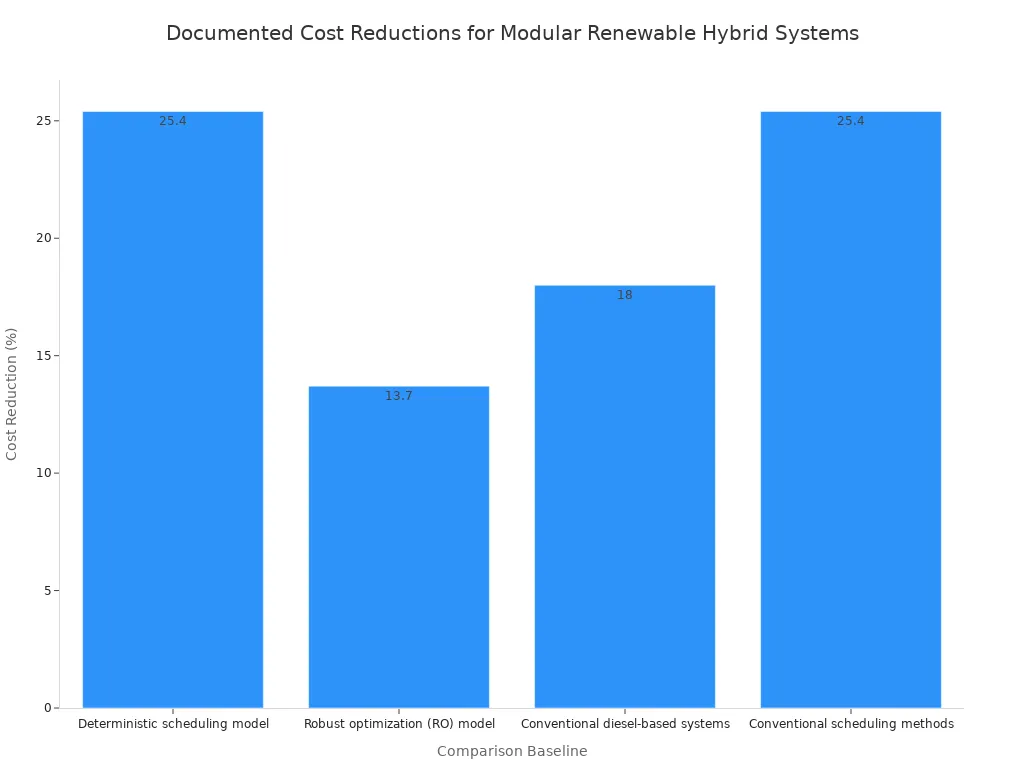
Modular renewable and hybrid systems cut operating costs over the life of a mine. They reduce energy costs and deliver stable, predictable energy prices. Lower operating costs per ton follow directly. In an Andean copper project, a containerized hybrid system cut energy costs by 38%. A solar-diesel hybrid microgrid at a Western Australian mining operation reduced fuel consumption by 40%.
| Comparison Baseline | Documented Cost Reduction |
|---|---|
| Solar-diesel hybrid microgrid vs. diesel-only generation (Western Australia) | 40% reduction in fuel consumption |
| Containerized hybrid system vs. diesel gensets (Andean copper project) | 38% reduction in energy costs |
| Modular enclosure installation vs. traditional replacement | 30% reduction in total installation cost |
| Remote microgrid deployment vs. diesel reliance | Reduced reliance on expensive diesel generators |
Integrated EPC support and proven generator technology provide a cost-effective, dependable solution. This combination helps mining operators control both upfront and long-term expenses.
Pre-Fabricated Modules Shorten Timelines
Research and industry experience show that modular mining power projects complete substantially faster than traditional onsite builds. The deployment gap is substantial.
| Build Type | Deployment Time |
|---|---|
| Modular / Containerized | Rapid |
| Traditional Build | Extended |
Across best- and worst-case scenarios, the modular approach finishes far sooner, showing a dramatic speed advantage.
Prefabricated modular enclosures reduce onsite construction time. Factory-assembled e-house enclosures cut the hours spent building on site and lower total project cost. Pre-assembled units install simply, which reduces on-site labor and installation-related complications. Enclosures designed to be smaller, lighter, and stronger are easier to handle and install, especially on congested or remote sites. Faster installation and smaller labor bills make prefabricated modular enclosures more economical than traditional concrete-built alternatives. These benefits for mining operations compound when schedules are tight and site access is limited.
Maintenance and Modular vs. Traditional Systems
Standardized Components Simplify Service
Standardized components reduce the number of spare parts a mine must stock. Identical modules serve multiple facilities and locations. This consolidation lowers inventory carrying costs and improves parts availability. Technicians learn one system and apply that knowledge across every installation. Training scales efficiently, and workforce capability improves without repeated investment.
Intelligent control systems with remote monitoring change how crews maintain equipment. Remote diagnostic systems transmit operational data to support centers. Experts identify problems and guide local personnel through repairs. This capability proves especially valuable at remote sites with limited technical expertise. Centralized monitoring sends alerts for anomalies or maintenance needs. Operators restart equipment and adjust power settings without traveling to the site. Predictive maintenance analytics help prevent failures before they occur.
| Maintenance Advantage | Benefit for Mining Operations |
|---|---|
| Predictable maintenance windows | Standardized architectures behave consistently, so operators schedule outages confidently and shift from reactive repairs to planned maintenance. |
| Reduced downtime exposure | Failed units are swapped with replacement modules, enabling swap-and-repair instead of lengthy custom fabrication cycles. |
| Simplified spare parts planning | Identical components serve multiple facilities, consolidating inventory and improving parts availability. |
| Efficient technician training | Knowledge from one installation transfers directly to others, scaling training efficiently. |
Pre-assembled modules greatly reduce operation and maintenance losses. A failed unit comes out and a replacement goes in. Standardized modules can be added or replaced freely for low-cost system expansion without replacing the whole equipment.
Key Tradeoffs to Weigh
Modular and traditional fixed power systems differ in several important ways. Traditional builds offer high capacity in a single permanent installation. They require extensive planning and cannot move once constructed. Modular systems deploy quickly and relocate as mining zones shift. They scale incrementally and simplify maintenance through standardized parts.
Modular systems carry tradeoffs. They may need more interconnections across a site. They depend on consistent module quality. Traditional systems concentrate capacity and simplify certain distribution designs. Neither approach wins universally.
Modular hybrid systems integrating renewables have no fuel costs and low operation and maintenance costs. These benefits for mining compound over a project’s life. Operators weigh upfront flexibility against long-term simplicity. The right choice depends on site lifespan, power demand trajectory, and access to fuel.
Modular power systems give mining operations scalability, reliability, cost savings, fast deployment, and simpler maintenance. These benefits for mining suit new sites and expanding projects where power needs change over time. Crews add capacity, relocate units, and swap modules without rebuilding infrastructure.
Mining companies should evaluate modular power for their next project or site upgrade. A modular approach reduces risk, controls costs, and keeps equipment running. Operators who plan for flexible power today will handle tomorrow’s demands with confidence.