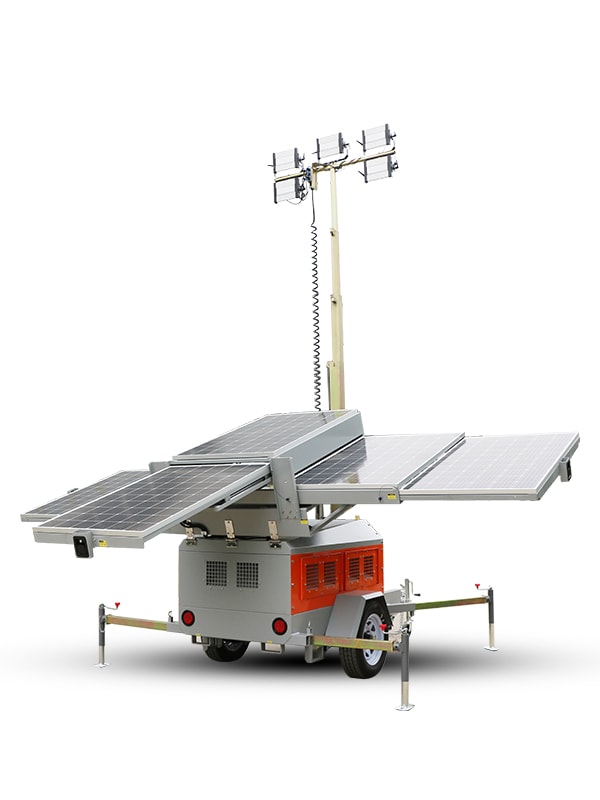
The ideal lighting tower for night mining combines high fuel efficiency, rugged durability, and minimal maintenance. The SWT IK Cube Series exemplifies these qualities with its 130-liter fuel tank delivering up to 135 hours of continuous operation. This extended runtime reduces refueling stops, keeping crews productive through long shifts.
A robust build matters equally. The tower withstands dust, moisture, and vibrations common at mining sites, while stabilizing legs secure it on uneven terrain. Easy deployment adds value—the compact footprint allows quick transport and setup, even in remote locations.
Reliable illumination directly impacts safety and efficiency. High-lumen LED fixtures cast broad, even light across work areas, reducing dark spots that cause accidents. Compliance with mining safety standards ensures operators can trust this equipment in demanding conditions.
For operations requiring dependable, low-maintenance lighting, the SWT IK Cube Series delivers measurable benefits.
Key Features of a Lighting Tower for Night Mining
Long-Lasting Fuel Tanks
Fuel capacity determines how long a lighting tower for night mining can operate without interruption. The SWT IK2000 features a 130-liter double-wall sub-fuel tank. This design provides up to 135 hours of continuous operation with all lights active. Such extended runtime means crews can work multiple shifts without stopping to refuel. Fewer refueling stops translate directly into reduced downtime and lower labor costs.
The double-wall construction adds a critical safety layer. It prevents leaks and contains any spillage, protecting the surrounding environment. This feature matters especially in remote mining sites where fuel storage and handling require extra care. Operators can plan longer work cycles with confidence, knowing the tower will perform through the night.
Industry benchmarks support this efficiency. Modern LED diesel towers typically consume between 0.55 and 1.0 liters of fuel per hour. The IK2000 fits comfortably within this range while delivering exceptional runtime. Compared to traditional metal halide units, LED systems achieve over 60% fuel savings. This efficiency reduces operational expenses significantly over the lifespan of the equipment.
High-Lumen LED Output
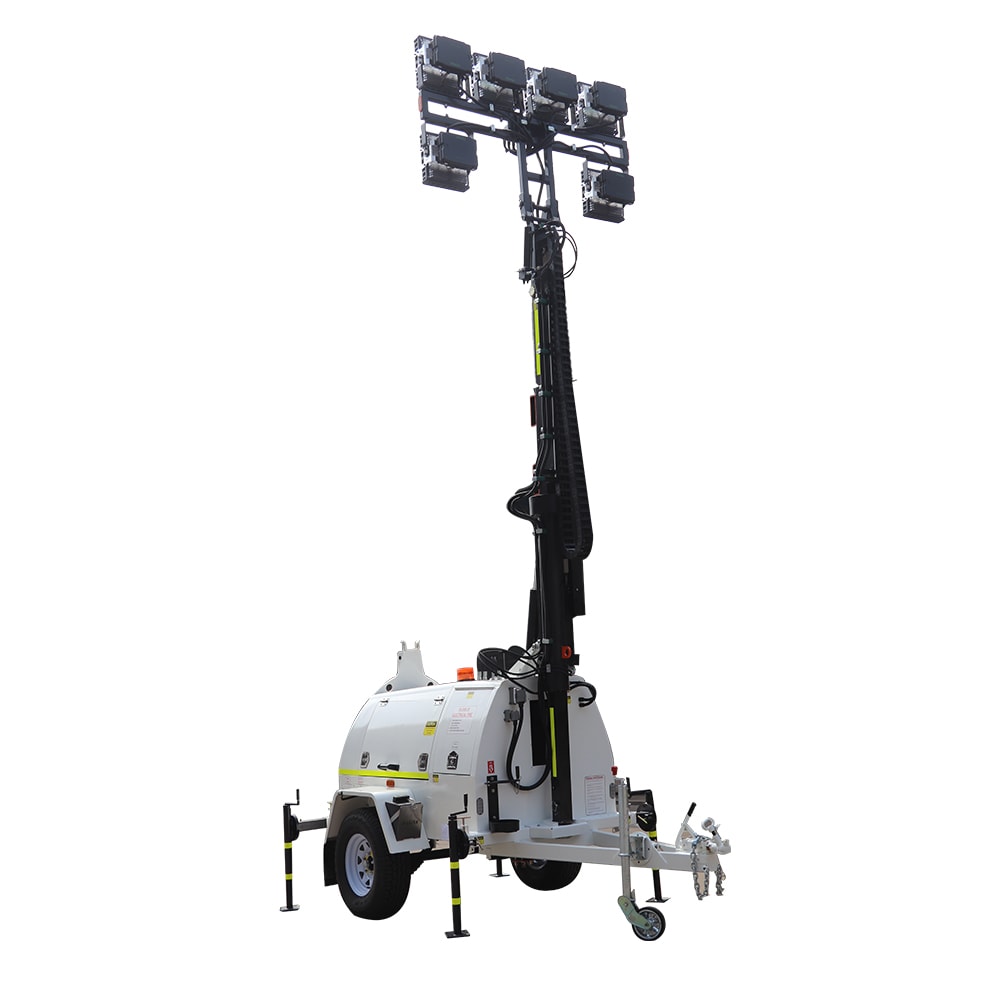
Brightness defines the effectiveness of any lighting tower for night mining. The IK2000 mounts four 500W LED fixtures. Each fixture produces 67,500 lumens, creating a combined output of 270,000 lumens. This massive light output covers expansive work areas with fewer units. Mining operations can illuminate large excavation zones, haul roads, and equipment staging areas using just one tower.
The 9-meter mast height maximizes the coverage area. Raising the lights high above the ground spreads illumination evenly across a wide radius. This height reduces dark spots and shadows that can hide hazards. Workers see clearly, which directly improves safety and productivity.
LED technology offers distinct advantages over older lamp types. LEDs contain no filaments, making them highly resistant to vibration. Mining sites generate constant shaking from heavy machinery and blasting operations. Filament-based halide lamps often fail under these conditions. LEDs also warm up instantly, providing full brightness immediately. Halide lamps require extended warm-up periods, delaying work during critical moments.
The rectangular fixtures allow precise beam positioning. Operators can rotate the mast 180 degrees electrically and tilt each light 180 degrees. This flexibility directs light exactly where needed, minimizing wasted illumination. The result is a well-lit work environment that enhances accuracy and reduces eye strain for night crews.
Energy efficiency complements the impressive output. LED modules consume significantly less power than traditional lighting systems. Lower power draw reduces generator load, extending engine life and cutting fuel consumption further. The combination of high lumen output and low energy use makes the IK2000 a cost-effective solution for demanding mining applications.
The lighting system integrates seamlessly with the tower’s overall design. Each fixture is sealed against dust and moisture, ensuring reliable performance in harsh conditions. This durability means consistent illumination night after night, even in the most challenging environments. Mining operators can trust the IK2000 to deliver dependable light when they need it most.
Durability of a Lighting Tower for Night Mining
Withstanding Dust and Water
Mining sites generate constant dust, moisture, and vibration. A lighting tower for night mining must resist all three to maintain reliable performance. The SWT IK2000 addresses this challenge with an IP23-rated alternator. This rating confirms protection against solid objects larger than 2.5 millimeters and water spray at angles up to 60 degrees from vertical. While this rating suits many mining applications, operators in extreme environments should understand the full spectrum of available protection.
Industry standards define clear benchmarks for harsh conditions. The IEC 60529 standard classifies ingress protection levels. For maximum dust resistance, the IP6X rating represents a dust-tight seal. This rating undergoes testing under vacuum with talc-like dust, simulating abrasive silica particles common in quarries. Water resistance scales similarly. IP67 provides complete protection against temporary immersion, while IP69 withstands high-pressure water jets. Mining operations near washing stations or heavy rainfall benefit from these higher ratings.
| Protection Level | Dust Resistance | Water Resistance | Typical Mining Use |
|---|---|---|---|
| IP23 | Objects >2.5mm | Spray up to 60° | Standard outdoor sites |
| IP54 | Limited dust | Splashing water | Humid or dusty areas |
| IP67 | Dust-tight | Temporary immersion | Extreme dust and rain |
The IK2000’s weather-resistant design extends beyond the alternator. Sealed electrical components prevent dust accumulation from degrading light output. The rectangular LED fixtures feature enclosed optical chambers that maintain brightness despite airborne particles. This sealing prevents water damage while preserving stable illumination in confined spaces.
Vibration presents another threat. Heavy machinery and blasting operations generate constant shaking. The tower’s robust chassis absorbs these forces without compromising structural integrity. Stabilizing legs with manual jacks provide secure footing on uneven, rocky terrain. These legs reduce tip risk in high winds, a critical factor for open-pit operations.
Wind resistance matters for safety. The IK2000 withstands wind speeds up to 17.5 m/s when fully extended. This specification assumes all four stabilizing legs remain deployed. Operators should retract the mast during severe weather events to maintain safety margins.
For mining-grade light towers, IP67 (Ingress Protection) and IK10 (Impact Protection) are common benchmarks for durability, requiring high resistance to dust, water, and vibration.
Corrosion-Resistant Construction
Corrosion slowly destroys unprotected equipment in mining environments. The IK2000 employs multiple layers of defense against this threat. The chassis and mast receive abrasive-blast preparation before coating. This process cleans the surface and creates a profile for optimal adhesion. Galvanising provides a sacrificial zinc layer that protects the underlying steel. An outdoor powder coating, typically polyester or polyurethane at 60–100 microns thick, completes the protective system.
Material selection reinforces this protection. Marine-grade aluminum alloys, such as 5052 and 6061, offer natural corrosion resistance. Anodising creates a ceramic-like oxide layer that withstands salt spray and chemical exposure. Stainless steel fasteners with molybdenum content prevent sensitisation during welding, maintaining strength at connection points.
The four lifting points and drawable stabilizing legs receive the same treatment. Exposed hardware resists corrosion through electroplating or hot-dip galvanising. This attention to detail ensures the entire tower maintains structural integrity over years of service.
Salt-spray testing validates these protections. Components withstand 120+ hours of exposure per ASTM B117 standards. This testing simulates years of real-world corrosion in accelerated time. The result is a lighting tower for night mining that maintains its appearance and function despite harsh chemical exposure.
Nano-coatings offer additional protection for remote sites. Hydrophobic treatments create contact angles above 110 degrees, preventing moisture accumulation in crevices and fastener joints. These advanced coatings extend cleaning intervals from three times yearly to once yearly, reducing maintenance labor.
The robust chassis design supports frequent relocation. Mining operations move equipment between sites regularly. The tower’s compact footprint and four lifting points enable safe transport across rough haul roads. The heavy-duty steel frame remains trailer-mountable without chassis deformation, even after repeated moves.
Corrosion resistance directly impacts total cost of ownership. A well-protected tower lasts longer, requires fewer replacements, and maintains resale value. Mining operators who prioritize this durability factor reduce long-term capital expenses while ensuring reliable illumination throughout the equipment’s lifespan.
Low Maintenance and Easy Deployment
Simplified Servicing
The SmartGen ALC404 controller forms the operational brain of the SWT IK2000. This unit handles engine starting, monitoring, and fault detection automatically. Operators receive clear diagnostic information without needing specialized training. The controller reduces maintenance needs by catching small issues before they become major failures. It also enables remote monitoring, allowing site managers to check tower status without walking to each unit.
The Kubota Z482 engine delivers dependable power with minimal upkeep. This two-cylinder, four-cycle, water-cooled diesel engine uses an E-TVS combustion system for efficient fuel burn. The design reduces carbon buildup and extends service intervals. Routine maintenance involves basic checks on oil levels, air filters, and fuel lines. No specialized tools or advanced mechanical knowledge are required. Mining crews can handle these tasks during regular shift changes, eliminating the need for dedicated service technicians.
The double-wall sub-fuel tank adds another maintenance advantage. Its construction prevents leaks and contains any spillage during refueling. This design protects the surrounding environment and reduces cleanup requirements. The tank’s 130-liter capacity supports up to 135 hours of continuous operation, meaning fewer refueling stops and less wear on the fuel system components.
Rapid Setup and Transport
Deployment speed directly affects productivity at mining sites. The IK2000 features four lifting points that allow quick attachment to cranes or forklifts. Workers can position the tower precisely without manual dragging or pushing. The compact footprint of 1150mm x 1150mm enables placement in tight spaces between equipment and structures.
Transport efficiency matters for operations managing multiple sites. The tower’s dimensions allow efficient packing in standard shipping containers. The table below shows typical loading capacities for different model sizes:
| Model Variant | 40 GP Container Loading Capacity |
|---|---|
| Small Model (compact, 1500×1650×2500 mm transport) | 16 pcs |
| Medium Model | 5 pcs |
| Large Model | 4 pcs |
The Storike 4TNVE600 compact mobile light tower, with a retracted shipping dimension of 2200×1630×2330 mm and a gross weight of 1180 kg, is officially rated for a 40′ HQ container capacity of 7 units/sets when certain accessories are disassembled for optimal space utilization.
The IK2000’s design follows similar principles. Operators can load up to 20 units in a 40-foot high container with some components detached. This capability reduces shipping costs per unit and simplifies logistics for remote mining locations. The hydraulic mast extends to 9 meters quickly, and the four drawable stabilizing legs with manual jacks secure the tower in minutes. This rapid deployment cycle keeps a lighting tower for night mining operational with minimal crew time.
Certifications and Application Suitability
Meeting Mining Safety Standards
Mining operations demand strict compliance with safety regulations. A lighting tower for night mining must meet established industry standards before deployment. The Gen3 MDG model demonstrates full compliance with MDG-15, a mandatory safety standard for mining equipment in New South Wales, Australia. This certification confirms the tower meets rigorous requirements for electrical safety, structural integrity, and operational reliability in underground and surface mining contexts.
International certifications add another layer of assurance. All MineSpec models carry IES LM79-19 certification, an international standard for LED luminaire photometric testing. This certification validates light output, color accuracy, and energy efficiency through standardized measurement procedures. UL certification applies to specific components or complete configurations for electrical safety in North American contexts. UL evaluates lighting products for electrical performance, environmental durability, and energy efficiency, making it a critical requirement for industrial applications.
The table below summarizes key certifications relevant to mobile lighting towers in surface mining:
| Certification | Applicability to Mobile Lighting Towers in Surface Mining | Key Verification Requirement |
|---|---|---|
| IP65 | Protects against dust ingress and low-pressure water jets, suitable for dusty and wet surface mining environments. | Inspect enclosure, cable glands, connectors, and control panel seals to ensure no gaps undermine the rating. |
| CE Marking | Indicates conformity with European safety, health, and environmental requirements for electrical equipment used on site. | Request the Declaration of Conformity and supporting test records; ensure model, voltage, and electrical system match documentation. |
| UL Certification | Applies to specific components or complete configurations for electrical safety in North American contexts. | Verify the exact model, voltage, and electrical system match the UL documentation; a logo alone is insufficient. |
| ISO 9001 | Confirms the manufacturer operates a documented quality management system, relevant for production consistency and traceability. | Ask for production inspection records, serial-number traceability, and corrective-action procedures; request recent evidence, not just a certificate copy. |
Additional safety features strengthen compliance. Fire extinguishers, exhaust blankets, emergency stops, fault alarms, and battery isolators provide essential protection. These features address common hazards in mining environments, reducing risk for operators and nearby workers.
Adapting to Remote Environments
Remote mining sites present unique challenges for equipment operation. The SWT IK2000 operates at a quiet 60 dB(A) at 7 meters. This noise level falls well below the 70 dB(A) upper boundary considered quiet for diesel generator sets. Standard diesel towers typically produce 65–75 dB(A) at 7 meters, while sound-attenuated canopy towers achieve 55–60 dB(A). The IK2000’s rating places it firmly in the quiet category, making it suitable for noise-sensitive areas near residential zones or wildlife habitats.
Extreme conditions test equipment durability. The tower functions reliably in high temperatures, heavy rainfall, and dusty atmospheres. The IP23-rated alternator provides baseline protection, while sealed electrical components prevent dust accumulation. The robust chassis and stabilizing legs maintain stability on uneven terrain. Wind resistance up to 17.5 m/s when fully extended ensures safe operation during storms.
The compact footprint and four lifting points enable rapid deployment in remote locations. Operators can transport up to 20 units in a 40-foot high container, reducing logistics costs for multi-site operations. The hydraulic mast extends to 9 meters quickly, and the drawable stabilizing legs secure the tower in minutes. This efficiency keeps crews productive even in isolated areas with limited infrastructure.
Quiet operation also improves working conditions. Reduced noise levels decrease operator fatigue and allow clear communication between crew members. This factor contributes to overall safety and productivity during extended night shifts.
The SWT IK Cube Series stands as the optimal lighting tower for night mining operations. Its 135-hour runtime, 270,000-lumen output, and corrosion-resistant construction deliver measurable cost savings while minimizing downtime. Operators should evaluate their specific site conditions against the criteria discussed—lumen requirements, mast height, power source reliability, and safety features. Diesel-powered LED towers consistently outperform alternatives in remote environments where refueling logistics and durability matter most. For operations demanding dependable illumination through extended shifts, this tower type offers the strongest return on investment. Mining managers seeking to enhance night productivity should consider the IK Cube Series for their next equipment purchase.