
Shandong Superwatt Power Tech Co., Ltd. (SWT)
The difference between prime and standby power for mines comes down to running hours and role. A prime-rated generator set is built to run as the main source of electricity, for thousands of hours a year, under a variable load. A standby-rated generator set is built to carry the site only during a utility outage, for a limited number of hours. A remote mine that makes its own electricity needs prime power. A mine connected to a stable grid, with generators protecting ventilation, dewatering and safety systems, usually needs standby power.
The rating printed on the nameplate matters as much as the kilowatt figure, and getting it wrong is costly in both directions. A standby-rated unit pushed into daily duty runs hotter, wears faster and can fail at the worst possible moment. A prime-rated fleet bought for a pure backup job ties up capital that could have gone elsewhere. This guide explains how the two ratings are defined, how they apply to real mining loads and how to choose between them. It includes a worked example based on a 1000 kW diesel generator set for mining, and it finishes with a practical checklist you can use before you request a quotation.
Prime Power vs Standby Power for Mining: The Short Answer
The two ratings answer different questions. Prime power asks, “How much can this generator set deliver every day, for years, as the primary source?” Standby power asks, “How much can it deliver for a limited time when the normal supply is lost?” Because a standby rating assumes few running hours, the same engine and alternator are given a higher kW figure under the standby rating than under the prime rating.
| Item | Prime power | Standby power |
|---|---|---|
| Role at the mine | Main source of electricity | Backup when the grid or main plant fails |
| Annual running hours | Unlimited, with a variable load | Limited, typically a few hundred hours a year |
| Typical average load | Commonly up to about 70% of the rating over 24 hours | Commonly up to about 70% of the rating |
| Overload capability | A short overload, often 10% for limited periods | None |
| Output for the same engine | Lower | Higher |
| Typical mining use | Off-grid sites, weak-grid sites, crushing and processing plants | Grid-connected mines protecting critical loads |
| Cost per usable kW | Higher | Lower |
These are general industry figures. The datasheet for the exact model is always the final authority.
Here is the rule of thumb. If the generator set will run every day, you are buying prime power. If it will mostly sit idle and start only in an emergency, you are buying standby power. If your situation falls between the two, for example a mine on a grid that fails for days at a time, you need to look closely at running hours, and that is where the details in the next sections matter.
Which rating does your mine need?
| Mine situation | Recommended rating |
|---|---|
| Off-grid mine, generators are the only supply | Prime power |
| Weak grid with frequent, long outages | Prime or limited-time prime power |
| Construction or exploration camp with a temporary supply | Prime power |
| Grid-connected mine, backup for ventilation, dewatering and safety loads | Standby power |
| Grid-connected mine with regular peak shaving | Limited-time prime power |
How ISO 8528 Defines Prime Power and Standby Power Ratings
Most manufacturers publish their ratings according to ISO 8528-1, the international standard for reciprocating engine-driven generating sets. The names of the categories differ a little from one catalogue to another, but the logic is consistent. Four categories matter for mining projects.
Emergency standby power (ESP)
Emergency standby power is the maximum power a generator set can deliver during a utility outage, with a variable load, for a limited number of hours per year, commonly quoted as up to about 200 hours. No overload is allowed, and the average load over a long run is normally kept to roughly 70% of the rating. This is the rating behind a typical standby generator for a mine: the kW figure is high, but it assumes the set sleeps for most of the year.
Prime power (PRP)
Prime power is the power a generator set can deliver for an unlimited number of hours per year with a variable load. The average output over 24 hours is normally limited to about 70% of the prime rating unless the manufacturer agrees otherwise, and a short overload of around 10% is permitted for a limited time. This is the rating for a mine that generates its own electricity day after day.
Limited-time running prime power (LTP)
Limited-time prime power covers the middle ground. The set can run at up to its full rating for a restricted number of hours a year, often quoted as up to about 500 hours. It suits applications such as peak shaving, or a grid-connected mine that expects regular but not continuous generator operation.
Continuous power (COP)
Continuous power is the output a generator set can deliver for unlimited hours at a constant load, with no overload. It is used where the load is flat for long periods, which is less common in mining because crushers, mills, conveyors and pumps cycle and vary through the shift.
Three practical points follow from this. First, the numerical limits above are the commonly quoted ISO 8528-1 conventions, and the manufacturer’s datasheet for the specific model and engine matching is what counts. Second, the same generator set lists different kW and kVA values under each rating, so two quotations are only comparable when they state the same rating. Third, every rating assumes reference site conditions, which is why altitude and temperature matter so much at a mine.
Why Mine Sites Change the Prime vs Standby Decision
A hospital or an office block usually has a clean grid, a mild climate and a predictable load. A mine rarely has any of these.
Remote locations. Many mines are hundreds of kilometres from a strong grid connection. Where a line exists, it may be long, weak and prone to faults. In both cases the generator set is either the primary source or the only protection against an expensive shutdown.
Heavy, variable motor loads. Crushers, grinding mills, slurry pumps, conveyors and ventilation fans draw large starting currents and cycle through the shift. Variable-frequency drives add harmonic content. A generator set for this duty needs an alternator that tolerates motor starting and non-linear loads while keeping voltage stable. SWT’s standard alternator configuration, for instance, is specified with waveform distortion below 5% and an H-class insulation system.
Harsh environment. Dust, heat, humidity and altitude all reduce what an engine and alternator can deliver. The reference conditions in SWT’s product data for the 1000 kW class are an operating temperature up to 40°C, an altitude up to 1,000 metres and relative humidity up to 60%. Many mines sit well outside those numbers, so output must be derated, and the derating applies to whichever rating you choose.
Fuel logistics. Diesel at a remote mine has to be trucked in and stored. A generator set that burns more fuel than it should, or that runs lightly loaded for long periods, makes a visible dent in operating cost.
Safety-critical loads. In an underground mine, ventilation, dewatering and emergency communication are not optional. Even a mine that treats its generators as backup must be sure they start and take load quickly, which is why automatic transfer switch (ATS) systems are common. The optional ATS for SWT generator sets transfers between mains and generator power within 80 ms, depending on configuration.
These factors are why the question of prime power vs standby power for mining cannot be answered by looking at kW alone.
When Does a Mine Need Prime Power Generators?
A mine needs prime-rated generator sets whenever the generators are the main source of electricity. Four situations are typical.
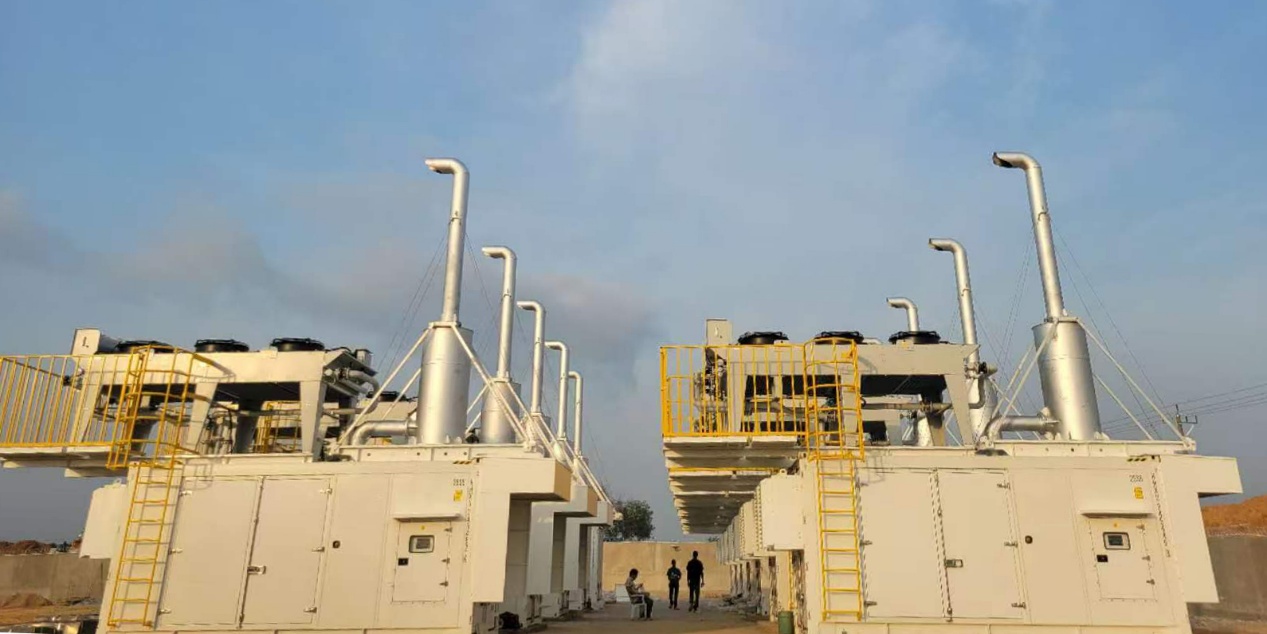
Off-grid mines. A new mine in a remote region often has no grid connection at all. The power plant is built from generator sets, and the mine runs on it for its entire life. This is the clearest case for an off-grid mining power supply built on prime-rated diesel or gas generator sets. SWT’s Simandou Mine 24 MW power plant in Guinea is an example of the scale at which a mine’s generation becomes its primary source of power.
Weak or unreliable grids. If the grid is available but regularly fails for hours or days, or cannot supply the full demand at peak, the generators end up running far more than a standby rating allows. Counting expected outage hours honestly is the key step. A grid that fails for 20 hours a year is a standby application. A grid that fails for 20 hours a month is not.
Construction, exploration and temporary phases. Before the permanent supply arrives, a site may run on generator sets for months or years. Rental and leasing models are common here, and SWT has also worked on a mine leasing project in Chile. Prime-rated and containerized generator sets are the safe choice because the running hours are unknown in advance.
Process plants with a steady daily load. Crushing, grinding and mineral processing plants run for many hours a day. Where grid power is expensive or limited, on-site generation using prime-rated sets can be the economic choice.
When you size prime power for a mine, remember that the average load over 24 hours should sit comfortably below the prime rating, not at it. Plan for the peak, plan for motor starting and leave headroom for the extension of the mine. Most large prime power plants at mines are built from several identical sets in parallel rather than one very large unit, so that one set can be serviced while the others carry the load.
When Is a Standby Generator Enough for a Mine?
Standby-rated generator sets are the right answer when the mine’s main power comes from a reliable grid and the generators are there to protect against interruptions. The question is which loads need protection and for how long.
Typical critical loads for backup power at a mine include:
- Ventilation fans, which makes a standby generator for underground mine ventilation one of the most common specifications
- Dewatering pumps, because mine dewatering pump backup power prevents flooding of the workings
- Hoists and winders, to bring personnel safely to surface
- Emergency and safety lighting
- Communication, tracking and control systems
- Fire protection pumps and critical process equipment
You do not necessarily have to back up the entire mine. Many sites install a standby plant sized for a fraction of the total demand, with a load-shedding scheme that drops non-essential equipment when the grid is lost. This keeps the plant smaller and cheaper.
Automatic start matters. A standby installation usually includes an ATS panel so that the generator set starts, comes up to voltage and takes the critical load without anyone touching it. SWT offers an optional ATS with a digital controller and electrical and mechanical interlock, so the two power sources can never be connected together. Regular test runs, ideally under load, confirm that the set will perform when it is called on.
One caution: standby ratings assume short, infrequent running. If utility outages in your region are long, such as multi-day events after storms or line faults, check whether the expected hours exceed the limits of a standby rating. In that case a prime or limited-time rating may be more appropriate.
A Real Rating Example: 1000 kW Standby vs 908 kW Prime
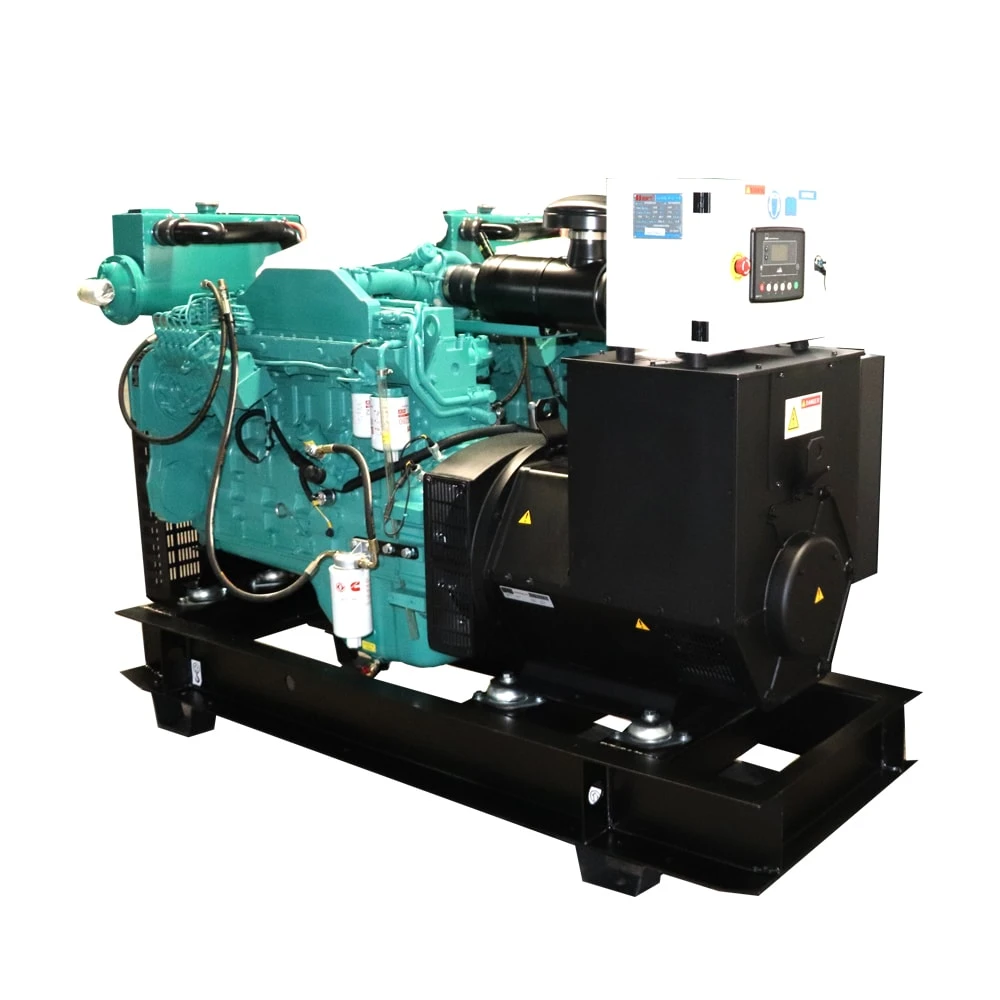
Numbers make the difference concrete. SWT’s SC1250 series is a 1000 kW / 1250 kVA class diesel generator set, integrated with a Cummins engine for large industrial and mining projects. Take the 50 Hz version matched to the Cummins QSK38-G2:
| Rating | Output (kW) | Output (kVA) |
|---|---|---|
| Standby | 1000 | 1250 |
| Prime | 908 | 1135 |
The rated voltage is 380 / 400 / 415 V at 1500 r/min with a power factor of 0.8, and the set is available as an open type or in a 20-foot container.
The prime rating is about 91% of the standby rating, a difference of roughly 92 kW. If you buy this set as the primary source for a mine and size it on the “1000 kW” headline, you have overstated its continuous capacity by that margin before any other factor is considered.
Now apply the common ISO 8528 convention that the average 24-hour load on a prime-rated set should not exceed about 70% of its prime rating. For this model that works out to roughly 636 kW as an average, even though the set can follow peaks well above that figure. If a crusher plant averages 800 kW, one set of this size is not enough for prime duty, and two sets would give you both the capacity and the redundancy.
Site conditions come on top. The reference values for this product are 40°C, 1,000 m and 60% humidity. A mine at 3,000 m or in a hot desert climate must apply a derating factor to either rating, and the loss can be substantial. Ask your supplier for the derated output at your exact conditions and engine matching before you fix the number of sets.
Sizing Mistakes: Can a Standby Generator Be Used as Prime Power?
Not if you want to stay within the rating. This is the most common mistake on mining projects, because a standby-rated set is cheaper per kW and the headline number looks attractive. Running it as the main source causes several problems:
- Higher operating temperatures in the engine and alternator, because the set runs at loads and hours it was never rated for.
- Faster wear, shorter overhaul intervals and more unplanned stops.
- A weaker warranty position, since operating outside the stated rating is normally not covered.
- A false sense of capacity: the standby kW figure is not a number you can rely on day after day.
The opposite mistake is oversizing. A mine that buys one very large prime-rated set for a load that is mostly small will run it lightly loaded for long periods. Lightly loaded diesel engines suffer from wet stacking: unburned fuel and soot build up in the exhaust system because combustion temperatures stay too low. The cure is better load matching, usually by splitting the capacity across several sets and using automatic load-dependent start and stop.
Other common errors include:
- Confusing kW with kVA, and forgetting that the power factor is typically 0.8.
- Ignoring the starting current of large motors, which can demand far more than the running load suggests.
- Forgetting altitude, temperature and humidity derating.
- Ignoring future expansion of the mine.
- Comparing quotations that use different ratings.
N+1 Redundancy and Generator Paralleling for Mining Power
At a mine, a single failure can stop production, so redundancy is part of the specification. The common approach is N+1: install enough sets to carry the load (N) plus one more, so that any one set can be taken out for service or fail without interrupting the supply.
Paralleling makes this work. A synchronizing system lets several generator sets share the load and operate together, either with each other or with the grid. SWT can supply a synchronizing system that supports up to 32 generator sets, with automatic start, synchronization and adjustment of the number of running units to match the load. This delivers three benefits for a mine:
- Efficiency: only the sets needed are running, each at a healthy load, instead of one oversized machine idling.
- Availability: if one set trips, the others keep the site running.
- Scalability: when the mine expands, you add another generator set instead of replacing the plant.
For a grid-connected mine, the same paralleling logic works with the utility, with ATS and synchronization combined. Whether your mine is built on prime or standby ratings, designing the plant as a group of identical sets in parallel is almost always better than relying on one large machine.
Prime vs Standby Power: Fuel Cost and Hybrid Options for Mines
For standby duty, the main cost is the purchase price. The generators run so little that fuel is almost irrelevant. For prime duty it is the opposite. Over the life of an off-grid mine, fuel and maintenance dwarf the capital cost, so a small difference in efficiency or load matching pays back quickly.
That is why many off-grid mines look beyond diesel alone. Where gas is available, for example coal mine gas, gas generator sets can replace part of the diesel supply. Where sunshine is plentiful, a hybrid power station combining solar, battery storage and diesel generator sets can cut fuel consumption. SWT offers container-style hybrid micro power stations, including a 30 kW containerized hybrid micro power station, for sites that need a compact and transportable solution. The generator set remains the backbone of these designs, but it runs fewer hours and at better loads.
A simple way to compare options is cost per kWh over the life of the project, including fuel logistics, maintenance and downtime risk, rather than the purchase price per kW alone.
How to Choose Between Prime and Standby Power for Your Mine: A Checklist
Use this list before you ask any supplier for a quotation. It will also make the answer you receive far more accurate.
- Define the role. Primary source, backup to the grid, peak shaving or a temporary bridging supply.
- Estimate annual running hours honestly, including expected outage hours.
- List the loads. Group them as critical and non-critical, and note motor starting methods and variable-frequency drives.
- Separate average load from peak load, then choose the rating accordingly.
- Record site conditions: maximum temperature, altitude, humidity and dust level.
- Choose voltage and frequency, for example 380 / 400 / 415 V at 50 Hz or 440 V at 60 Hz.
- Decide on the enclosure: open type for plant rooms, a 20-foot container or soundproof enclosure for outdoor sites, and a trailer if the unit must move.
- Plan redundancy and paralleling: N+1, a synchronizing system and room for expansion.
- Specify controls and monitoring: local and remote start, event logs, RS485 or Ethernet communication and cloud monitoring.
- Plan fuel: daily tank, bulk tank, automatic filling and delivery logistics.
- Ask for factory testing and documents: load tests at 0%, 25%, 50%, 75%, 100% and 110%, a test report, a quality certificate, schematics and manuals.
FAQ: Prime and Standby Power for Mines
What is the difference between prime power and standby power for mines?
Prime power is a rating for a generator set that serves as the main source of electricity, with unlimited annual running hours and a variable load. Standby power is a rating for a set that runs only when the normal supply fails, for a limited number of hours a year. The standby rating is higher in kW because the set is not expected to work hard.
Can a standby-rated generator run continuously at a mine?
It can physically run, but not within its rating. Continuous running at standby loads increases temperatures, accelerates wear and may put the warranty at risk. A mine that needs continuous generation should specify prime-rated sets.
How many hours a year can a standby generator run at a mine?
Under the common ISO 8528-1 convention, an emergency standby rating covers up to about 200 running hours per year. The datasheet for your model is the final authority. If your expected outage hours exceed that figure, specify prime or limited-time prime power instead.
Which rating should an off-grid mine choose?
An off-grid mine should choose prime-rated generator sets, preferably several in parallel with N+1 redundancy. Where gas or solar resources exist, a gas or hybrid design can lower fuel cost.
Is standby power enough for mine ventilation backup?
Usually yes, if the mine is connected to a reliable grid and outages are short and infrequent. The backup system should include an ATS and a tested start sequence. If outages can last for days, check the expected running hours against the limits of the standby rating.
Is a 1000 kW standby set the same as a 1000 kW prime set?
No. The same generator set has a lower prime rating than standby rating. In the SWT SC1250 example above, a 1000 kW standby rating corresponds to 908 kW prime for the 50 Hz Cummins QSK38-G2 configuration.
How does altitude affect generator output at a mine?
At higher altitude the air is thinner, so the engine produces less power, and high temperatures add to the effect. The loss applies to both prime and standby ratings. Always ask for the derated output at your altitude and ambient temperature.
How many generator sets should a mine install for redundancy?
The usual approach is N+1: enough sets to carry the full load, plus one. The exact number depends on the load profile, the size of the largest motors and the site’s tolerance for downtime. A synchronizing system lets the sets share load automatically and start or stop according to demand.
Prime vs Standby Power for Mines: Which Should You Choose?
The difference between prime and standby power for mines comes down to one question: how many hours a year will the generator set really run, and under what load? A mine that makes its own electricity needs prime-rated sets, ideally in parallel with N+1 redundancy. A grid-connected mine protecting ventilation, dewatering and safety systems can usually rely on standby-rated sets with an ATS. Everything else, from altitude derating to fuel logistics and hybrid options, adjusts the answer but does not change the logic.
If you are planning a mining power project and are not sure which rating or configuration fits, SWT’s engineers can review your load list and site conditions and recommend a suitable generator set. To see which models fit different mining loads, read our companion guide, Which SWT Generator Set Works for Mining Site Power?, or contact SWT for a quotation.