
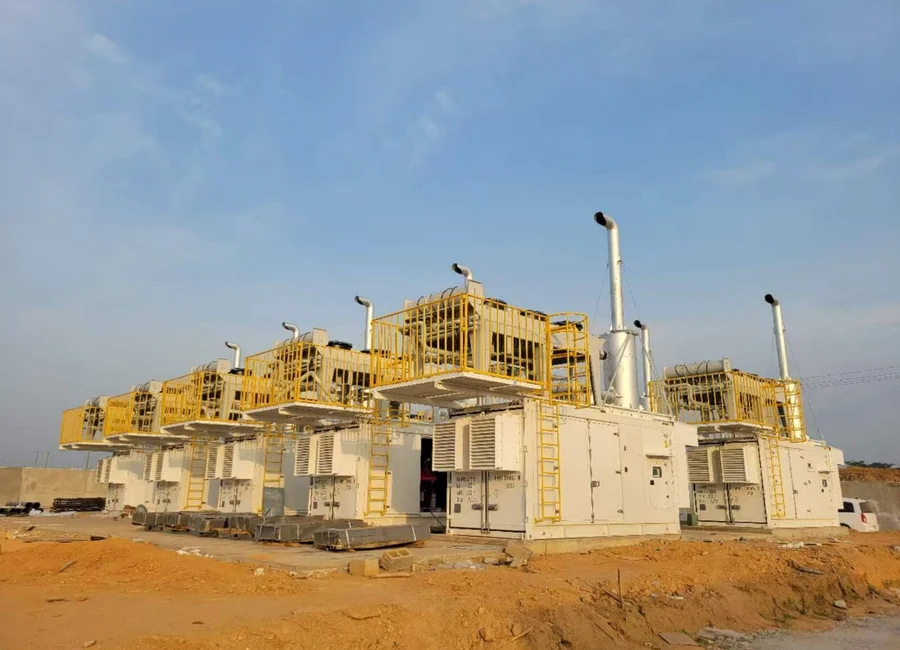
Yes — SWT provides solar storage diesel microgrid solutions for mining through its New Energy Solutions division. The offer rests on three pillars: PV panels, battery systems, and diesel backup. Each pillar answers a distinct mining pressure. PV cuts daytime fuel burn at remote sites. Batteries smooth output and carry load after dark. Diesel backup covers the gaps and keeps 24/7 operations running while emissions pressure eases. SWT has manufactured generator sets since 1993, more than 30 years of experience that anchors the diesel side of every system. This article covers the components, the integration logic, the fit for mine sites, compliance, and cost.
Inside SWT’s mining microgrid
SWT New Energy Solutions builds resilient microgrid systems by integrating hydrogen, solar, storage, and gas power technologies. Each mining microgrid combines these resources into one coordinated system. The architecture follows a simple path: solar arrays and batteries feed power conversion equipment, transformers step voltage to the site distribution network, and diesel generators stand ready as backup. An industrial energy management system ties every asset together.
Solar PV and battery storage
Solar PV paired with battery storage forms the renewable core of the system. Solar panels and batteries work as one unit: the array harvests daytime energy, and the battery bank holds surplus for night shifts or cloudy periods. Containerized battery energy storage systems provide scalable capacity, with modular power conversion systems managing charge and discharge. For mining deployments, a recommended capacity range of 1–20 MWh+ is common, and system sizes span roughly 500 kW to 100 MW depending on site load.
Modern battery storage technology keeps improving. Lithium-ion designs deliver higher energy density and longer lifespans, which reduces downtime and supports grid stability. A microgrid controller coordinates dispatch across all assets, while monitoring through SCADA keeps operators informed. This on-site generation model lets a mine draw clean power without sacrificing reliability.
Diesel gensets and controls
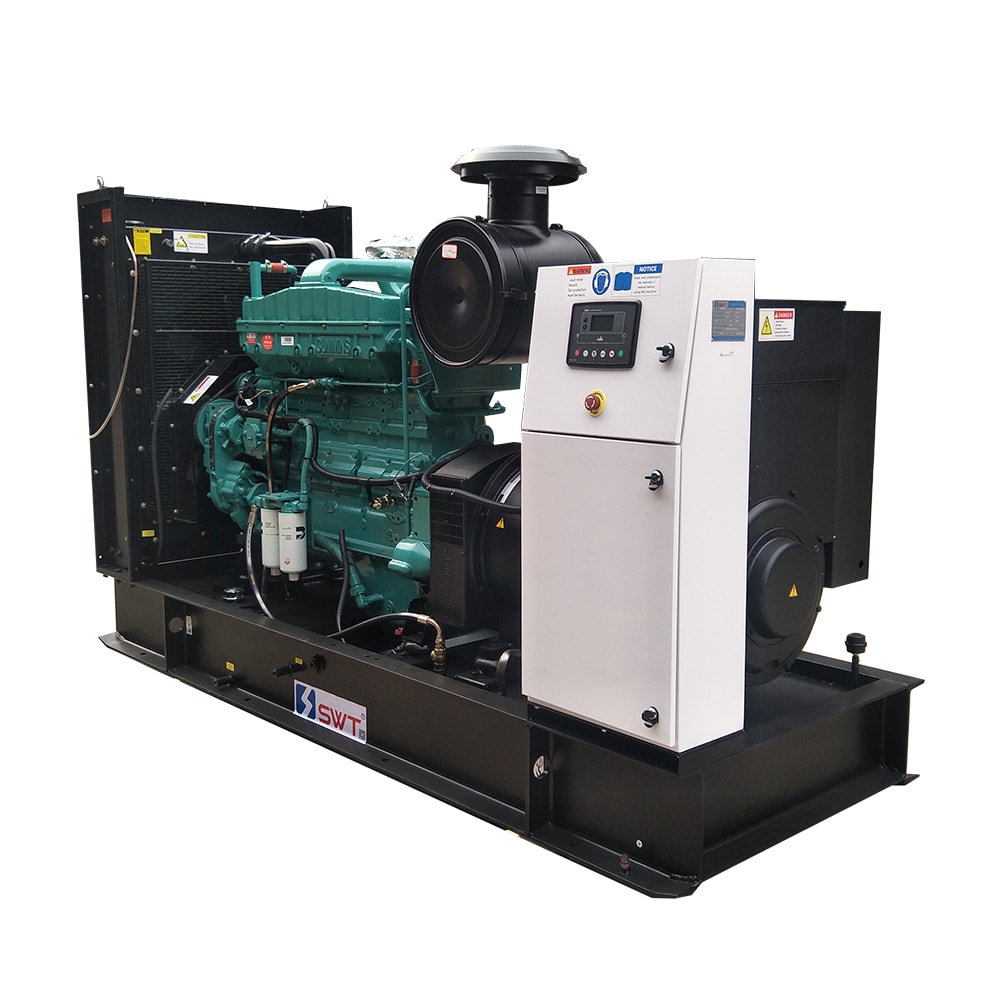
Diesel generator backup completes the microgrid. SWT has manufactured generator sets since 1993, more than 30 years of proven production. A United Nations expert team assessed SWT’s manufacturing and quality systems in 2005 and awarded a US$30 million contract; those units still serve peacekeeping bases with high reliability. That record supports the diesel backup role in every mining microgrid.
Diesel generators in hybrid microgrids act as stabilization equipment and backup power supply. Accurate dynamic models matter here — researchers validated a frequency dynamics model for a 400 kVA diesel genset after finding vendor models often miss field behavior. Controller-hardware-in-the-loop testing helps verify governor and exciter response across operating modes. Diesel remains a dependable partner to renewables, not a replacement for them.
How solar storage diesel microgrid solutions work
The operating logic of solar storage diesel microgrid solutions follows a clear priority order. PV carries production loads first, and an energy management system dispatches the remaining assets. A microgrid controller enforces the sequence across the microgrid.
Solar-first, battery-smoothing operation
- Solar PV serves active loads first. Surplus power charges the battery storage system when limits and strategy allow.
- The battery absorbs short-term mismatch between generation and demand and regulates the local bus.
- Generators stop when PV output and charge levels suffice. The grid-forming unit holds the microgrid in island mode.
- The system starts a generator when state of charge, forecast generation, load demand, or reserve thresholds require more energy, and the generator may charge batteries within its efficient range.
- Non-critical loads are shed when generation and storage cannot support total demand.
Each step runs automatically, and operators can override the schedule when conditions change. This layered control keeps the microgrid stable. Primary control handles fast voltage and frequency regulation. Secondary control restores system-level balance and coordinates generator synchronization. Tertiary control, run by the EMS, handles forecasting, generator scheduling, and reserve management. Islanding transitions within the microgrid follow the same discipline: the controller verifies voltage, frequency, phase sequence, and synchronization conditions before reconnection. Energy storage also supports the local bus during weak-grid conditions, which matters at remote mines with unstable utility connections. Load shedding protects the system from collapse, and restoration follows a staged priority list.
Diesel at its efficient point
Fuel savings come from dispatch discipline, not from generator size. A diesel generator burns fuel inefficiently at low load, and unburned fuel can accumulate in exhaust components — a condition known as wet stacking. The EMS therefore runs generators only when needed and loads them toward their efficient range, sometimes charging batteries at a good load point before shutting the unit down. Charge levels and load drive the decision, and the EMS balances the microgrid around generator limits. Runtime, fuel access, and load profile variability all shape the dispatch plan.
In our experience the inclusion of solar (for a relatively modest cost increase over BESS-only) can increase the total diesel savings by roughly 50% over the BESS-only.
Integrating solar PV into hybrid microgrids also supports grid stability. PV inverters respond faster than mechanical governors, and the hybrid mix reduces the cycling that wears generators down. On-site generation becomes a coordinated system rather than a set of separate assets. A second islanding event, such as a planned utility separation, follows the same verification steps. For mining operators weighing solar storage diesel microgrid solutions, this sequence is the core of the design. The microgrid stays stable through every transition.
Built for mining conditions
SWT’s partnership with Zijin Mining Group provides direct mining-sector experience. That relationship matters because a mine site is not a controlled industrial hall. Equipment must tolerate dust, heat, cold, altitude, and constant load swings. SWT designs each microgrid around the actual site conditions rather than a generic template.
Remote sites, harsh environments
Environmental inputs drive every design decision. SWT captures temperature, dust, altitude, available space, and access photos before specifying equipment ratings, cooling, foundations, and maintenance layout. This discipline protects performance in remote microgrids where service visits are costly.
Dust demands particular attention. Standard IP55 enclosures are insufficient at mining sites, where particulate levels behind haul trucks far exceed safe exposure limits. Dust-tight IP65 enclosures per IEC 60529 form the minimum specification, with IP66 for washdown areas. Thermal management keeps battery cells within their operating band across the site’s real temperature range. Low-temperature-rated chemistries and pre-heating logic protect batteries in cold climates. Oversized cooling systems and ampacity derating per IEEE 835 address high-altitude conditions, where air density and cable capacity both fall.
Modular containerized designs support these requirements. Integrated thermal management and fire suppression sit inside rugged enclosures, and cloud-based dashboards enable remote diagnostics and multi-level alerts. Operators gain visibility without a permanent engineering team on site.
Matching shifting mine loads
Mine loads follow shift patterns, seasonal processing variation, and peak demands from crushers, mills, and HVAC equipment. A representative gold mine in northern Canada runs three shifts with a peak electrical load of 8 MW, driven by processing, ventilation, dewatering, and camp services. Systems must be sized against an hourly profile across a full year, not a single average figure.
Scalability covers both new builds and existing diesel-powered operations. Parallel cabinets serve smaller expansions, and containerized units handle larger jumps. Capacity Boost Mode, pre-set in the energy management system, parallels storage and diesel when peak loads spike, absorbing high demand without manual intervention. Economic Mode lets batteries carry stable loads with diesel as backup. This flexibility suits remote/off-grid mining areas and harsh environments alike.
The energy management system acts as the core controller. It handles fast switching, load forecasting, and predictive diesel start, coordinating solar PV, storage, and generators without voltage or frequency conflicts. For sites using on-site generation as backup for unreliable grids, this coordination supports guaranteed uptime through every load shift and islanding event.
Compliance and cost
Regulations and grid codes
Mining microgrid projects must satisfy mining regulations and local grid codes. SWT designs customized solutions to international standards, so the system documentation aligns with the requirements regulators and utilities expect.
IEC TC 8 covers standardization for the electricity supply sector, including connection of network users and the design and management of de-centralized electricity supply systems such as microgrids.
Key references for a mining microgrid include IEC TS 62898-1 for planning and specification, IEEE 2030.7-2017 for microgrid controller functions, and IEEE 1547 for distributed energy resource interconnection. Energy-storage safety and cybersecurity follow IEC 62933 and IEC 62443. Protection studies draw on IEC 60909 for short-circuit calculation, and power quality follows IEC 61000 and IEEE 519. These standards were applied together in an isolated mining microgrid study to ensure technical reliability and reproducibility.
Fuel savings and lifecycle economics
Industry estimates suggest hybrid microgrids can cut fuel costs at remote mines by up to 40%. This figure is an industry estimate, not an SWT guarantee. The logic behind it is straightforward: diesel-only systems carry high operational costs from fuel transport to remote locations, volatile oil prices, and frequent maintenance. A hybrid system runs the backup generator less often, which lowers fuel purchases directly.
Lifecycle comparisons favor hybrid configurations in many cases. One analysis found net present cost 19% lower for a hybrid microgrid in New Mexico and 35% lower in Maryland. Three options fit different scenarios. Diesel-only suits short-lived sites with low solar resource and simple logistics. Solar-plus-storage microgrids fit sites with strong irradiation and steady daytime loads. Hybrid designs best match 24/7 mines that need firm capacity. Islanding capability and storage sizing shape the final economics, and islanding transitions must be verified during commissioning.
Yes, SWT can deliver solar storage diesel microgrid solutions tailored to mining. The system integrates PV, batteries, and diesel gensets under one controller. Solar-first dispatch with diesel at its efficient point drives the fuel savings. The Zijin Mining Group partnership grounds the design in real mine conditions. Compliance with international standards and clear lifecycle economics complete the case.
A site load-profile assessment is the practical next step. Gather reliable site data, then validate it through field surveys and interviews. Model the load curves with a tool such as RAMP, accounting for appliance ratings and usage windows. Share the results with SWT’s New Energy Solutions team to size the microgrid.