
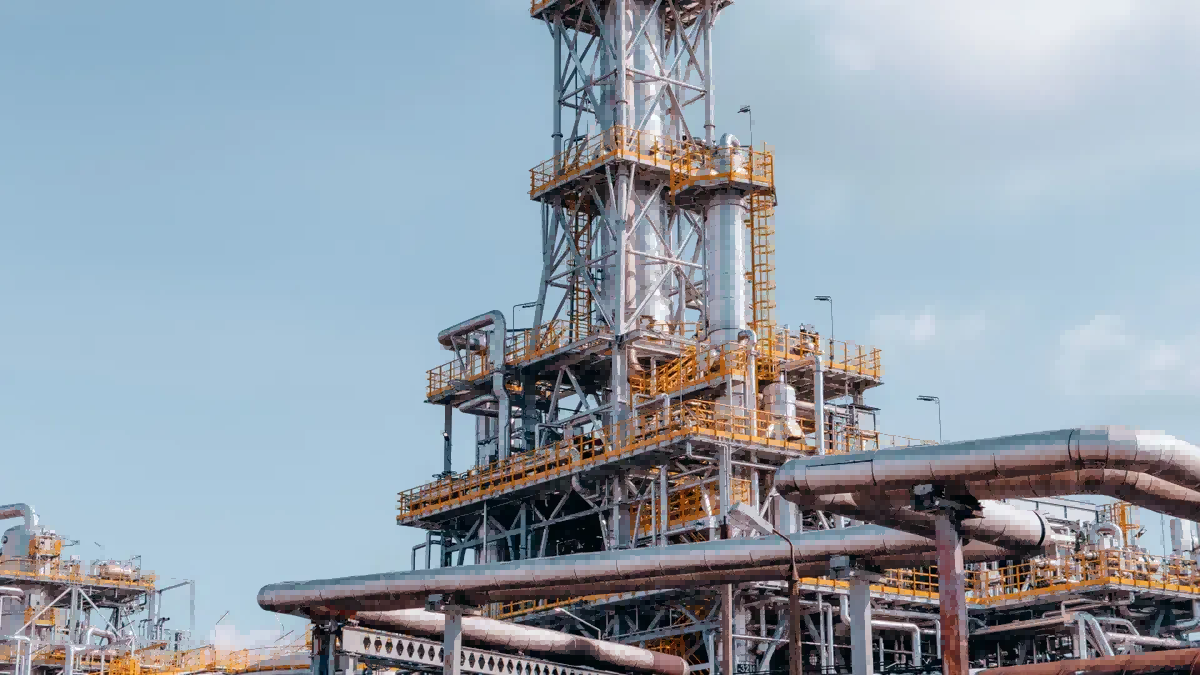
Associated gas power generation uses the natural gas that comes out of the ground with crude oil. It burns this gas as fuel to make electricity at or near the oilfield. Operators run into this topic often. Rules against flaring are getting stricter, remote fields need power that is not tied to the grid, and fuel costs push teams to look for a cheaper energy source.
That wasted resource explains the interest. Associated gas power generation turns a byproduct into useful electricity. The sections below explain what associated gas is, how it becomes power, and where the approach works best.
What Is Associated Gas?
A Byproduct of Oil Extraction
Associated gas is natural gas that comes out of the same reservoir as crude oil. It rises to the surface with the oil and separates there. Some of it exists as free gas in the reservoir. The rest stays dissolved in the oil until the pressure drops.
The amount of this gas closely follows oil production. In North Dakota, oil output rose by 500,000 barrels per day after January 2008. Over the same period, associated gas output rose by 500,000 mcf per day. By June 2012, the state produced 660,000 barrels of oil per day and roughly 713,000 mcf of gas per day. That is slightly over 1 mcf of associated gas per barrel of oil. The vast majority of produced gas came from oil wells, and about one third of it was flared.
The gas-oil ratio (GOR) describes how much gas a field yields per barrel of oil. It forms a continuum:
| GOR | Field character |
|---|---|
| Below 2 | Predominantly oil, little associated gas |
| 2 to 5 | Gassy oil at the low end, wet gas at the high end |
| Above 5 | Mostly natural gas |
Most crude oil globally occurs at GORs below 1. As the ratio rises above 1, crude oil resources gradually decline while associated gas increases. Each extracted unit then contains progressively more associated gas. Rising oil production therefore raises gas volumes, and managing that gas becomes a growing priority.
Flaring in North Dakota grew rapidly alongside the recent growth in oil production and therefore growth in associated gas production. Associated gas output outpaced installation of gas gathering infrastructure (wellhead pipelines and compressors), so large volumes of associated gas were flared.
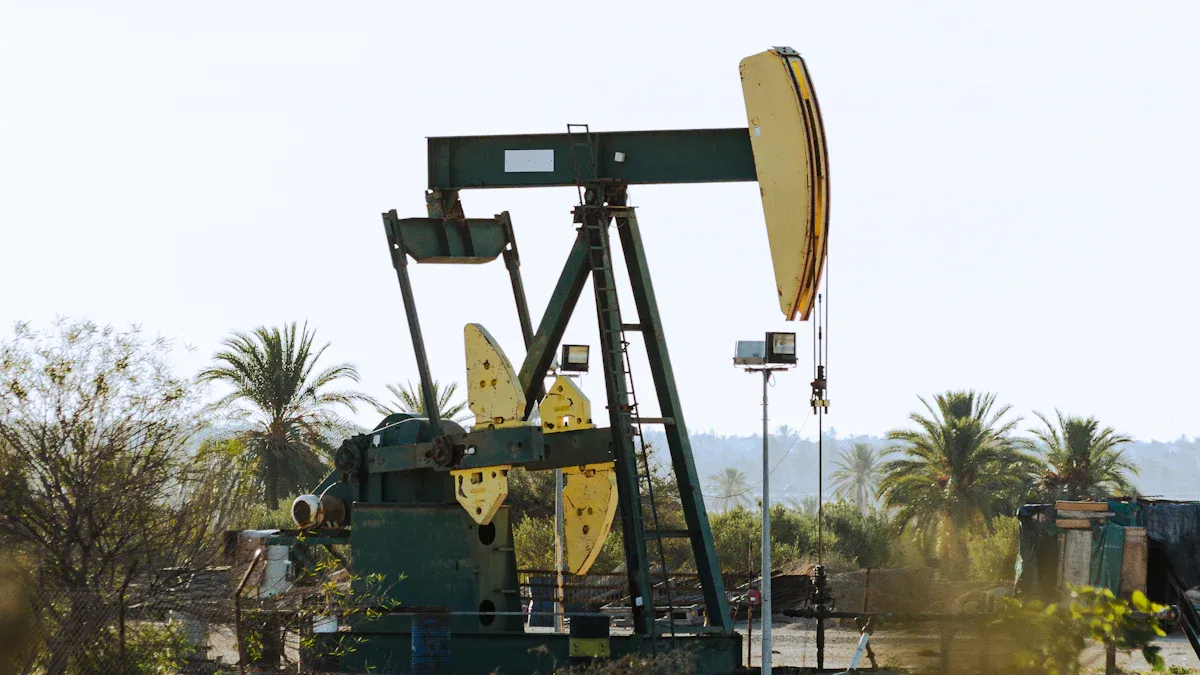
Why It Fits Power Generation
Three properties make associated gas a practical fuel for electricity. First, it is produced on site, so the fuel needs no long-distance transport. Second, it would otherwise be flared or wasted. Third, it can replace diesel or crude fuel in engines and turbines.
The economics reinforce the fit. A rise in oil price can prompt increased oil production. Higher oil production raises natural gas production by increasing associated gas output. Projects with the most associated gas are often selected early, because operators view the gas as a bonus to oil. A decline in oil prices can reverse the trend and reduce associated gas production.
Some countries show a strong dependency between the two streams. Brazil holds large crude oil resources with associated natural gas, so total gas production moves with oil production. Brazil also holds large pure gas resources that are largely independent of oil price changes. Producers there can rank crude oil against pure gas development, which makes modeled outcomes under varying oil prices more complex than in countries lacking such dependency.
This on-site fuel supply is the foundation of associated gas power generation. The next section explains how the gas is captured, treated, and converted into electricity.
How Associated Gas Power Generation Works
Capture and Treatment
The process begins at the wellsite. Field crews handle the first stage of gas cleanup. They take out hydrocarbon liquids, free water, and solids from the raw stream. They also remove bulk CO2 and H2S to stop pipeline corrosion, take out water vapor to avoid hydrates and condensation, and compress the gas to a pressure that can move it to a central facility. Modular skidded packages work well for remote wells, because they arrive ready to install and need less site construction.
At the central facility, the gas goes through a series of treatment steps:
- Inlet receiving — control and emergency shutdown valves, slug catchers, and two- or three-phase separators keep liquid slugs away from downstream single-phase gas equipment.
- Compression — the gas is compressed to make equipment smaller and get the most natural gas liquids out. Compression also serves residue gas, vapor recovery unit gas, and acid gas reinjection.
- Bulk acid gas removal — membrane systems take out CO2, while amine sweetening systems handle H2S and CO2 for both bulk and deep removal.
- Acid gas treatment — cleaning to pipeline specs, with separated CO2 reinjected for disposal or enhanced oil recovery, and H2S burned, reacted with a scavenger, injected into a suitable formation, or turned into elemental sulfur.
- Sulfur recovery — the Claus combustion process turns H2S into elemental sulfur, with liquid reaction or biological processes as alternatives where rules allow.
- Gas dehydration — taking out water stops corrosion and hydrates in gathering lines, and cryogenic sections need water cut to about 0.1 ppmv.
- Emission control — glycol dehydration vent gas and amine unit off-gases may need treatment for BTEX and VOC control through operating-condition adjustment, burning, condensation, or carbon adsorption.
Each step protects the next piece of equipment and the final fuel quality. Skipping a step risks corrosion, hydrate blockages, or off-spec fuel. Once treated, the gas feeds the generation equipment. How deep the treatment goes depends on the gas composition and the engine or turbine specs.
Generation Technologies
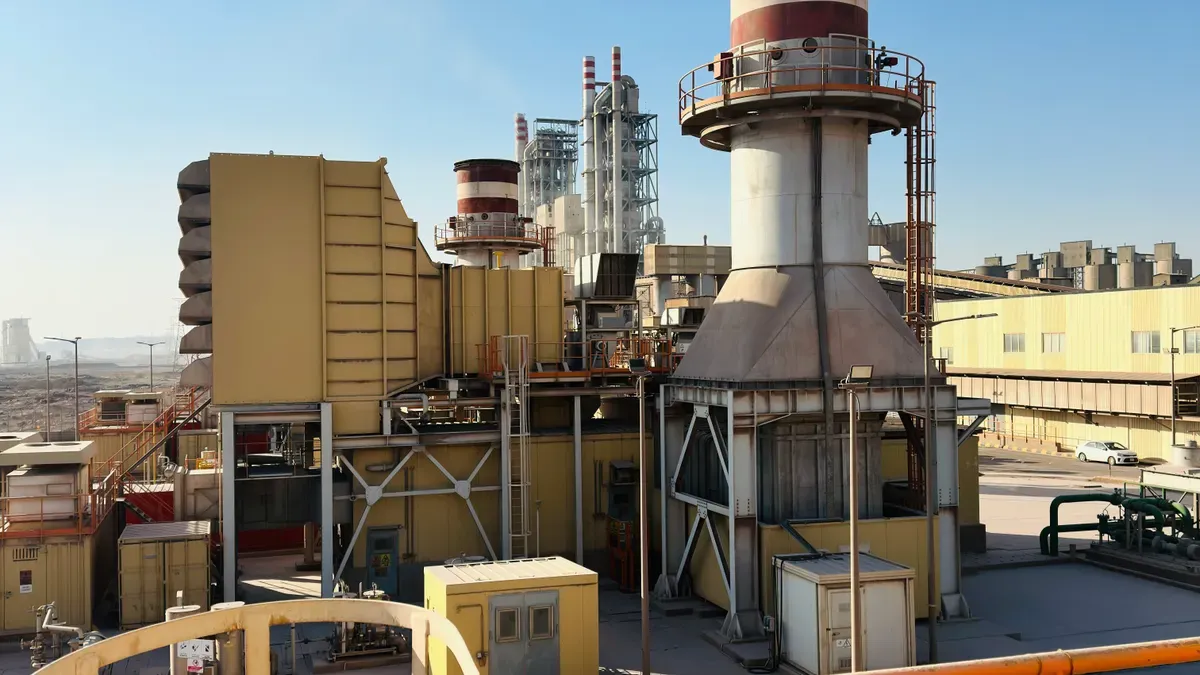
Gas engines and gas turbine gensets are the two main ways to make power. Gas engines fit smaller, modular setups and handle changing loads well. Gas turbine gensets fit larger power needs and offer a high power-to-weight ratio. Operators pick between on-site setups, where generation sits at the well pad and uses gas directly, and centralized setups, where treated gas feeds a larger plant serving multiple wells. On-site setups avoid long gas pipelines. Centralized setups capture economies of scale. The right choice depends on power demand, gas volume, and distance between wells. Engine choice also depends on fuel quality and maintenance access.
Gas supply can be on and off at some fields, and treatment needs can change with gas composition. Diesel generator sets can serve as backup or companion power in those cases. SWT offers diesel generator sets powered by Cummins, Perkins, MTU, Volvo, Baudouin, SDEC, Yuchai, Kubota, and Weichai engines. These units range from 24kW to 2000kW and come in 50Hz and 60Hz configurations, with rated voltages of 380V, 400V, or 415V. They give a fit-based option where gas supply varies or where a site needs firm backup capacity. This companion role supports associated gas power generation rather than replacing it.
Benefits for Oilfields
Economic Advantages
Saving money on fuel is a big reason people are interested. Natural gas usually costs less for the same amount of energy than diesel. Its price also changes less when global oil markets move. Getting gas through a pipeline means no tanker refueling, no on-site tank care, and no fuel polishing. Operators skip diesel problems like sludge, clogged filters, and damaged injectors. One field report says diesel fuel savings reach up to $250,000 per month. Remote sites also avoid the cost of utility power service. Associated gas power generation gives stranded or low-value gas a useful outlet without long-term pipeline commitments.
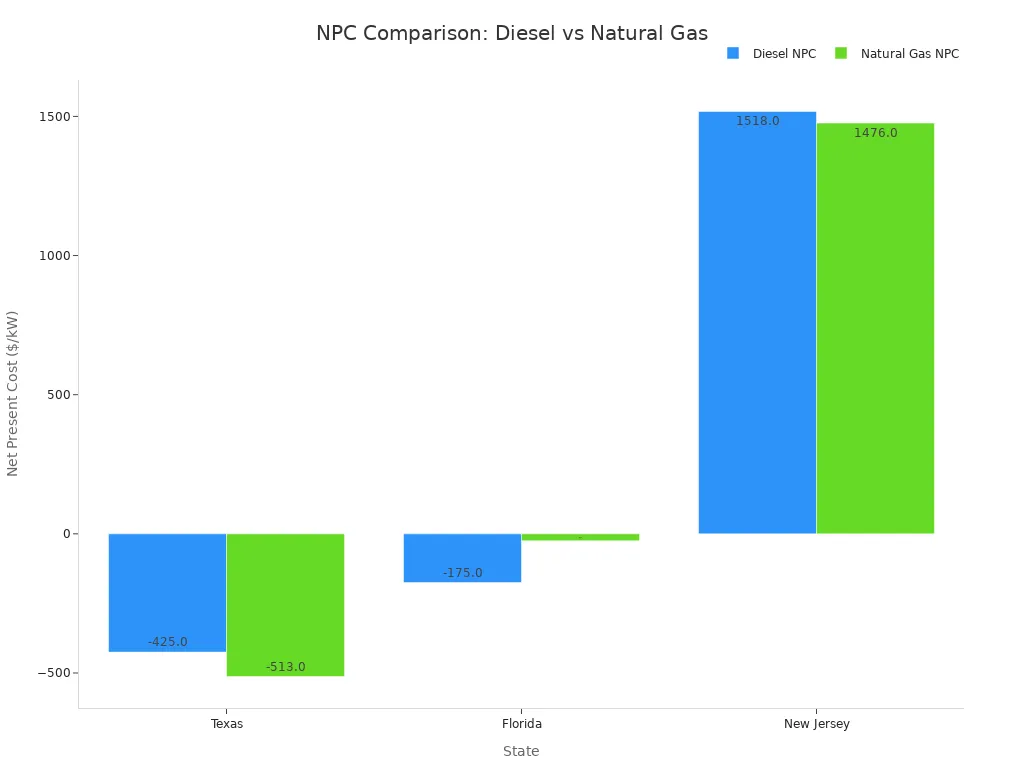
Equipment costs are more mixed. Gas units cost 10–20% more than similar diesel units at the equipment level. A 60–150 kW unit carries about $4,000–$12,000 more in premium. Maintenance favors gas over time: a 100 kW system costs $600–$1,200 a year versus $900–$1,800 for diesel. Oil change intervals also stretch to 200–250 hours. Case studies show small net present cost differences:
| State | Diesel NPC ($/kW) | Natural Gas NPC ($/kW) |
|---|---|---|
| Texas | -$425 | -$513 |
| Florida | -$175 | -$25 |
| New Jersey | $1,518 | $1,476 |
Producers also gain upside from selling gas to nearby power producers. This may bring a higher price than downstream sales while avoiding transportation costs.
Environmental Advantages
Using flared gas for power can cut emissions by up to 99% compared with flaring. A 25 MW micro data center ran entirely on associated natural gas across Texas and North Dakota oilfields. In its first five months, it avoided about 29,300 metric tons of CO2-equivalent. That equals removing roughly 6,800 gasoline-powered vehicles from the road for a year. Cleaner gas combustion also stretches oil-change intervals and lowers wet-stacking risk, which reduces load-bank needs. Gas can meet strict Tier 4 limits with a simple three-way catalyst.
Challenges and Limitations
Technical Hurdles
Associated gas has a different makeup from field to field and even from well to well. That change forces treatment systems to deal with shifting levels of CO2, H2S, water vapor, and heavier hydrocarbons. Any shift can push equipment past what it was built to handle. Supply is uneven too. Gas volumes go up and down with oil output, so a generator may run at full load one week and sit idle the next. Remote sites add logistics problems. Crews must move treatment modules, spare parts, and maintenance staff over long distances. Modular skidded packages help, but they do not take away the burden.
Regulatory Constraints
Flaring rules now shape whether projects make financial sense. The World Bank’s Global Gas Flaring Reduction program, launched in 2002, helps countries set flaring-reduction policies and meet targets. Some countries fine operators that fail to hand in a workable flaring-reduction plan. In 2024, the US Interior Department’s Bureau of Land Management issued a final rule that tightened flaring limits on federal and tribal lands. Even with these measures, the World Bank reported in 2025 that fossil fuel industries released 389 million tonnes of CO2-equivalent through flaring in 2024.
Governments can put in place a range of effective regulations and policies to incentivize and encourage gas flaring reduction, while operators can re-inject associated gas or build infrastructure to capture, treat, store, and transport associated gas to market.
Permitting adds another layer. Gas power projects may need a CWA Section 404 permit for fill in waters of the U.S., an NPDES permit for discharges, and a Safe Drinking Water Act UIC Class VI well permit when paired with carbon capture. State and local permitting was mostly favorable through the 2010s. The early 2020s marked a turning point, as some states began issuing selective or blanket denials for new gas plants.
Commercial scale matters too. Marginal wells often produce too little gas to justify treatment and generation equipment. Some marginal sites spike gas with pipeline-quality gas just to flare it, which wastes the resource.
Applications and Viability
Typical Oilfield Use Cases
Oilfield sites often have gas on hand but still rely on diesel generators, rental power, or grid connections that are not steady. This gap between gas that is available and power that is reliable opens the door for flare gas to power projects. Operators use associated gas power generation in several common settings.
| Use case | Supporting detail |
|---|---|
| Upstream oilfield power supply | Generators supply power for production, transportation, and processing. They run on oilfield gas taken straight from the ground, LNG, associated petroleum gas, flare gas, and synthetic gases. |
| Remote or energy-deficient areas | Engines bring power to fields far from energy infrastructure. They turn associated petroleum gas of various qualities directly into power and heat. |
| Replacing diesel | Associated petroleum gas costs less than outside power supply, including diesel. Rising diesel fuel and storage costs make diesel gensets less workable. |
| Reducing flaring and emissions | Putting often-flared gas to use lowers carbon footprint and CO2 emissions compared with diesel or venting. It also gives the oilfield cheap energy and can make power to sell to the public grid. |
Offshore sites are a case of their own. They need other ways to handle flaring, and making power from the gas lets them use it instead of burning it.
What Drives Viability
Several factors decide whether a project makes sense. Gas volume and consistency come first, because supply tied to oil output rises and falls with production decisions. A Hennessy Funds investment guide notes that falling oil prices can cut shale oil production. That removes some associated gas supply and should push natural gas prices higher, while likely keeping them fairly low and competitive. Power demand, treatment cost, and regulatory drivers also shape the case.
Competition from cheaper energy sources matters too. A CSIS analysis finds that hydropower availability can weaken the economics of large-scale gas power plants, as in parts of South America. Backup power needs complete the picture. Diesel generator sets can serve as companion units where gas supply is intermittent, and SWT offers 24kW–2000kW sets in 50Hz and 60Hz configurations for that role.
Associated gas is natural gas that comes up with crude oil from the same reservoir. Operators capture it and clean out liquids and impurities. Then they burn it in gas engines or turbines to make electricity on site. Oilfields use it because it lowers fuel costs, cuts flaring, and turns a byproduct into usable power.
Associated gas power generation therefore gives oilfields a practical way to turn an on-site fuel into reliable electricity.
The practice works best at remote fields with steady gas volumes and at sites with strict flaring limits. As those rules get tighter, more operators will likely see the gas as a power source instead of waste.