
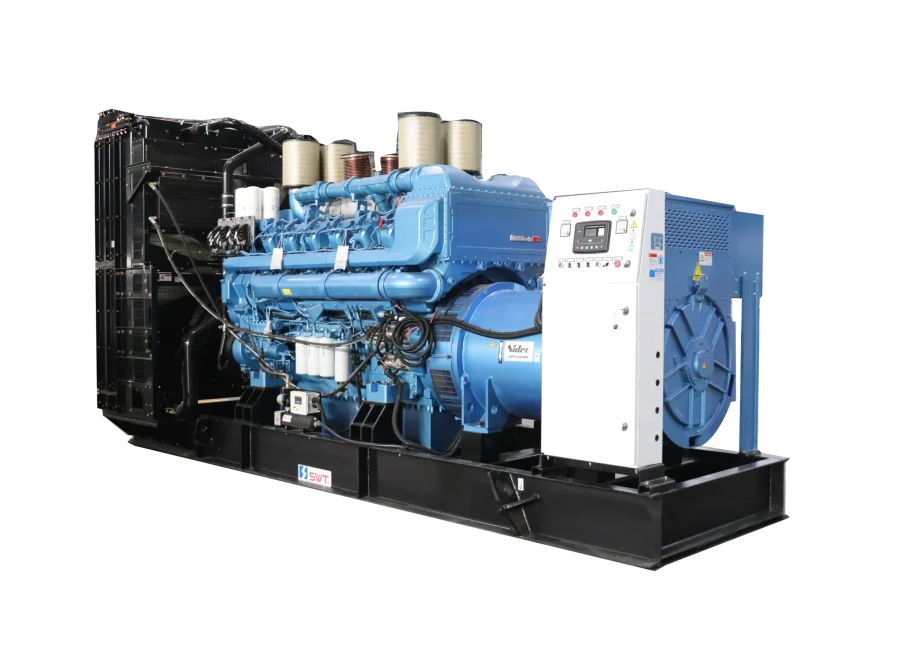
The generator set suitable for drilling operations is, for most sites, a diesel unit. High power density, wide fuel availability, and durable construction explain this preference. Generator Source notes that these engines handle continuous, heavy-duty use under extreme conditions. Woodstock Power reports that these units burn less than half the fuel of natural gas counterparts for the same work output. Natural gas, dual-fuel, and hybrid generator sets fit specific scenarios, and these generator sets reward careful matching. Site conditions decide the final selection. A diesel generator remains the default, and careful evaluation confirms the right match. Diesel fuel requires careful storage planning, yet long service life offsets that effort, according to Univpower.
- Diesel generator sets are the top choice for most drilling sites due to their durability and fuel availability.
- Proper sizing with 10-25% headroom and running at 70-80% capacity improves efficiency and extends generator life.
- Specify ISO 8528 Class G3 or G4 performance and IP66 or NEMA 4X enclosures for reliable oil and gas operations.
- Natural gas, dual-fuel, and hybrid sets fit specific scenarios like sites with field gas or strict emissions rules.
- Always require full load bank testing and third-party verification before accepting a generator set.
Key Criteria for Selection of Generator Sets
Power Capacity and Load Profile
Sizing begins with a full inventory of site loads. HNG Power recommends listing continuous base loads, large transient loads, and critical emergency loads before any equipment is quoted. Base loads cover lighting, HVAC, and instrumentation. Transient loads include mud pumps, compressors, and drilling start-ups. Emergency loads include fire pumps and communications. A time-series load profile then shows how these loads combine across a shift, a day, and a season.
Headroom protects the investment. HNG Power advises 10%–25% headroom for future expansion or temporary peak loads. Turnkey Industries reports that running a generator at 70% to 80% of capacity improves fuel efficiency and longevity. For heavy motor starts, several mid-to-large generator sets in parallel often serve better than one oversized unit. This arrangement supports load sharing, maintenance switchover, and redundancy.
Reliability, Fuel Efficiency, and Enclosure Ratings
Fuel consumption and overload capacity rank among the critical criteria in the selection of generator sets for drilling. Drilling Contractor reports that typical units carry a nameplate rating near 1,100 kW and deliver at least 10% overload beyond that rating. The same source cites a BSFC below 200 grams of fuel per kW-h for 1,200-rpm units of that size. Lower BSFC means low fuel consumption per unit of power output. Buyers should request high-resilience diesel or dual-fuel generator sets built to ISO 8528 Class G3 or G4. ISO 8528 defines performance classes for engine-driven generator sets; G3 and G4 denote the tighter voltage and frequency tolerances expected in oil and gas work.
| Parameter | Typical specification |
|---|---|
| Nameplate rating | about 1,100 kW |
| Overload capacity | at least 10% beyond nameplate |
| Engine speed | 1,200 rpm |
| BSFC | under 200 g per kW-h |
Enclosures must match the environment. An IP66 rating means the enclosure is dust-tight and protected against powerful water jets. NEMA 4X adds corrosion resistance for coastal and chemical exposure. HNG Power notes that offshore platforms commonly design for N+1 or N+2 redundancy, so one unit failure never drops a critical load. Specifying rugged, reliable and fuel-efficient on-site generator sets at this stage prevents costly retrofits later.
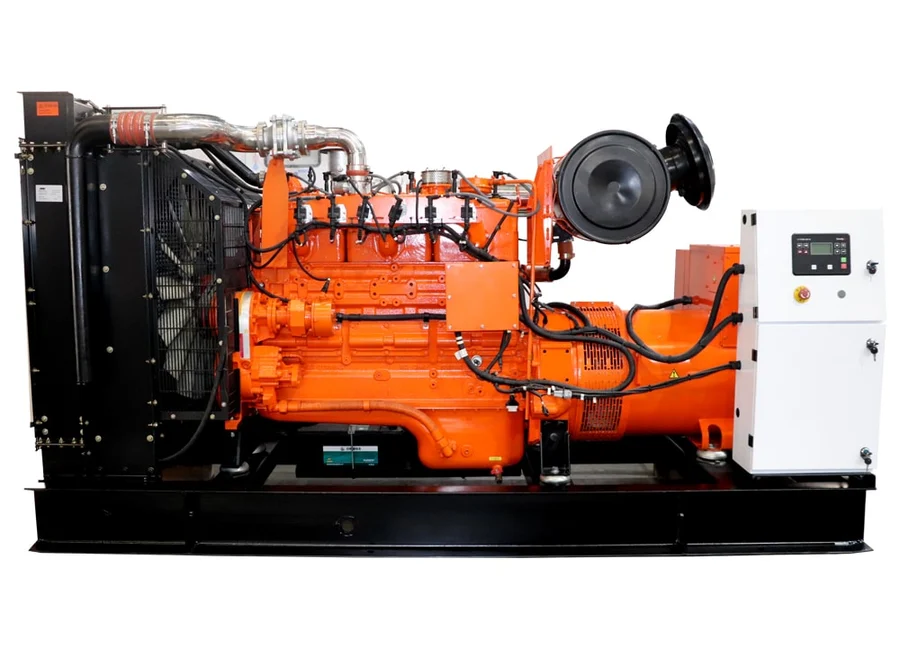
Generator Sets Compared for Drilling
Diesel Generators for Mining Operations and Drilling
Diesel generator sets remain the primary power source for drilling rigs, wellsite facilities, and remote oilfield operations. Depco reports that these units offer fuel flexibility, durability, and a low-maintenance profile for continuous duty far from utility infrastructure. Common sizes for drilling range from 250 kW to 2,000+ kW, depending on rig class and load requirements. Aggpower cites a wide power range from 10 kVA to 4000 kVA for single units. Keypowergenerator lists a 50 kW–2000 kW range with fuel consumption as low as ≤200 g/kWh.
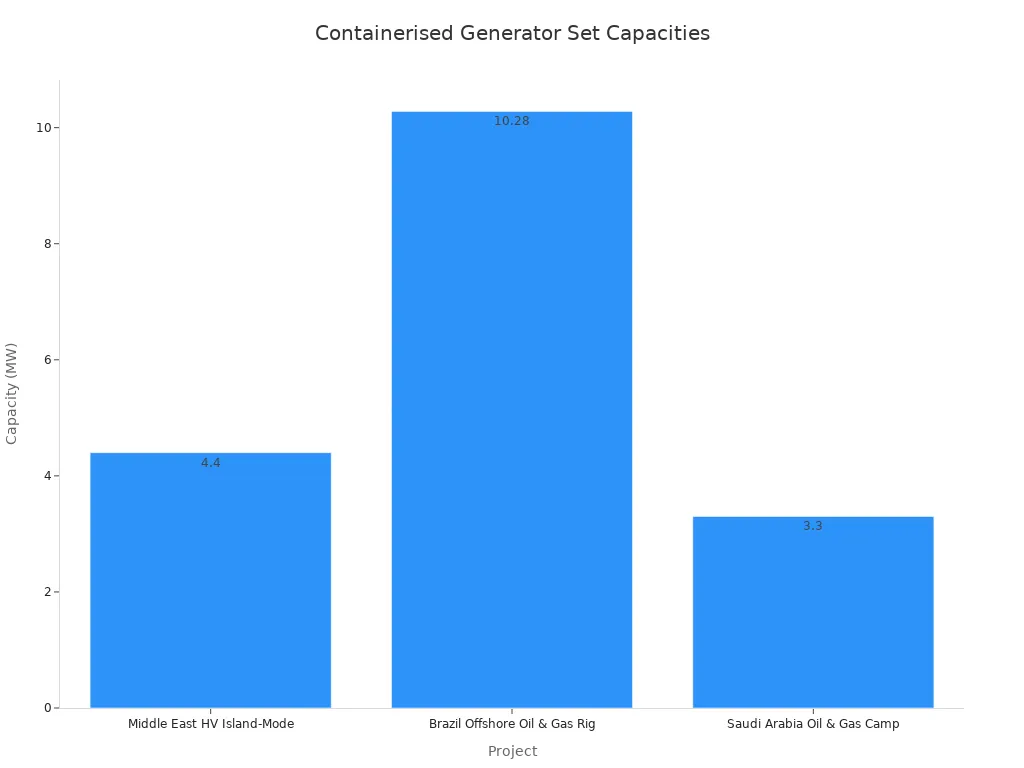
A diesel mining generator suits remote sites where fuel trucking is established. What to look for in a diesel mining generator starts with overload capacity and service access. Container-type diesel generator sets designed for petroleum drilling rigs protect equipment in harsh locations. MPMC describes containerized units rated to ISO 8528 for continuous duty, with cooling optimized for 50°C-plus ambient and N+X redundancy. The MPMC chart below shows three such projects: a Middle East high-voltage island-mode installation at 4.4 MW, a Brazil offshore rig at 10.28 MW, and a Saudi Arabia oil and gas camp at 3.3 MW.
Modern rigs often run multiple diesel-electric generator sets in parallel. An AC/DC SCR-powered rig uses dedicated diesel-electric direct-current generators to feed the draw works, mud pumps, and top drive. An AC/DC SCR drilling rig with SCR controls varies speed smoothly under load. An AC/DC electric rigs with SCR controls arrangement also supports redundancy, so one unit can drop offline without stopping the drill string.
Natural Gas, Dual-Fuel, and Hybrid Fit
Natural gas, dual-fuel, and hybrid sets fit specific scenarios rather than replacing diesel outright. Patsnap compares the two fuels directly. Diesel units cost $800 to $1,500 per kilowatt upfront, while natural gas units run $1,200 to $2,000 per kilowatt. Diesel fuel costs $3.50 to $4.50 per gallon in most markets. Natural gas costs $8 to $15 per thousand cubic feet, with lower per-BTU costs but more volatility. Diesel carries an energy density of 35–40 MJ/L against 0.036 MJ/L for natural gas. Natural gas thermal efficiency sits at 35–42%.
| Attribute | Diesel generators | Natural gas generators |
|---|---|---|
| Upfront price | $800–$1,500 per kW | $1,200–$2,000 per kW |
| Fuel cost | $3.50–$4.50 per gallon | $8–$15 per thousand cubic feet |
| Energy density | 35–40 MJ/L | 0.036 MJ/L |
| Thermal efficiency | Comparable to gas | 35–42% |
Hybrid configurations bring measurable field benefits. World Oil reports a Wyoming site at 7,000 ft altitude where a hybrid system cut NOx emissions by 50% against a diesel baseline, with total greenhouse gas 10% lower. Field gas use eliminated roughly 28,000 gal of diesel over 14 days. Integrated automation reduced engine hours by 24%. These generator sets reward sites with available field gas and strict emissions targets.
SWT supplies diesel and gas generator sets from 8 to 4500 kVA in containerized, silent, and customized configurations, covering every option above. Matching the generator set suitable for drilling operations to site conditions remains the deciding step.
Step-by-Step Guide to the Right Generator Set Suitable for Drilling Operations
Assess Site Needs and Regulations
Start with the load profile. List every load the site will run, then record how those loads combine across a shift and a season. This step defines the power needed at the drill site and prevents oversizing. Next, judge site remoteness. A rig far from utility lines depends on its own supply, so total power availability becomes a design target rather than a convenience. Fuel supply follows. Confirm whether diesel trucking is reliable, or whether field gas is close enough to justify a dual-fuel unit. Environmental rules close the assessment. Local emissions limits may favor a dual-fuel or hybrid set, and noise limits may require a silent enclosure. Note that an ac/dc electric rigs with scr controls arrangement draws power in sharp bursts, so the load profile must capture those peaks.
Size, Specify, and Verify
Sizing your generator begins with the peak load plus headroom for growth. Match the unit to the duty cycle, then confirm overload capacity against the largest motor start. Specify ISO 8528 Class G3 or G4 performance for oil and gas work, and choose an IP66 or NEMA 4X enclosure for harsh sites. A containerized diesel generator set suits remote rigs, and a dual-fuel option fits sites with field gas. Fuel consumption deserves a line in the specification, because it drives operating cost over years of duty.
Verification protects the purchase. Every unit should undergo full 100% load bank testing before dispatch, as OpenPR describes for industrial generator sets. This stepped loading validates cooling, fuel consumption, lubrication pressures, and governor response before ocean transport. Factory acceptance tests witnessed at the factory cover generators, switchgear, and related equipment, according to LinkedIn’s product validation guidance. Drilling Contractor adds that independent third parties, such as a classification society, should verify components against technical standards. Third-party observers catch issues outside the builder’s own testing, including alarm logic faults and protection settings missed during reactive load-sharing checks. Apply the same discipline to generator set availability planning: confirm spare parts support and service reach before signing.
These steps keep multiple generator sets matched to real demand. The same logic serves mining operations, where remote pits face identical constraints. A well-specified diesel generator set remains the anchor of the fleet, and careful verification confirms generator sets will perform once they reach the site.
For most drilling operations, a diesel generator set remains the default choice. Proven durability and broad fuel availability keep these units at the center of rig power planning.
Weigh every selection criterion against the specific site before purchasing. Compare power needs, reliability, fuel consumption, overload capacity, portability, compliance, and cost. A unit with low fuel consumption may cost more upfront yet save money across years of duty. Apply the step-by-step guide above to confirm the generator set suitable for drilling operations. Careful sizing and factory verification help generator sets perform as specified. These generator sets reward disciplined planning, and the right diesel unit delivers dependable power for the life of the project.
FAQ
What size generator set does a drilling rig need?
Rig size and load profile set the answer. Common drilling units range from 250 kW to 2,000+ kW, per Depco. Add 10%–25% headroom for growth, as HNG Power advises. Running at 70%–80% of capacity improves fuel efficiency and longevity.
Which performance class suits oil and gas work?
Specify ISO 8528 Class G3 or G4 for oil and gas applications. These classes define tighter voltage and frequency tolerances. Drilling Contractor reports that typical units also carry at least 10% overload beyond nameplate. High-resilience diesel or dual-fuel generator sets meet this standard.
What enclosure rating protects equipment on site?
Choose IP66 or NEMA 4X enclosures for harsh environments. An IP66 rating means the enclosure is dust-tight and protected against powerful water jets. NEMA 4X adds corrosion resistance for coastal and chemical exposure. Containerized configurations further protect generator sets at remote rigs.
Can dual-fuel or hybrid sets replace diesel entirely?
Not entirely. Dual-fuel and hybrid sets fit specific scenarios, such as sites with field gas or strict emissions targets. A Wyoming hybrid project cut NOx by 50% against a diesel baseline, per World Oil. Diesel remains the primary power source for most drilling operations.
How should buyers verify a unit before shipment?
Require full 100% load bank testing before dispatch. This stepped loading validates cooling, fuel consumption, lubrication pressures, and governor response. Independent third-party verification against technical standards adds assurance. Confirm spare parts support and service reach before signing.