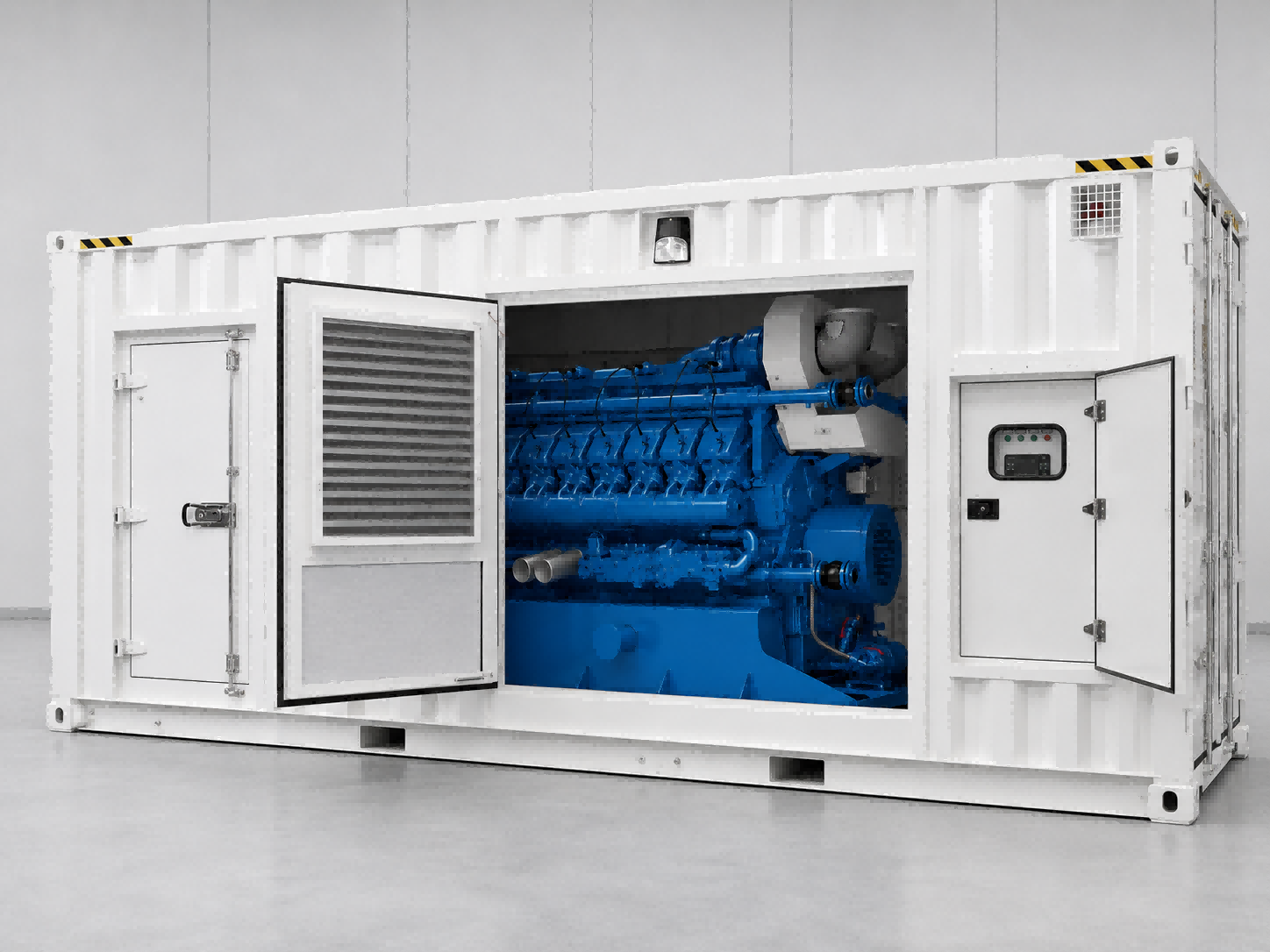
In remote industrial operations, temporary project sites, and off-grid infrastructure, conventional diesel generators have historically been the primary source of electricity. While capable of providing power in isolated locations, diesel-only systems face significant challenges in modern energy applications:
- High fuel consumption and logistical complexity – Continuous operation requires frequent fuel deliveries, which are costly and operationally burdensome in remote locations.
- Load response limitations – Diesel generators operate efficiently only within specific load ranges, making them unsuitable for fluctuating or variable energy demands.
- Limited energy management capabilities – Conventional systems lack integrated controls to coordinate renewable energy and storage assets, restricting operational efficiency and reliability.
These challenges have accelerated the adoption of Container-style Hybrid Micro Power Stations, which integrate renewable generation, energy storage, and diesel backup in a single, deployable system. By combining these elements with intelligent energy management, these hybrid systems provide reliable, efficient, and flexible off-grid power.
Container-style Hybrid Micro Power Station Architecture
Container-style hybrid microstations are modular, integrated solutions designed for off-grid and temporary deployment. Their architecture emphasizes reliability, operational efficiency, and environmental adaptability.
Core Components
| Component | Function | Operational Role |
|---|---|---|
| Photovoltaic (PV) Modules | Generate renewable electricity | Supplies daytime load and charges storage |
| Battery Energy Storage System (BESS) | Stores electricity | Provides peak shaving, load leveling, and output stabilization |
| Diesel Generator | Backup and peak support | Engages when PV and battery output are insufficient |
| Energy Management System (EMS) | Intelligent monitoring and control | Coordinates energy dispatch, manages storage, and ensures operational reliability |
Operational principle: During daylight, PV modules provide primary power while excess energy charges the battery system. Batteries discharge to meet load peaks or to smooth fluctuations. Diesel generators are activated only when renewable and storage sources cannot meet demand, reducing fuel consumption and mechanical wear.
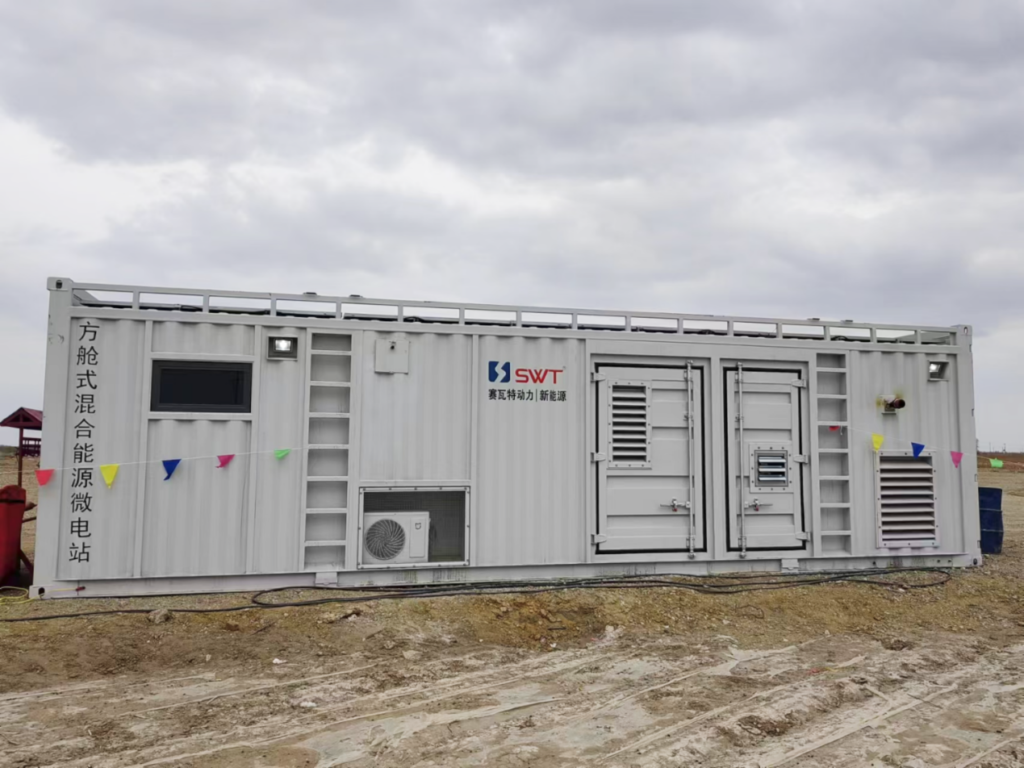
Containerized Design Advantages
The containerized form factor enhances deployment and operational performance:
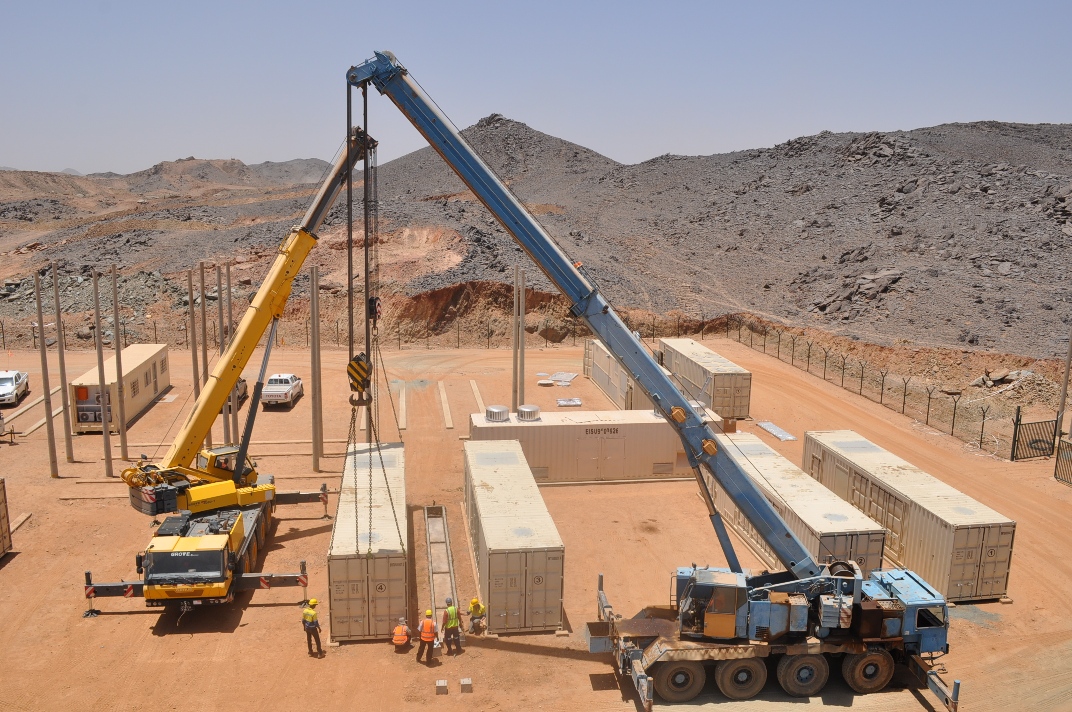
- Rapid deployment and modular scalability – Pre-assembled units are transport-ready and can be expanded by adding additional containers as load requirements grow.
- Environmental resilience – Enclosures protect batteries, inverters, and generators from dust, humidity, high temperatures, and corrosive coastal environments.
- Simplified maintenance – Centralized layout allows easier inspection, servicing, and component replacement.
Containerized units reduce infrastructure requirements, enabling installation in locations where civil works are limited or temporary setups are required.
Operational Modes
Hybrid microstations can operate in off-grid or grid-connected modes:
- Off-grid mode: Provides fully independent electricity for remote or isolated applications.
- Grid-connected mode: Supports peak load management, renewable injection, and backup supply while working alongside utility grids.
Dual-mode operation ensures applicability across industrial sites, infrastructure projects, and temporary energy deployments.
Efficiency and Reliability Advantages
Hybrid microstations improve energy efficiency and operational reliability by intelligently coordinating PV generation, battery storage, and diesel backup.
Diesel Reduction
Hybrid control logic prioritizes renewable energy and storage, minimizing diesel runtime.
| Load Condition | PV Output | Battery Output | Diesel Output |
|---|---|---|---|
| High solar, low load | 100% | 0% | 0% |
| Moderate load | PV + Battery | The battery smooths the load | Diesel off |
| Low solar, high load | PV + Battery | Battery supplements | Diesel activated |
This approach reduces fuel consumption, lowers maintenance frequency, and extends generator lifespan.
Energy Storage for Load Stabilization
Batteries act as buffers to stabilize power delivery:
- Peak shaving – Batteries discharge during high-load periods to avoid diesel overuse.
- Supply smoothing – Absorbs fluctuations from intermittent solar generation to maintain voltage and frequency stability.
- Support for critical loads – Ensures a continuous supply to sensitive equipment and operational processes.
Energy storage reduces generator cycling, improving both efficiency and system longevity.
Maximizing Renewable Energy Utilization
EMS algorithms coordinate PV and storage to maximize renewable contribution:
- Surplus solar energy charges the battery.
- Storage discharges strategically to reduce diesel engagement.
- Consistent load supply is maintained across varying demand and environmental conditions.
By prioritizing renewable energy, hybrid microstations reduce operational fuel costs and minimize environmental impact.
Long-Term Operational Value
Hybrid systems provide advantages in lifecycle cost and operational efficiency:
- Lower fuel costs – Diesel runtime is minimized through intelligent energy coordination.
- Reduced maintenance demands – Optimized generator operation reduces wear and service frequency.
- Remote monitoring – Reduces on-site staffing requirements and enables proactive system oversight.
Operational comparison:
| System Type | Diesel Runtime | Storage Contribution | Reliability |
|---|---|---|---|
| Diesel-only | 100% | 0% | Moderate |
| Hybrid Microstation | 30–50% | 50–70% | High |
Deployment Efficiency Through Containerization
Containerized design supports rapid installation and flexible system scaling.
Modular Transport
Standard container dimensions allow transport by road, sea, or air, with minimal on-site assembly. Pre-assembled units reduce setup time and logistical complexity.
Rapid Installation
- Requires only a leveled foundation.
- Commissioning can be completed within days, supporting temporary or emergency deployments.
Environmental Adaptability
- Sealed enclosures protect against dust, high humidity, extreme heat, and coastal conditions.
- Units are engineered to operate in deserts, tropical climates, and coastal environments reliably.
Flexible Expansion
- Parallel deployment of additional containers allows capacity scaling.
- Modular design supports incremental energy needs without large-scale infrastructure modifications.
Deployment Overview Table:
| Parameter | Feature |
|---|---|
| Transport | Standard container, compatible with truck/ship/air |
| Installation | Minimal foundation, pre-assembled unit |
| Expansion | Modular parallel deployment for load growth |
| Environmental Protection | Resistant to dust, humidity, heat, and corrosion |
Intelligent Energy Management System (EMS)
EMS is essential to hybrid microstation performance and reliability.
Automated Scheduling
- Dynamically dispatches PV, storage, and diesel to optimize fuel use and maintain a continuous supply.
- Responds to real-time load and environmental variations.
Remote Monitoring and Predictive Oversight
- Tracks energy flows, system health, and storage performance.
- Enables predictive maintenance and proactive operational adjustments.
Fault Detection and Reliability
- Provides early alerts before faults impact the power supply.
- Ensures continuous, reliable electricity in critical applications.
EMS Functionality Table:
| Function | Benefit |
|---|---|
| Automated Dispatch | Reduces fuel consumption, stabilizes supply |
| Remote Monitoring | Minimizes staffing, supports proactive management |
| Fault Alerts | Prevents unplanned downtime |
| Load Balancing | Optimizes renewable and storage utilization |
Long-Term Strategic Value
Container-style hybrid microstations deliver operational, economic, and environmental advantages:
- Reliable electricity supply – Coordinated hybrid operation ensures continuous power in remote or temporary sites.
- Operational efficiency – Optimal integration of PV and storage minimizes diesel use and maintenance.
- Rapid deployment and scalability – Containerized modular units can be transported, installed, and expanded efficiently.
- Intelligent control – EMS enables predictive maintenance, energy optimization, and stable performance.
By integrating renewable energy, energy storage, diesel backup, and intelligent management into a deployable container, these systems provide long-term operational stability, efficiency, and flexibility, establishing a new standard for modern off-grid and distributed energy infrastructure.