Electricity has become one of the most important operating resources for modern businesses. Whether it is a manufacturing plant running multiple production lines, a data center supporting cloud services, or a hospital operating critical medical equipment, stable power supply directly affects productivity, profitability, and operational continuity.
At the same time, energy markets are changing. Electricity prices continue to rise in many regions. Diesel fuel costs remain sensitive to global supply fluctuations. Environmental regulations are becoming stricter, and companies are under increasing pressure to reduce emissions while maintaining competitive operating costs.
For many industrial and commercial users, relying entirely on the public grid is no longer the only option. Businesses are looking for ways to gain greater control over energy costs, improve power reliability, and strengthen long-term energy security.
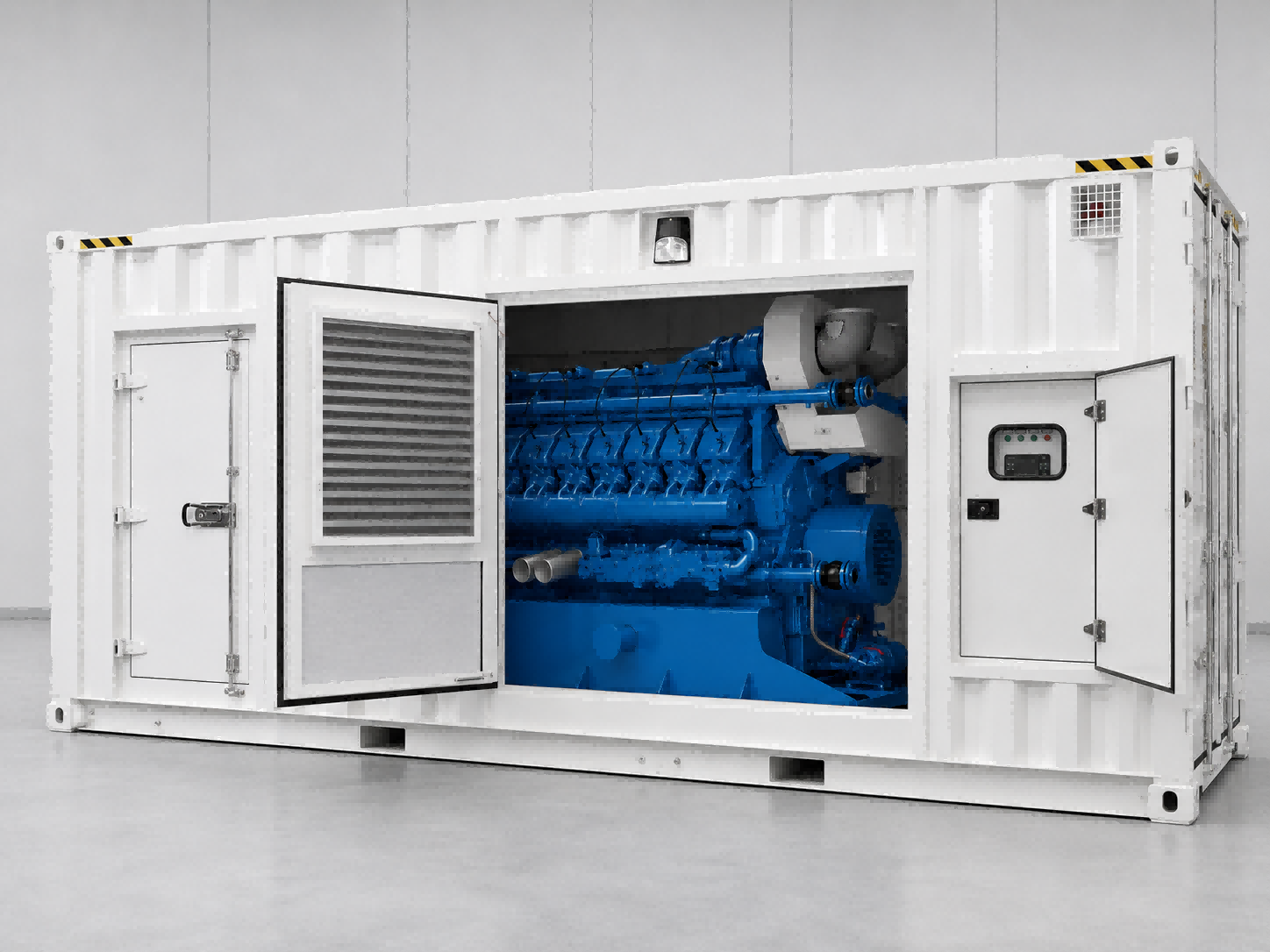
This shift is one of the reasons why Gas Gensets are attracting increasing attention across a wide range of industries. What was once considered an alternative power source is now being incorporated into industrial energy planning, distributed power generation projects, CHP systems, microgrids, and renewable energy integration strategies.
The discussion today is no longer simply about generating electricity. It is about building an energy system that balances operating cost, environmental performance, and supply reliability.
Why Are More Businesses Looking Beyond Traditional Power Supply Models?
For many years, grid electricity combined with diesel backup generators was considered a standard solution.
That model still works in some situations, but industrial energy requirements have changed significantly.
Manufacturers are investing heavily in automation. Data centers operate around the clock. Hospitals cannot tolerate even brief interruptions. Industrial parks are facing growing electricity demand while trying to meet carbon reduction targets.
A short power outage can create consequences far beyond lost electricity.
For example:
- Automated production lines may require hours to restart
- Sensitive manufacturing processes can lose entire production batches
- Data centers may face service disruptions and financial penalties
- Mining operations can experience equipment downtime and productivity losses
As energy becomes more critical to business operations, many organizations are looking for greater independence from external power uncertainties.
Gas-powered generation offers a practical solution because it allows facilities to produce electricity close to the point of consumption while maintaining control over energy costs and supply reliability.
What Is a Gas Genset and How Does It Work?
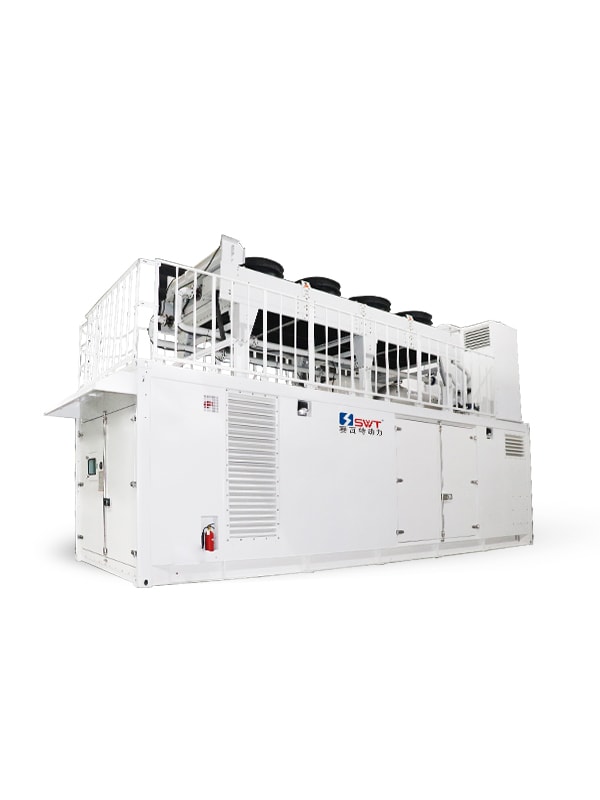
A Gas Genset is a power generation system that uses gaseous fuels to drive an internal combustion engine connected to an alternator.
The process itself is straightforward. Fuel enters the engine, combustion creates mechanical power, and the generator converts that mechanical energy into electricity.
The real value lies not in the basic operating principle but in the flexibility of fuel sources and the ability to support long-duration operation.
Modern gas-powered systems can operate on:
- Natural Gas
- Biogas
- LPG
- Landfill Gas
- Coal Mine Methane
- Associated Gas from Oil Fields
This flexibility allows project owners to utilize locally available energy resources while reducing dependence on liquid fuel logistics.
A modern Gas Genset typically includes:
| System Component | Function |
|---|---|
| Gas Engine | Converts fuel energy into mechanical power |
| Alternator | Generates electricity |
| Fuel Supply System | Controls gas pressure and delivery |
| Cooling System | Maintains operating temperature |
| Intelligent Controller | Manages operation and protection |
| Synchronization Module | Supports parallel operation |
| Monitoring System | Provides real-time operational data |
Advanced systems can automatically adjust output based on load demand, synchronize with multiple generators, and communicate with plant energy management systems.
For industrial users, these capabilities are often more important than the generator itself because they directly affect operational flexibility.
Why Fuel Economics Often Drives Investment Decisions
When evaluating a power generation project, many buyers initially focus on equipment cost.
In reality, generator purchase price represents only a portion of the total investment.
For facilities operating thousands of hours every year, fuel consumption becomes the dominant operating expense throughout the life of the equipment.
This is one reason why gas-powered generation continues to gain momentum.
A manufacturing facility operating 7,000 to 8,000 hours annually may spend far more on fuel over ten years than it spends on the generator itself.
As a result, experienced project owners often evaluate energy solutions based on cost per kilowatt-hour rather than equipment acquisition cost.
Natural gas frequently offers a competitive advantage in regions with established gas infrastructure.
The benefits become more noticeable when:
- Annual operating hours are high
- Electricity demand is continuous
- Fuel supply contracts are available
- Grid electricity costs continue increasing
Under these conditions, many projects achieve stronger long-term economics through gas generation than through diesel-based systems.
Gas Genset vs Diesel Generator: Why the Comparison Is Changing
Diesel generators remain an important part of the power generation industry. They continue to serve critical backup applications worldwide.
However, the conversation has evolved.
Instead of asking which technology is better, many project owners now ask which technology is more suitable for their operating profile.
| Evaluation Factor | Gas Genset | Diesel Generator |
|---|---|---|
| Continuous Operation | Excellent | Higher operating cost |
| Fuel Cost Stability | Often stronger | More volatile |
| Emissions Profile | Lower | Higher |
| Noise Levels | Lower | Higher |
| CHP Compatibility | Excellent | Limited |
| Renewable Integration | Strong | Moderate |
| Long-Term Operating Economics | Competitive | Depends on fuel cost |
For backup power applications operating only a few hours per year, diesel may still be a practical choice.
For facilities running continuously, fuel economics and emissions increasingly favor gas-powered systems.
This explains why many industrial projects are reassessing traditional diesel-based strategies.
How Gas Gensets Support Industrial Production
Industrial facilities face one common challenge: production interruptions are expensive.
The financial impact often extends beyond lost electricity.
A power disruption may affect:
- Production schedules
- Raw material utilization
- Product quality
- Equipment utilization rates
- Delivery commitments
In highly automated factories, restarting a production line can take considerably longer than the outage itself.
For this reason, many manufacturers are incorporating Gas Gensets into broader energy strategies rather than treating them solely as emergency backup equipment.
On-site generation provides several advantages:
- Improved supply reliability
- Reduced exposure to grid instability
- Greater control over energy costs
- Potential participation in demand-response programs
Industries such as food processing, chemicals, pharmaceuticals, textiles, and metal manufacturing increasingly use gas-powered systems as part of daily operations.
Why Data Centers Are Paying More Attention to Gas Power
Data centers represent one of the fastest-growing power-consuming sectors globally.
A modern facility may require tens of megawatts of continuous electricity.
Power interruptions are measured not only in downtime but also in financial impact and service reliability.
As data center operators expand capacity, many are exploring alternatives to conventional backup infrastructure.
Gas-powered generation offers several advantages:
- Long-duration operation
- Stable fuel supply through pipeline networks
- Lower emissions
- Reduced fuel storage requirements
In some regions, gas generation is becoming part of microgrid strategies designed to improve resilience while supporting sustainability objectives.
For operators planning facilities with operational lifespans measured in decades, energy strategy has become a critical investment consideration.
Hospitals and Critical Infrastructure Demand Continuous Power
Healthcare facilities operate under a different set of priorities.
For hospitals, electricity directly affects patient care.
Operating rooms, imaging systems, intensive care units, laboratories, and life-support equipment all depend on uninterrupted power.
The cost of a power interruption cannot be measured solely in financial terms.
Gas-powered generation provides an additional layer of energy security for healthcare facilities, particularly where long-duration operation may be required.
Lower noise levels also make gas systems attractive for environments where patient comfort and operational continuity must coexist.
The Growing Role of Biogas and Renewable Gas Projects
One of the most interesting developments in the power generation market is the increasing use of renewable gas resources.
Agricultural operations, wastewater treatment plants, food processing facilities, and landfills often generate methane-rich gas streams.
Historically, these gases were treated as waste products.
Today, many operators view them as energy assets.
Biogas Gensets allow facilities to convert organic waste into useful electricity and thermal energy.
The benefits extend beyond power generation.
Projects can achieve:
- Lower energy costs
- Reduced methane emissions
- Additional revenue opportunities
- Improved sustainability performance
This approach aligns particularly well with industrial facilities pursuing environmental targets while seeking greater energy independence.
Why CHP Is Changing the Economics of Power Generation
One of the strongest arguments for gas-powered generation is its compatibility with Combined Heat and Power (CHP) systems.
Traditional electricity generation discards a large portion of fuel energy as waste heat.
CHP captures that thermal energy and converts it into useful output.
For facilities requiring both electricity and heat, this creates a completely different economic model.
Examples include:
- Food processing plants requiring steam
- Pharmaceutical facilities requiring hot water
- Textile factories requiring drying processes
- Hotels requiring domestic hot water
- Industrial parks requiring district heating
Instead of wasting thermal energy through exhaust systems, CHP utilizes that energy within the facility.
| Energy System | Overall Energy Utilization |
|---|---|
| Conventional Power Generation | 35%–45% |
| Standard Generator Operation | 35%–45% |
| CHP Gas Genset System | 75%–90% |
In many projects, the value of recovered heat becomes a major contributor to return on investment.
This is why CHP continues to gain traction across industrial and commercial sectors.
Gas Gensets in Distributed Energy Systems and Microgrids
The energy sector is gradually moving toward more decentralized generation models.
Rather than relying entirely on large central power plants, many organizations are generating electricity closer to where it is consumed.
This approach offers several advantages:
- Reduced transmission losses
- Improved reliability
- Faster deployment
- Greater operational flexibility
- Enhanced energy security
Gas Gensets are becoming a foundational component in these systems because they provide stable and controllable power output.
In microgrids, gas-powered generation often serves as the balancing resource that maintains stability when load demand changes or renewable generation fluctuates.
Supporting Renewable Energy Through Hybrid Power Solutions
Solar and wind generation continue to expand worldwide.
While renewable energy plays an increasingly important role, output variability remains a challenge.
Industrial facilities still require stable electricity regardless of weather conditions.
Hybrid power systems address this challenge by combining:
- Solar PV
- Wind Energy
- Battery Storage
- Gas Gensets
Each technology contributes different strengths.
Renewables reduce fuel consumption.
Battery systems improve response speed.
Gas-powered generation provides dependable dispatchable power when renewable output decreases.
This combination creates a more resilient energy system while supporting carbon reduction goals.
Choosing the Right Gas Genset for Long-Term Project Success
Selecting a Gas Genset involves much more than matching generator capacity to electrical load.
Project owners should evaluate:
- Operating hours
- Fuel availability
- Future energy demand
- CHP opportunities
- Emission requirements
- Expansion plans
- Integration with renewable energy
The most successful projects typically begin with a broader energy assessment rather than a generator specification sheet.
A system designed around long-term operational objectives often delivers greater value than one selected solely on equipment price.
Final Thoughts
Gas Gensets are no longer viewed simply as an alternative to diesel generators.
They are becoming an important part of industrial energy planning, distributed power generation, CHP projects, renewable energy integration, and critical infrastructure development.
For many industrial and commercial users, the objective is no longer just producing electricity.
The focus is controlling energy costs, maintaining operational continuity, improving environmental performance, and strengthening long-term energy resilience.
In that context, Gas Gensets are moving from standby equipment to a strategic asset within modern energy systems. Facilities that evaluate power generation from a lifecycle and operational perspective increasingly see gas-powered solutions as a practical way to balance efficiency, reliability, and future energy requirements.