Power generation requirements on modern industrial projects have changed significantly over the past decade. Construction sites are moving into remote regions, mining operations are expanding into harsh environments, and data centers are demanding higher backup power reliability with shorter deployment timelines.
Under these conditions, traditional generator installations often create additional engineering challenges. Separate acoustic rooms, onsite weather protection structures, ventilation construction, and complex transportation arrangements can increase both project cost and commissioning time.
For many EPC contractors and industrial power providers, the containerized genset has become a more practical solution.
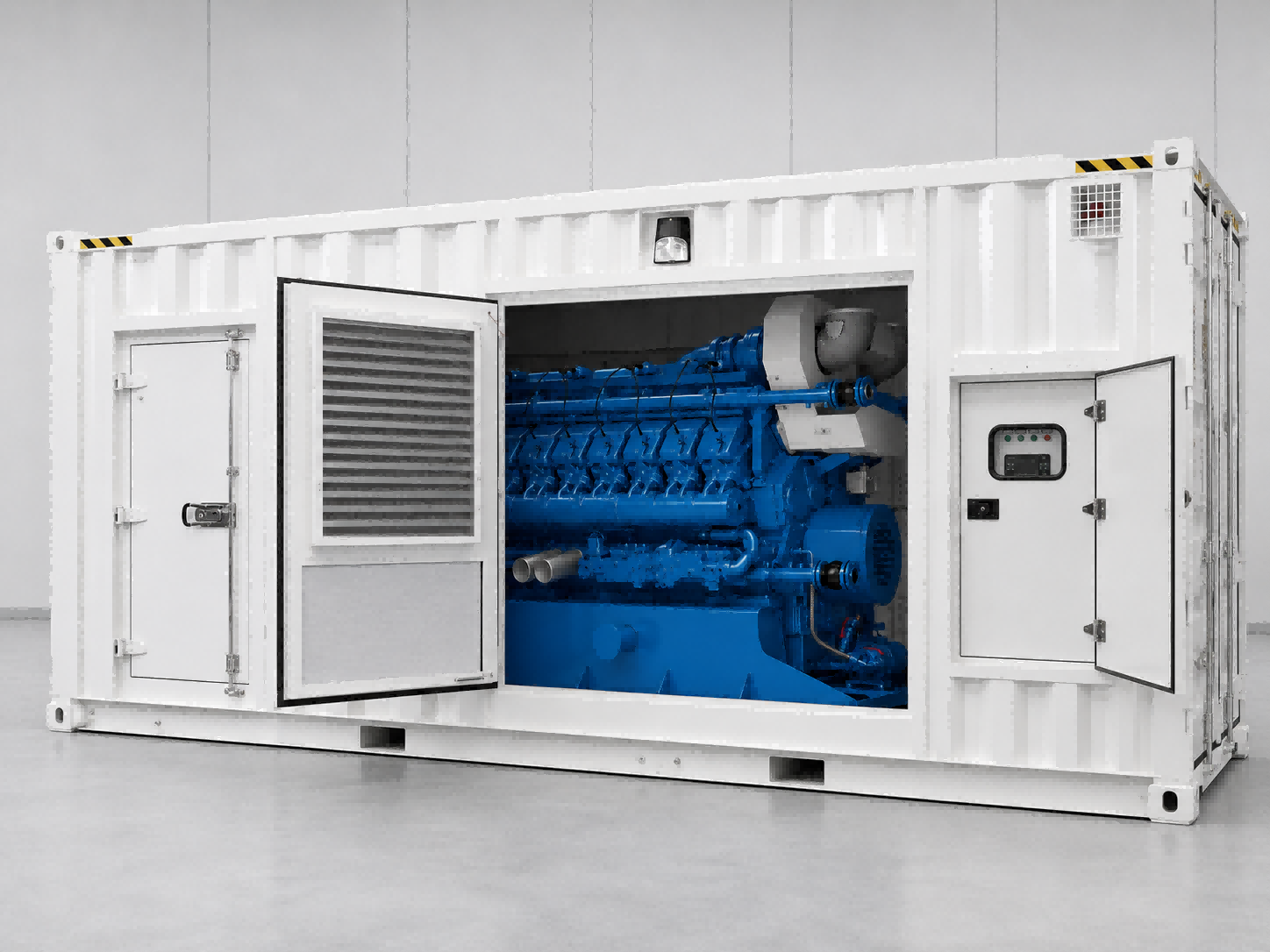
A containerized diesel generator combines the engine, alternator, cooling system, fuel system, exhaust system, and control equipment inside a standardized ISO container enclosure. The entire power generation system is delivered as a ready-to-deploy module designed for outdoor operation, long runtime performance, and international transportation efficiency.
This type of containerized power solution is now widely used in mining projects, oil and gas operations, temporary construction power stations, industrial backup power systems, and overseas infrastructure development, where rapid deployment and operational reliability are critical.
What a Containerized Genset Actually Does on Industrial Projects
On industrial sites, a container generator set functions as more than a backup generator. In many applications, it becomes part of the project infrastructure itself.
At remote construction sites, the genset may supply temporary prime power for cranes, welding equipment, worker camps, and dewatering systems before the utility grid becomes available.
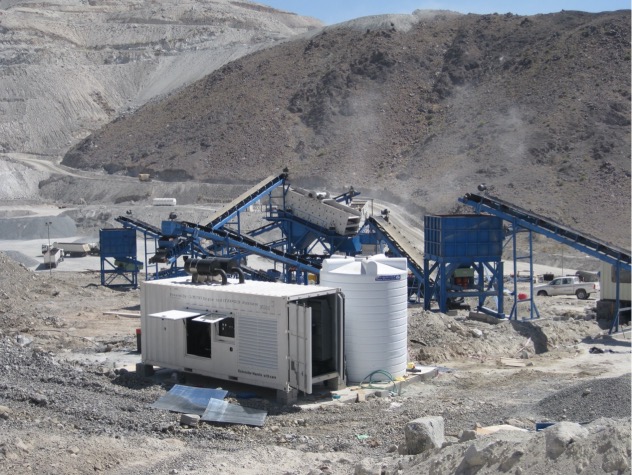
At mining operations, synchronized containerized gensets often provide continuous power for processing equipment, ventilation systems, conveyors, and field offices.
For data centers, the role is different. The generator becomes part of the emergency backup architecture designed to maintain uninterrupted operation during utility failure.
That difference in application is important because industrial diesel genset selection is heavily influenced by operating profile, load behavior, environmental conditions, and deployment strategy.
A backup power generator container designed for a hospital standby application may operate only a few hours each month during testing. A prime power system supporting a quarry or remote drilling project may run continuously for thousands of hours every year.
How a Containerized Diesel Generator Works
The power generation process itself follows standard diesel generator principles. The diesel engine drives the alternator, producing electrical power for the connected load.
What matters in industrial applications is how the enclosure and supporting systems are engineered around the generator.
Inside a diesel generator container, airflow management becomes one of the most important design factors. High-output engines generate large amounts of heat, especially during continuous load operation.
If ventilation is poorly designed, several problems appear quickly:
- Hot air recirculation
- Alternator overheating
- Reduced engine efficiency
- Power derating
- Premature component wear
For this reason, industrial outdoor generator system manufacturers spend considerable attention on radiator airflow separation, intake louver positioning, and hot-air discharge routing.
In high-temperature regions such as the Middle East or Africa, enclosure cooling design directly affects long-term operational stability.
Why Ventilation Design Matters in a Containerized Power Solution
Many buyers focus heavily on engine brand and alternator specifications while overlooking enclosure airflow engineering.
In reality, thermal performance often determines whether the generator can maintain stable output under full industrial load conditions.
A properly engineered containerized genset usually incorporates:
- High-capacity axial ventilation fans
- Weather-protected intake louvers
- Internal airflow channel separation
- Hot-air extraction routing
- Acoustic airflow attenuation systems
Balancing cooling performance and sound attenuation is one of the most difficult parts of silent containerized generator design.
Main Systems Inside a Containerized Genset
A containerized power system combines several integrated subsystems working together under continuous industrial operating conditions.
Engine and Alternator
The engine provides mechanical power while the alternator converts that energy into electrical output.
For industrial applications, buyers generally focus on:
- Continuous load capability
- Fuel efficiency
- Transient response
- Service accessibility
- Runtime durability
Large infrastructure projects typically prioritize operational stability over maximum standby ratings.
Fuel System
Integrated fuel tanks are often built into the base frame or container structure.
For remote-site applications, extended runtime capability is essential because fuel delivery may not always be predictable.
Many containerized diesel generator systems are configured for:
- 24-hour operation
- 48-hour operation
- Long-duration prime power use
Control and Monitoring System
Modern industrial backup power systems increasingly rely on digital automation.
Remote monitoring systems allow operators to monitor:
- Fuel levels
- Operating hours
- Alarm conditions
- Engine temperature
- Load performance
For large projects with multiple synchronized gensets, remote diagnostics can significantly reduce maintenance response time.
Acoustic and Exhaust System
A silent generator enclosure is engineered to reduce operational noise without restricting ventilation airflow.
This normally includes:
- Industrial silencers
- Acoustic insulation panels
- Vibration isolation systems
- Low-noise airflow pathways
Industrial noise reduction is never achieved through insulation alone. Airflow and exhaust tuning play equally important roles.
Why Containerized Gensets Perform Better in Harsh Environments
Many industrial power projects operate in environments that are difficult for conventional open-frame generators.
Mining operations generate fine airborne dust that can contaminate alternators and cooling systems. Coastal infrastructure projects expose equipment to salt-laden air and accelerated corrosion. Tropical construction projects create challenges related to humidity and extreme heat.
A weatherproof enclosure helps isolate critical components from those environmental conditions.
Dust Protection for Mining and Quarry Projects
Dust accumulation is one of the most common causes of cooling inefficiency and electrical contamination on mining sites.
Containerized industrial diesel gensets often include filtered airflow systems designed to reduce airborne particle intrusion.
This becomes especially important for:
- Open-pit mining operations
- Cement plants
- Quarry facilities
- Desert construction projects
Corrosion Resistance in Coastal Regions
Coastal environments can rapidly damage exposed metal surfaces.
For marine-adjacent projects, many containerized generator systems use:
| Protective Feature | Purpose |
|---|---|
| Anti-corrosion coating | Reduce salt exposure damage |
| Stainless steel hardware | Improve structural durability |
| Weather-sealed access doors | Prevent moisture intrusion |
| Reinforced ventilation design | Protect internal airflow systems |
These details may appear minor during procurement, but they strongly affect long-term operational life.
Why Noise Reduction Matters on Industrial Projects
Noise control has become increasingly important for industrial power installations, particularly near populated areas.
A large construction project operating near residential districts may face strict dBA limitations during nighttime operation. Hospitals and data centers often require low-noise standby systems to maintain operational compliance.
This is where a silent containerized generator offers clear advantages.
Main Sources of Generator Noise
Industrial diesel gensets generally produce noise from four main areas:
- Engine combustion
- Cooling fan airflow
- Exhaust discharge
- Mechanical vibration
Reducing generator noise requires coordinated acoustic engineering rather than simply adding insulation materials.
A well-designed silent generator system balances:
- Cooling airflow
- Internal temperature control
- Acoustic attenuation
- Service accessibility
Excessive sound insulation with poor airflow design can actually increase overheating risk.
Why Overseas Projects Prefer Containerized Generator Systems
International infrastructure projects place heavy emphasis on logistics efficiency.
A standard open-type generator may require additional packaging, structural support, and protective transportation arrangements before shipping overseas.
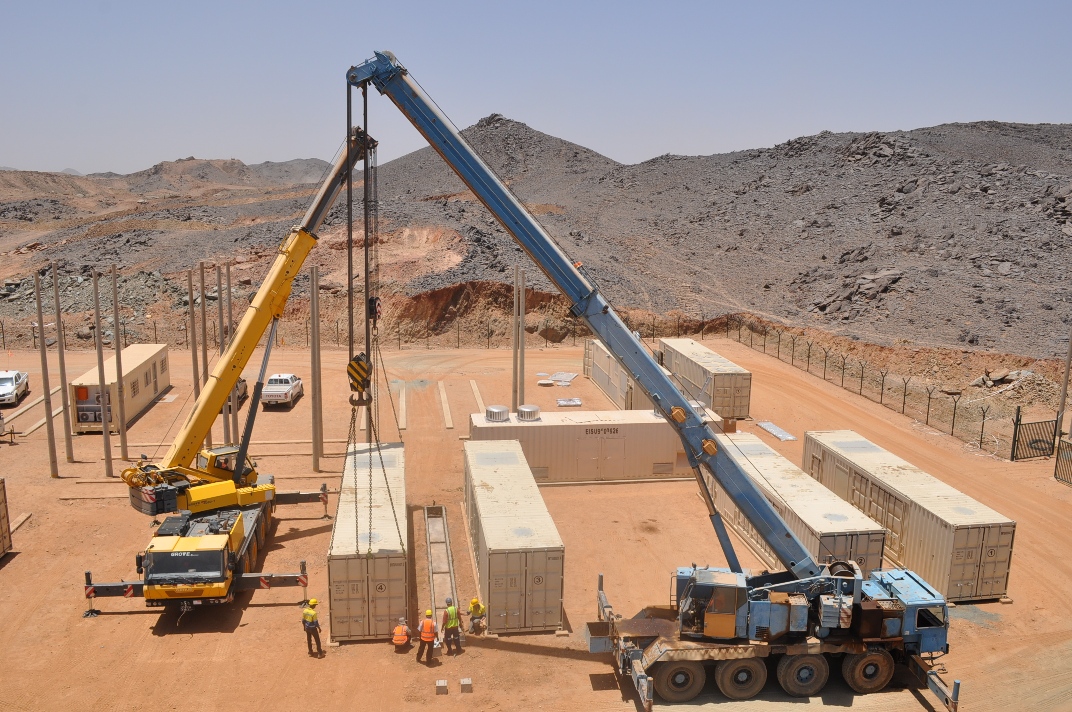
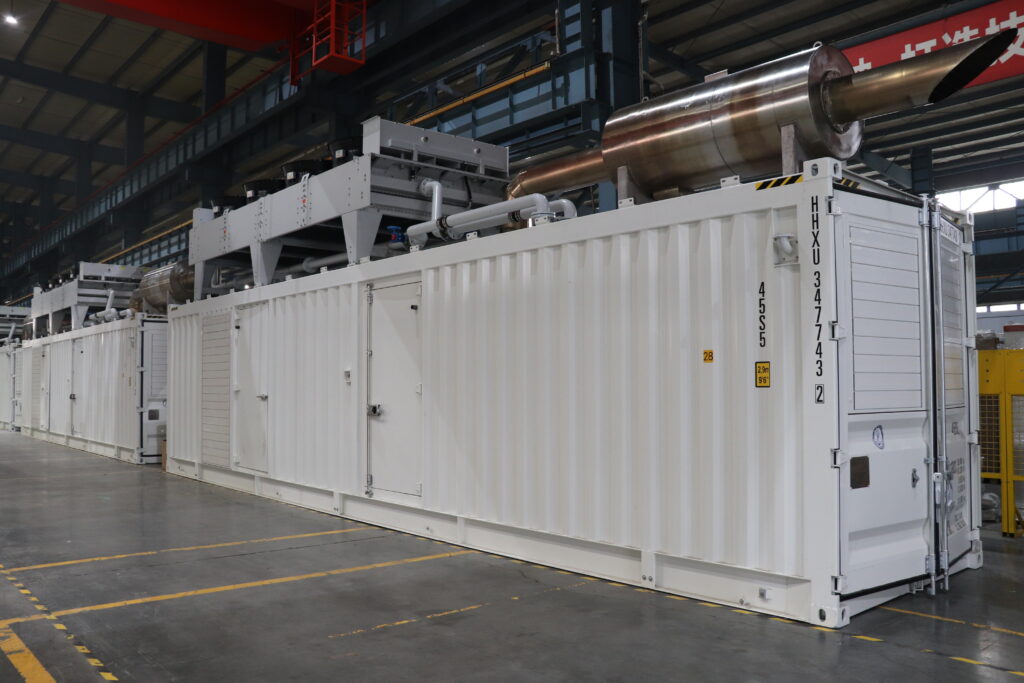
A containerized genset simplifies much of that process because the enclosure itself functions as a transport-ready structure.
Transportation Advantages
ISO-standard dimensions simplify:
- Sea freight loading
- Port crane handling
- Truck transportation
- Intermodal logistics
- Cross-border shipment coordination
For EPC contractors working across multiple countries, transport standardization reduces both project risk and mobilization complexity.
Faster Deployment at Remote Sites
One reason containerized power solutions are widely used in temporary infrastructure projects is deployment speed.
Typical installation procedures may involve:
- Positioning the container
- Connecting the fuel supply
- Connecting load cables
- Performing commissioning checks
- Starting synchronized operation
Compared with building a dedicated generator room onsite, the time savings can be substantial.
Containerized Genset vs Open-Type Diesel Generator
The decision between an open-frame generator and a containerized diesel generator usually depends on deployment conditions.
For indoor generator rooms with permanent infrastructure, open-type units may still be practical. For outdoor industrial applications, containerized systems generally provide stronger operational flexibility.
| Comparison Item | Containerized Genset | Open-Type Diesel Generator |
|---|---|---|
| Outdoor operation | Fully integrated weather protection | Additional shelter required |
| Transportation efficiency | ISO container compatible | More complex logistics |
| Noise reduction | Integrated acoustic design | Separate canopy often needed |
| Deployment speed | Faster onsite commissioning | More installation work |
| Equipment security | Better physical protection | Exposed components |
| Remote project suitability | Highly suitable | Limited protection |
Many industrial operators now treat the enclosure as part of the power system rather than an optional accessory.
Common Applications for Containerized Gensets
Data Center Backup Power
Modern data centers require highly reliable industrial backup power systems capable of fast response during utility failure.
Containerized gensets are commonly selected because they support:
- Synchronization systems
- N+1 redundancy
- Modular expansion
- Outdoor installation flexibility
Construction and Infrastructure Projects
Large infrastructure developments often require temporary power before permanent electrical systems are completed.
A containerized generator can move between project phases with relatively little dismantling work.
Oil and Gas Operations
Oil field applications often involve remote locations with harsh environmental exposure and limited utility infrastructure.
Containerized diesel generators are frequently used for:
- Drilling support power
- Field camp electrification
- Pipeline operations
- Temporary production facilities
Mining Operations
Mining facilities value containerized gensets because they support:
- Long continuous runtime
- Dust-resistant operation
- Modular power expansion
- Simplified transportation
How to Select the Right Containerized Genset
Generator sizing alone does not determine whether a power system will perform well on an industrial project.
Environmental conditions, operating profile, synchronization requirements, and maintenance accessibility all affect long-term reliability.
Key Selection Factors
Before selecting a containerized genset, buyers usually evaluate:
- Continuous load demand
- Peak motor starting requirements
- Site temperature conditions
- Fuel autonomy requirements
- Noise restrictions
- Future expansion plans
For synchronized genset projects, scalability planning is particularly important because additional generators may need to integrate later.
Remote Monitoring Considerations
Remote monitoring systems have become increasingly important for industrial fleet management.
Operators can remotely monitor:
- Fault alarms
- Load conditions
- Fuel consumption
- Maintenance intervals
For remote industrial projects, this improves response speed and reduces unexpected downtime risk.
Industrial Power Projects Are Moving Toward Modular Power Systems
Large industrial projects are gradually shifting away from traditional fixed generator installations.
Several factors are driving this transition:
- Faster project mobilization
- Reduced onsite construction
- Better transportation efficiency
- Increased power scalability
- Improved operational flexibility
Containerized gensets fit naturally into this trend because the system can function as a transportable modular power station rather than a permanently constructed facility.
Hybrid energy integration, intelligent load management, and cloud-based remote monitoring are also becoming more common in modern containerized power systems.
For many industrial operators, the containerized genset is no longer simply a generator package. It has become part of a broader infrastructure strategy focused on flexibility, deployment speed, and operational reliability.
FAQ
What is a containerized genset?
A containerized genset is a diesel generator system integrated inside a standardized ISO container enclosure for transportation, outdoor operation, and industrial power deployment.
What are the advantages of containerized generators?
Main advantages include rapid deployment, weather protection, transport efficiency, noise reduction, and simplified installation for industrial applications.
Are containerized gensets suitable for outdoor use?
Yes. Most containerized generator systems are specifically engineered for outdoor operation in harsh environmental conditions.
How noisy is a containerized diesel generator?
Noise levels vary by generator size and acoustic configuration, but silent containerized generators are designed to reduce engine, exhaust, and airflow noise significantly.
Can containerized gensets be customized?
Yes. Common customization options include fuel tank size, synchronization systems, sound attenuation level, remote monitoring capability, and container dimensions.
What industries commonly use containerized generators?
Mining, oil and gas, construction, telecommunications, data centers, manufacturing, and power rental industries commonly use containerized diesel generators.
Industrial power generation has moved far beyond the traditional concept of a stationary generator installed inside a fixed equipment room.
Modern projects demand systems that can be transported efficiently, deployed quickly, operated outdoors, and expanded as power requirements change.
A containerized genset addresses those requirements by integrating power generation, acoustic treatment, weather protection, and transportability into a single industrial platform.
That combination explains why containerized power solutions are now widely used across mining operations, infrastructure projects, industrial backup power systems, and international EPC developments where operational reliability and deployment speed remain critical priorities.