Selecting prime power generators for remote mining operations requires balancing continuous electrical loads, site environmental derating factors, structural durability, and complex fuel logistics. Mine engineers must calculate motor starting kVA against running kW requirements. Proper equipment sizing maintains a 70%–80% ideal load factor to avoid engine wet stacking while maximizing fuel efficiency. Rugged enclosures demand IP44+ ingress protection against severe ambient dust and rain. Procurement managers must evaluate EPA emissions compliance alongside local dealer technical support. These critical parameters ensure reliable off-grid continuous power.
Sizing Prime Power Generators for Mine Loads
Calculating Motor Starting kVA and Running kW
Selecting prime power generators begins with a thorough load inventory. Engine drivers, electrical loads, and site technicians must record running kW, operating power factor, and starting kVA for every piece of heavy machinery.
When a three-phase induction motor starts direct-on-line, it draws 5–7 times its running current with a low power factor between 0.20 and 0.35. This dramatic surge boosts the starting kVA demand to 2.5–3.5 times the motor’s normal running kVA. Because of this high current, engineers must size the generator set to handle extreme voltage dips during start-up.
| Mining Load Type | Typical Motor Size (kW) | Starting kVA Factor | Generator Impact |
|---|---|---|---|
| Ventilation fan | 55–200 | 2.0–3.0 | Requires high starting current; soft starter may reduce impact |
| Crusher | 90–315 | 2.5–3.5 | Largest shock load; generator must be oversized |
| Dewatering pump | 37–132 | 1.8–2.5 | Continuous load with moderate starting surge |
| Conveyor | 18–90 | 1.5–2.0 | Multiple conveyors start sequentially; sequential starting reduces peak |
Site engineers calculate starting requirements by examining motor parameters on the nameplate.
| Calculation Method | Formula | Example Application |
|---|---|---|
| Using NEMA Code Letter | Starting kVA = Motor HP × Code Letter kVA/HP |
For a 20 HP, Code G motor (6.29 kVA/HP): Starting kVA = 20 × 6.29 = 126 kVA. |
| Using Locked Rotor Current (LRA) | Starting kVA = LRA × Voltage × √3 |
If LRA is known from the nameplate, this formula directly calculates the starting kVA requirement. |
Under ISO 8528-1 standards, Prime Power (PRP) ratings allow continuous operation under variable load for unlimited annual hours, provided the average 24-hour load factor remains equal to or below 70% of the PRP rating.
Managing Load Factors and Paralleling Strategies
For prime power generators in mining applications, the recommended ideal load factor range to prevent wet stacking is 70–80% of rated capacity. Operating below 50% load leads to incomplete combustion, unburnt fuel buildup, and severe carbon deposits inside exhaust manifolds. Annual load bank testing helps mitigate these issues if low-load operations cannot be avoided.
A paralleling strategy splits large site demands across multiple smaller generator units. This approach optimizes fuel consumption, increases system redundancy, and avoids light-load operation.
| Time Period / Load Demand | Single Large Generator (1000 kW) | Parallel System (Three 400 kW Generators) | Key Efficiency Insight |
|---|---|---|---|
| Overnight (200 kW) | Operates at 20% load (inefficient, wasteful fuel use) | Runs one generator at 50% load | Matches capacity to actual load, avoiding low-load inefficiency. |
| Business Hours (600 kW) | N/A | Runs two generators at a combined 75% load | Adds capacity as needed, keeping units in efficient operating range. |
| Peak Production (900 kW) | N/A | Runs three generators online | Meets high demand without a single unit being over-stressed or under-loaded. |
Paralleling delivers four concrete operational benefits for remote sites:
- Efficiency: Load distribution allows units to operate within their most efficient fuel curve.
- Extended Equipment Lifespan: Balanced wear prevents overloading individual engines, reducing unexpected component failures.
- Scalability: Operators can scale total generation capacity by adding modular units as mine development expands.
- Application in Remote Locations: Multi-generator systems guarantee continuous power during routine engine maintenance without shutting down essential mining loads.
Accounting for Site Environmental Derating
Altitude and Temperature Power Loss
Environmental conditions at remote mine locations directly impact engine performance. Power equipment experiences reduced capacity in high-altitude environments above 1,000 meters elevation. Thin air contains less oxygen, reducing combustion efficiency inside engine cylinders. General engineering standards show that diesel generator power drops by approximately 8–12% for every 1,000 meters increase in altitude.
Altitude and ambient temperature determine engine derating, cooling margin, and enclosure ventilation needs — confirming that these site conditions are critical inputs for sizing prime power generators in mining.
Engineers apply mathematical derating factors to calculate true site capacity before purchasing equipment. High ambient temperatures further reduce air density, compounding high-altitude power losses. For example, combining site elevation, extreme heat, and humidity effects can result in a 15% total derating factor.
- Convert derating percentage to a factor:
1 - 0.15 = 0.85. - Apply the factor to an 800 kW base rating:
Available output = 800 × 0.85. - Resulting capacity: Available output equals 680 kW under site conditions.
Dust Filtration and Advanced Cooling Systems
Heavy airborne dust presents severe operational challenges for mining machinery. Airborne particulate matter clogs air intake systems, accelerates internal engine wear, and reduces thermal performance. Mine operators protect power equipment by installing three-stage filtration systems:
- Cyclonic Pre-Cleaner: Spins incoming air to remove 80–90% of coarse dust particles.
- Dual-Element Air Cleaner: Traps fine particulates using primary and safety filter elements.
- Air Restriction Indicator: Provides mechanical or electronic warnings when filters clog.
Proper air intake positioning further shields engine intakes from heavy ground-level dust near haul roads, crusher discharge points, and active blast zones. Specialized heavy-duty radiators protect engines from thermal shutdown during continuous load cycles.
| Design Feature | Specification / Detail | Performance Benefit in Dusty Mines |
|---|---|---|
| Core Material | Copper-Brass | Durable and field-repairable, reducing downtime in remote locations |
| Fin Structure | Wide-spacing tube-and-fin | Prevents rapid dust fouling, maintaining heat transfer efficiency |
| Surface Treatment | Anti-dust and corrosion coating | Improves abrasion resistance against mineral dust and debris |
Selecting Structural Durability and Enclosures
Ingress Protection Ratings and Weatherproofing
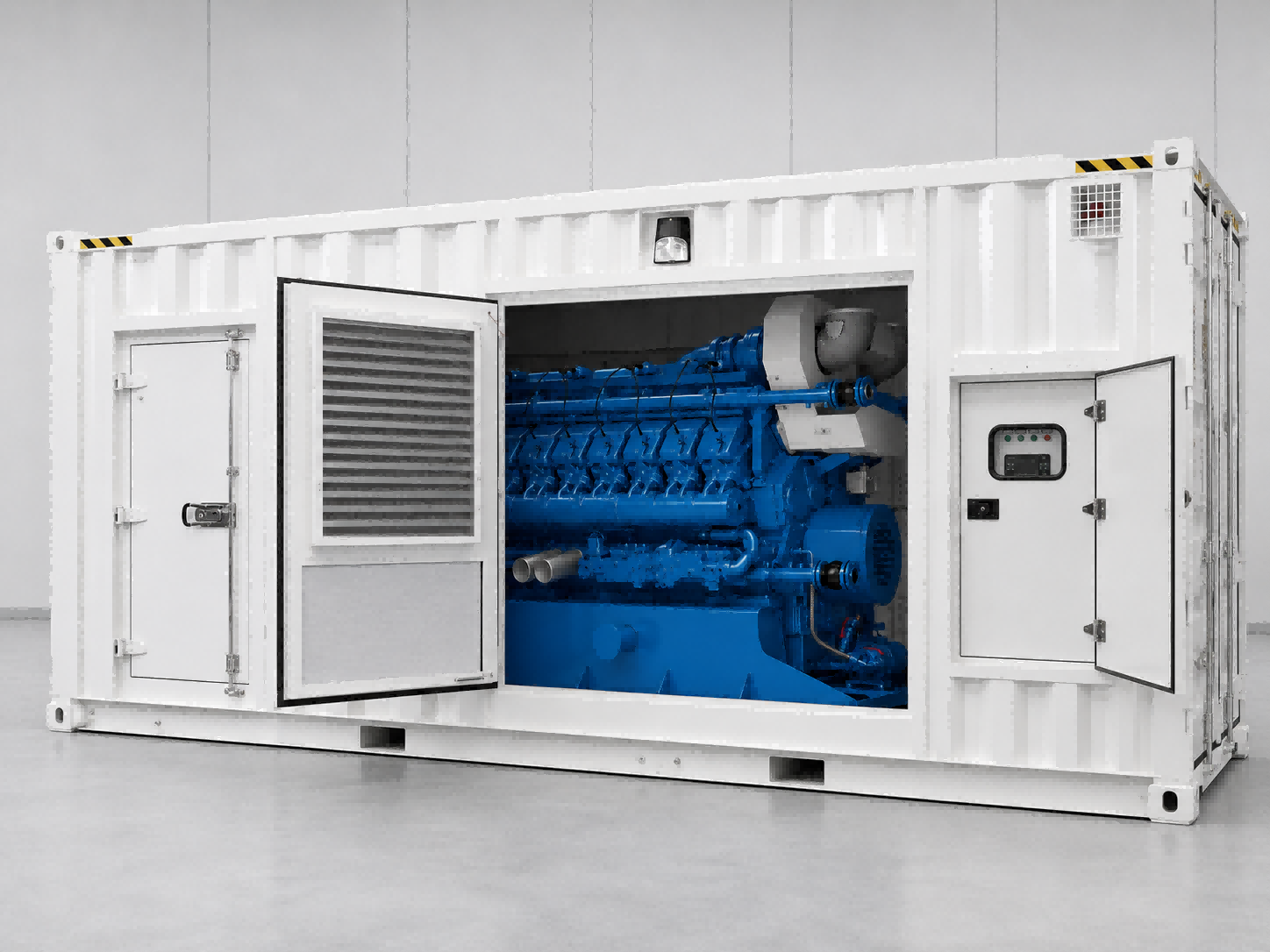
Mining environments feature severe ambient conditions like dense mineral dust and heavy rain. Protective enclosures isolate engine alternators and sensitive control circuitry from destructive external elements. High-quality weatherproofing prevents premature structural corrosion and hazardous short circuits on remote off-grid job sites. Sound-attenuated metal canopies also suppress operational noise levels, protecting site personnel working nearby.
Standard industrial enclosures often fail when deployed in active open-pit mines or processing plants. Fine particulate matter breaches basic cabinet seals, causing rapid wear on electrical components. Mine operators specify sealed enclosures designed to withstand direct weather exposure and airborne dust storms.
IP65 is the applicable standard for mining environments. The ‘6’ provides complete dust protection and the ‘5’ protects against low-pressure water jets. Its use case is specifically listed as ‘Dust-heavy areas like cement plants, mining, and agriculture.’
| IP Digit | Protection Level | Meaning for Generator Enclosures |
|---|---|---|
| First Digit: 6 | Solids/Dust Protection | ‘Complete protection from dust; dust tight’ – This is the highest level of dust ingress protection. |
| Second Digit: 5 | Moisture/Water Protection | ‘Low pressure jets of water. Limited ingress expected’ – This protects against water exposure common in industrial sites. |
Heavy-Duty Skid Mounts and Isolation
Frequent relocation across unpaved site roads subjects mining power units to severe mechanical stress. Heavy-duty structural steel skid bases distribute equipment weight evenly across uneven surfaces. Integrated drag points allow field crews to pull generator modules across rough pit floors safely. Reinforced bunded bases underneath the skid frame catch fluid leaks, preventing fuel or oil contamination on site grounds.
Vibration isolation systems further safeguard internal components from dynamic operational loads. Heavy steel frames absorb ground shocks during haulage across unmaintained access paths. These structural enclosures maintain internal alignment between the engine crankshaft and alternator shaft during heavy transport operations.
Anti-vibration isolators decouple the engine alternator assembly from the main chassis frame. Elastomeric dampers absorb continuous operational vibrations produced during baseline power generation cycles. These rubber mountings shield mounted digital control panels, sensitive sensor wiring, and rigid exhaust piping from structural fatigue. Proper vibration isolation protects delicate electronics and extends overall machinery service life during continuous prime power duty.
Evaluating Fuel Flexibility and Total Cost
Diesel vs Gaseous Fuel Operations
Remote mining sites often face severe supply chain logistics and high fuel transport costs. Traditional off-grid operations rely heavily on imported diesel fuel. Modern project managers frequently turn to local alternative gaseous fuels like coal mine gas, associated gas, or natural gas. Modular gas production can reduce operational expenditure by 50% to 70% compared to conventional diesel generators in remote regions with high transport premiums.
Dual-fuel systems provide continuous operation during variable gas supplies. Engines like the Cat 3516 DGB use Dynamic Gas Blending technology to substitute up to 70% of diesel fuel with gas. Dedicated gas engines maximize resource utilization further. The Jenbacher Type 2 Gas Generator Set (250-330 kWe), integrated by SWT, features an inline 8-cylinder J208 model with a 16.6-liter displacement. This system achieves up to 39.7% electrical efficiency on variable fuel supplies.
Analyzing Heat Recovery and Lifecycle Costs
Selecting gas-fueled prime power generators delivers substantial financial advantages across long production cycles. Converting waste coal mine gas into electricity produces $8 million to $10 million in annual operating cost reductions. This operational strategy generates $89 million in total savings over an 11-year mine life. The installation involves an incremental capital cost of $2.6 million over diesel units, achieving a full payback period in four months. Gas utilization also drives a 43% reduction in greenhouse gas emissions.
Combined Heat and Power configurations maximize total fuel efficiency by capturing engine jacket water and exhaust heat. Thermal exchangers convert this recovered energy into useful thermal energy for mine camp facilities, water treatment, and mineral processing. SWT supplies complete gas generator set integration, providing remote monitoring, gas pre-treatment, and full Engineering, Procurement, and Construction services for industrial sites. Efficient heat recovery dramatically lowers overall operating expenses and long-term Total Cost of Ownership.
Ensuring Compliance, Maintenance, and Support
EPA Emissions Standards and Local Regulations
Off-grid continuous power installations must comply strictly with local environmental regulations and EPA emission standards. Site managers avoid legal penalties and environmental hazards by deploying fully certified power equipment. Proper engine selection directly impacts site compliance, especially in remote regions with strict air quality guidelines.
Proper load management ensures long-term regulatory compliance and engine health. Operating prime power generators within an optimal 70–80% load band guarantees complete fuel burn inside combustion chambers. This load range prevents engine wet stacking, which occurs when unburnt fuel clogs fuel injectors and exhaust manifolds during light loading.
| Operational Condition | Primary Consequence | Impact on Service Life & Wet Stacking |
|---|---|---|
| Light Loading (30–40%) | Incomplete combustion, carbon deposits | Causes wet stacking and increases operating costs. |
| Optimal Loading (70–80%) | Complete fuel burn, moderate stress | Prevents wet stacking and maximizes equipment service life. |
| Excessive Loading (Above 90%) | Accelerated wear on internal components | Increases maintenance frequency and causes premature engine failure. |
Dealer Network Support and Telemetry
Unplanned downtime severely damages project profitability in isolated mining areas. Strong local dealer support mitigates operational risks through fast spare parts delivery. Standard critical components typically arrive within 24–48 hours in North America. Experienced integrators like SWT provide complete system integration, gas pre-treatment, and end-to-end Engineering, Procurement, and Construction services to maintain continuous site power.
Cellular telemetry systems further enhance predictive maintenance capabilities for off-grid power units. Modern monitoring platforms export operational data using standard open protocols like Modbus RTU or MQTT to prevent vendor lock-in. These digital platforms transform raw diagnostic metrics into actionable maintenance insights for site operators.
- Early Fault Detection: Tracks subtle changes in engine vibration, temperature, and abnormal fuel consumption.
- Prescriptive Maintenance: Recommends precise inspection sequences to increase first-time repair rates.
- Improved Fleet Utilization: Keeps mining equipment operational for longer periods through continuous data-driven insights.
Engineers and procurement heads select optimal generators by following a structured framework. First, calculate starting kVA and running kW to prevent voltage dips. Next, apply environmental derating factors for high altitudes and extreme site temperatures. Operators must then choose IP44+ enclosures with heavy-duty skid mounts to resist severe dust and vibration. Evaluating fuel options like natural gas or coal mine gas lowers long-term operational costs. Finally, confirm strong local dealer support to avoid costly project downtime.
- ISO 8528 PRP rating and continuous load profile
- Site altitude, maximum ambient temperature, and calculated derating factor
- Enclosure ingress protection rating (IP44+ or IP65)
- Fuel source specification (diesel, natural gas, or coal mine gas)
- Dealer support SLA for emergency parts delivery