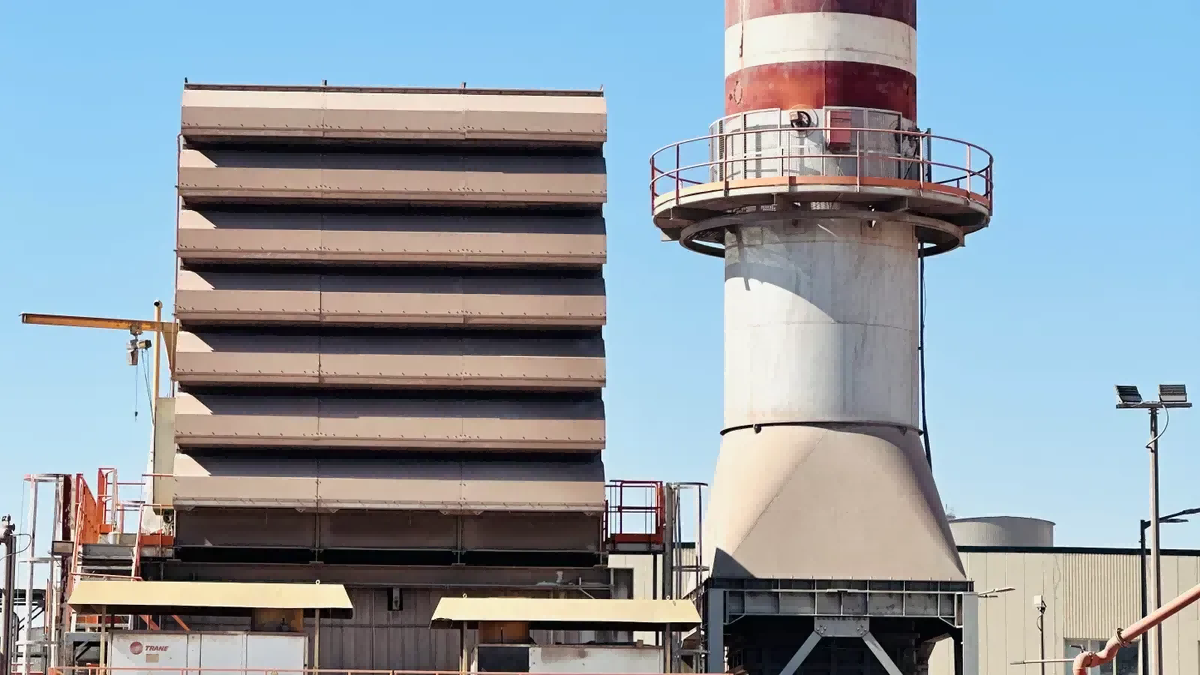
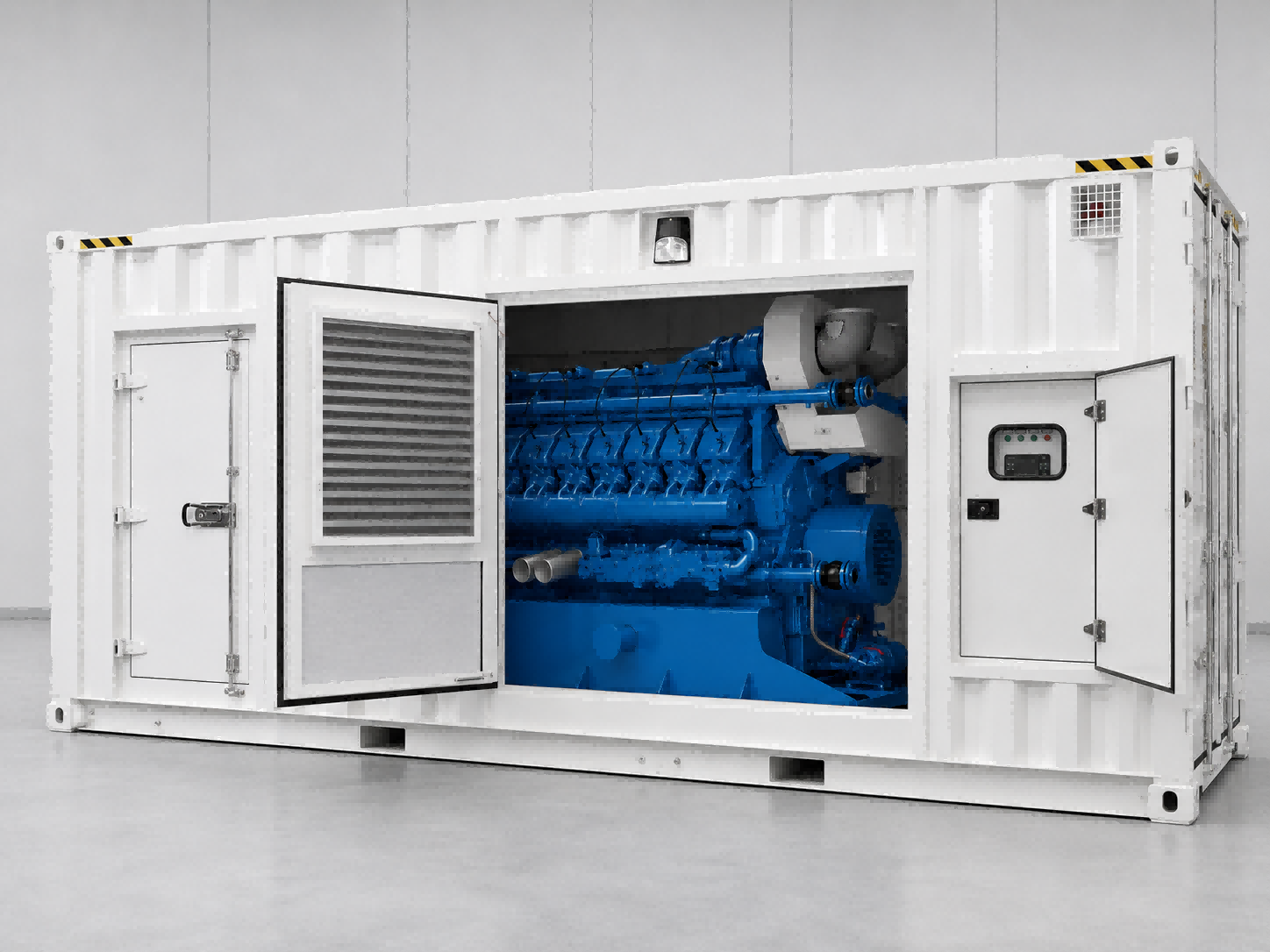
Resilient power systems for AI computing sites depend on advanced cooling, modular infrastructure, integrated power solutions, and sustainable backup. High reliability and efficiency are essential because almost half of data center outages result from onsite power system failures.
- Power failures accounted for 36% of major global outages since 2016.
- Power remains the leading cause of impactful outages, making up 45% of incidents in 2025.
AI computing sites face much higher power density requirements compared to traditional data centers:
| Type of Data Center | Power Density (kW per rack) |
|---|---|
| Traditional | 5–15 |
| AI | 40–80+ |
SWT offers trusted generator sets and power equipment, backed by strong service and support teams, to help ensure reliable operation in these demanding environments.
Designing Resilient Power Systems
Power Demand in AI Computing Sites
AI computing sites require much higher power than traditional data centers. These facilities often need power capacities that exceed 100 megawatts. Some campuses plan to scale up to the gigawatt level. IT hardware equipment uses a large share of electricity. In standard data centers, IT equipment accounts for 40-50% of total consumption. In AI data centers, this share rises above 60%. AI computing racks can reach power densities of 30-100 kilowatts per rack, which is much higher than the 7-10 kilowatts seen in traditional server racks.
AI workloads show high variability. Power demand can fluctuate sharply, sometimes changing by hundreds of megawatts within seconds. This makes planning and management more complex.
AI data centers are often located in regions with low electricity prices. In 2023, fifteen states in the U.S. accounted for about 80% of total data center demand.
- Modern hyperscale AI facilities require power capacities exceeding 100 MW.
- AI racks can reach power densities of 30-100+ kW per rack.
- Power demand fluctuates sharply, sometimes by hundreds of megawatts within seconds.
- IT hardware uses more than 60% of total electricity in AI data centers.
The table below shows how power consumption differs between server types:
| Type of Server | Power Consumption (Watts) |
|---|---|
| Traditional CPU servers | 300-500 |
| GPU-accelerated servers | 3,000-5,000+ |
| AI training clusters | Can exceed 10,000 |
AI workloads require specialized hardware that consumes much more electricity. Conventional data centers handle cyclical workloads with predictable peaks. AI facilities support continuous, maximum-capacity operations.
Electrical & Mechanical Integration
Building resilient power systems for AI computing sites means integrating electrical and mechanical systems from the start. Teams must treat power, cooling, and architecture as one system. This approach helps facilities adapt as AI technologies and densities change.
- Adopt integrated design from concept through commissioning.
- Design for adaptability and revisit assumptions often.
- Match cooling strategies to workload density, using liquid cooling for high-density AI racks.
- Evaluate higher-voltage power distribution, such as 800 VDC, for extreme rack densities.
- Consider site context, including climate, water availability, grid capacity, and seismic conditions.
- Strengthen structural and safety systems to support heavier racks and extensive liquid infrastructure.
- Use modular and off-site construction to speed up delivery and allow phased expansion.
- Prioritize mission-critical requirements.
Design-build projects deliver results about 30% faster than traditional models. This reduces downtime and improves reliability. Integrated designs allow better communication among engineers, electricians, and field teams. This minimizes miscommunication and rework. Aligning electrical design with mechanical and production systems eliminates redundancies and enhances system reliability.
Performance Modeling & Optimization
Modeling and simulation play a key role in optimizing resilient power systems for AI computing sites. These techniques help predict power demand, monitor system health, and improve efficiency.
| Modeling Technique | Description |
|---|---|
| Predictive Maintenance | Uses condition-based monitoring and failure prediction to reduce outages and extend asset lifespan. |
| Load Forecasting | Applies machine learning for accurate demand prediction, improving grid reliability and reducing costs. |
| Renewable Generation Forecasting | Predicts output variability to improve integration of renewable sources and reduce unpredictability. |
| Fault Detection and Anomaly Recognition | Enhances system monitoring with adaptive detection methods, reducing response time during anomalies. |
| Grid Stability and Contingency Analysis | Identifies high-risk scenarios and strengthens resilience in high-renewable environments. |
| Energy Optimization and Dispatch Strategies | Improves economic efficiency through optimal power flow and real-time grid balancing. |
Simulation tools can reproduce typical AI power patterns using configurable load profiles. They offer different modes for complex test scenarios. Real-time monitoring provides detailed reports on infrastructure response to power demands. These tools support tests from single racks to full-scale infrastructure with both AC and DC configurations.
Simulation results help teams optimize system design and operation. They provide insights that guide research and development, making power systems more resilient and efficient.
Advanced Cooling Solutions
Liquid Cooling
Liquid cooling has become essential for AI computing sites. This technology uses water or specialized fluids to absorb heat directly from processors and other components. It supports rack densities above 100 kW, which is much higher than traditional air cooling. Liquid cooling systems reduce cooling energy use by up to 90%. They also improve energy efficiency by up to 40%. Facilities that use liquid cooling can lower their overall power consumption by 15.5%. Processing capacity increases by up to 120% when compared to air cooling.
| Metric | Liquid Cooling | Air Cooling |
|---|---|---|
| Cooling energy use reduction | Up to 90% | N/A |
| Energy efficiency improvement | Up to 40% more | N/A |
| Processing capacity increase | Up to 120% more | N/A |
| Rack density support | 100kW and above | N/A |
| Whole data center power use | 15.5% lower | N/A |
Liquid cooling enables higher performance and greater efficiency for AI workloads.
Immersion Cooling
Immersion cooling takes efficiency a step further. In this method, servers are submerged in a non-conductive fluid. This eliminates the need for server fans and allows for even higher power densities. Immersion cooling reduces operational costs significantly. Cooling a 64-rack AI cluster over ten years costs $28 million with immersion cooling, compared to $31 million for liquid cooling and $42 million for advanced air cooling. Immersion cooling also reduces real estate footprint by 60–75%.
- Immersion cooling offers:
- Lower operational costs
- Smaller facility footprint
- Improved Power Usage Effectiveness (PUE) between 1.03–1.08
Immersion cooling is ideal for sites with limited space and high-density AI hardware.
Cooling Integration with Power Systems
Integrating cooling systems with power infrastructure improves energy efficiency and operational reliability. Advanced liquid cooling can save 60–80% of cooling energy. Direct-to-chip cooling increases processing efficiency by 12%. Immersion cooling handles higher power densities and removes the need for server fans.
| Cooling Technology | Energy Savings (%) | Operational Benefits |
|---|---|---|
| Advanced liquid cooling | 60–80% | Reduces cooling energy consumption, lowers server energy usage by 5–10% |
| Direct-to-chip cooling | 12% | Increases processing efficiency compared to air cooling |
| Immersion cooling | N/A | Handles higher power densities, eliminates need for server fans |
Efficient cooling integration supports stable power delivery and maximizes uptime for AI computing sites.
Modular Infrastructure
Scalable Power Modules
Scalable power modules help AI computing sites meet growing demands. Operators can add new modules as workloads increase. This approach supports high rack densities, reaching up to 150 kW per rack. Daniel Robbins, Executive Director at RakworX, notes that modular data centers offer flexibility. Organizations can start small and expand as needed. This flexibility addresses the limits of traditional setups.
- 61% of data center operators now prioritize immediate power availability.
- Modular designs allow quick deployment and adaptation to changing AI workloads.
| Metric | Value |
|---|---|
| Rack density (traditional) | 5–10 kW |
| Rack density (current) | 100–120 kW |
| Modular Data Center support | 120–150 kW per rack |
| Total IT capacity | Up to 76.8 MW |
Scalable modules form the backbone of resilient power systems. They enable facilities to respond quickly to new AI projects.
Containerized Solutions
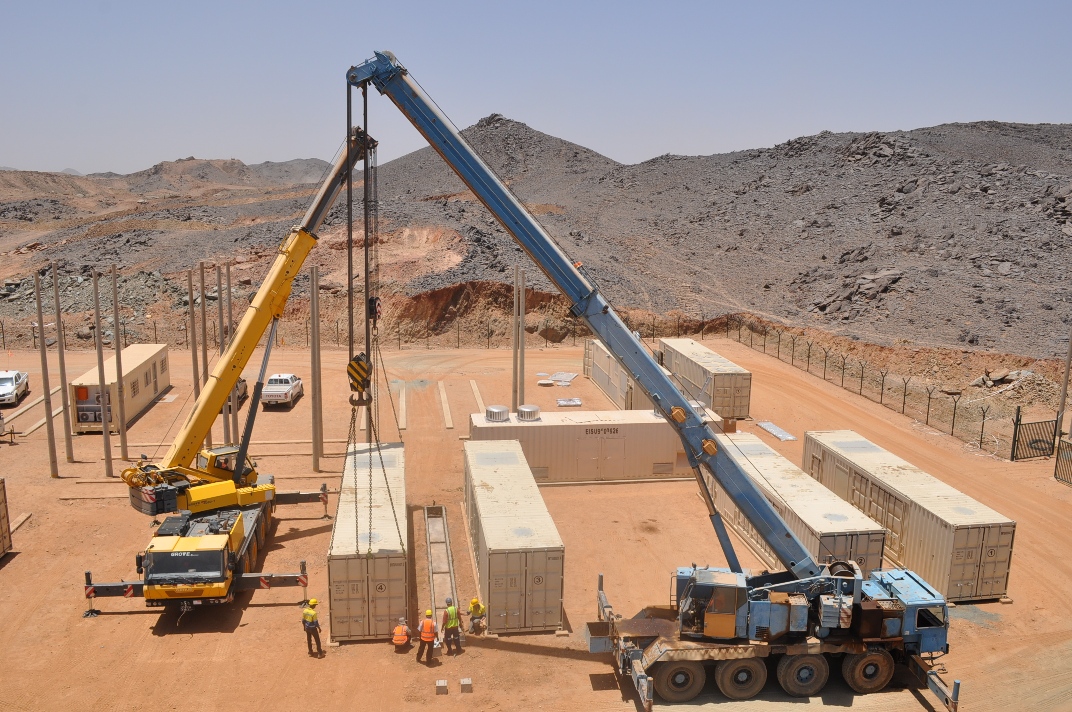
Containerized solutions use prefabricated units that arrive ready for installation. These units can be relocated or expanded as needed. Factory pre-assembly compresses the timeline, making deployment faster than traditional methods. Research shows modular approaches can reduce deployment times by up to 50%.
| Factor | Container Data Center | Traditional Data Center |
|---|---|---|
| Deployment Timeline | Significantly faster; factory work runs in parallel with site prep | Extended construction timeline; sequential phases |
| Scalability | Add units incrementally as demand grows | Requires planning for peak future demand |
| Portability | Can be relocated with crane/truck | Permanent structure |
Containerized solutions offer flexibility and speed. They support rapid scaling and site adaptation.
Rapid Deployment
Rapid deployment is critical for AI computing sites. Modular infrastructure reduces deployment time by 40–50% compared to traditional builds. Modular data centers typically take 6 to 9 months from order to commissioning. Traditional builds can take 18 to 36 months. Some edge labs in Europe completed on-site work in just 2 days. Multi-megawatt expansions have achieved 4.9 MW with only 3 months of on-site work.
- Modular infrastructure enables faster commissioning.
- Simpler single-unit deployments finish even quicker.
- Facilities can scale up without long construction delays.
Resilient power systems depend on modular infrastructure for speed and flexibility. This approach ensures AI computing sites stay ahead of demand.
Integrated Power Systems
On-site Generation (Diesel, Gas, Renewables)
AI computing sites depend on robust on-site generation to maintain continuous operations. Diesel and gas generator sets provide immediate backup during grid outages. Renewable sources, such as solar and wind, help reduce carbon emissions and support sustainability goals. SWT generator sets and power equipment deliver reliable power generation, backup, and maintenance. Their solutions adapt to the high demands of AI workloads. SWT’s regional service centers, including the Middle East Service Center in Dubai, ensure fast response and ongoing reliability. Qualified engineers offer installation guidance, commissioning support, and genuine spare parts supply.
Ongoing support and maintenance minimize downtime. Genuine parts enhance performance and reliability. Collaboration among brands, distributors, engineers, and technicians ensures dependable power solutions throughout the lifecycle.
Battery Storage & Microgrids
Battery energy storage systems (BESS) and microgrids strengthen resilient power systems for AI computing sites. These technologies stabilize power supply and manage energy volatility. Aligned Data Centers deployed a 31 MW battery storage system in Oregon, allowing faster online operations and bypassing utility upgrades. Grid-responsive batteries discharge during peak demand, supporting low-carbon and resilient infrastructure.
- Data centers require stable power to maintain uptime and performance.
- Battery storage reacts to power disturbances more effectively than traditional solutions.
- Campus-level battery deployment manages energy volatility and ensures a stable supply.
- Integration of BESS enables faster interconnection approvals.
Microgrids combine local generation, storage, and control systems. They provide flexibility and resilience, especially during grid disruptions.
Solid-State Transformers & Circuit Breakers
Solid-state transformers (SSTs) and advanced circuit breakers improve efficiency and scalability in AI data center power systems. SSTs achieve up to 99% conversion efficiency, reducing energy losses. Their compact design makes them up to 14 times smaller and 40 times lighter than conventional transformers. SSTs handle higher power densities and support rapid deployment with modular components.
| Advantage | Description |
|---|---|
| Increased Efficiency | SSTs reach up to 99% conversion efficiency, reducing energy losses. |
| Reduced Size and Weight | SSTs are up to 14 times smaller and 40 times lighter than traditional units. |
| Improved Scalability | Modular, mass-produced SSTs enable faster deployment. |
| Higher Power Densities | SSTs support the energy-intensive demands of AI data centers. |
Advanced circuit breakers protect equipment and maintain system stability. These technologies help AI computing sites achieve high reliability and performance.
Backup & Sustainability
Renewable Backup Solutions
AI computing sites increasingly rely on renewable energy for backup power. Solar panels and wind turbines provide sustainable alternatives to traditional diesel generators. Battery storage systems store excess energy and supply power during outages. Natural gas generators offer another option, supporting longer backup durations. These solutions help reduce carbon emissions and support environmental goals. Data centers benefit from integrating renewables with battery storage, which allows for stable operations even during grid disruptions.
SWT enhances backup reliability through warranty coverage, technical training, and remote support. Operators receive guidance on installation and maintenance. Remote monitoring and tiered support ensure quick troubleshooting and proactive issue identification. Skilled technicians can diagnose and resolve problems before they impact operations.
Waste Heat Recovery
AI workloads generate significant heat. Facilities can recover this heat and use it for practical applications:
- Building heating
- Hot water systems
- Industrial processes
- District energy networks
Reusing heat from AI servers improves energy efficiency. It lowers environmental impact and reduces strain on power grids. Waste heat recovery is a crucial part of sustainable infrastructure. By capturing and repurposing heat, data centers can support local communities and industries.
Waste heat recovery not only saves energy but also contributes to a more resilient power systems approach.
Emergency Power Strategies
Emergency power strategies are vital for minimizing downtime in AI data centers. Regular maintenance of backup systems, such as UPS units and generators, ensures continuous operation. Battery health checks, fuel supply verification, and load testing confirm system readiness. Data centers require long-duration backup power to operate during extended outages. Natural gas generators and battery storage systems are emerging as reliable alternatives.
Redundancy is essential. Dual power paths and configurations like N+1 or 2N guarantee backup availability. Power resiliency allows facilities to withstand disruptions and recover quickly. Integrating permanent and portable generators supports operational continuity during emergencies.
24/7 monitoring and remote support services help maintain backup system reliability. Proactive monitoring identifies issues before they affect business operations.
Collaboration & Flexible Design
Cross-functional Teams
Building resilient power systems for AI computing sites requires collaboration across many disciplines. Electrical engineers, mechanical engineers, IT specialists, and facility managers must work together from the earliest design stages. Each team brings unique expertise. Electrical engineers focus on power distribution and safety. Mechanical engineers design cooling and structural systems. IT specialists ensure that computing needs align with infrastructure capabilities. Facility managers oversee daily operations and maintenance. When these teams communicate openly, they can identify risks early and develop solutions that support both performance and reliability. Regular meetings and shared digital platforms help teams coordinate tasks and track progress.
Adaptive Planning
AI data centers face changing power requirements. Adaptive planning helps these facilities respond quickly and efficiently. Flexible scheduling allows operators to shift AI workloads to off-peak hours. This reduces stress on the power grid and lowers costs. Workloads can also move between data centers in different regions. This spatial flexibility lets operators use cleaner or cheaper energy sources. AI-driven controls adjust temperature and humidity in real time, which improves energy efficiency. Reinforcement learning models make small changes to airflow, keeping systems safe and reliable.
- Temporal flexibility enables rescheduling of AI workloads during off-peak hours.
- Spatial flexibility allows rerouting of workloads to regions with cleaner or less expensive energy.
- AI adaptive controls optimize energy efficiency by adjusting temperature and humidity.
- Reinforcement learning models incrementally adjust airflow to maintain safe operations.
These strategies help data centers manage power demands and maintain high reliability.
Regulatory & Grid Integration
Integrating AI data centers with regional power grids presents several regulatory challenges. Policymakers must balance economic growth with grid reliability. Many regions lack standardized electricity load profiles for data centers, which complicates planning. Cost-sharing for infrastructure upgrades and interconnection processes can be complex. Grid operators worry about the impact of large data centers on grid stability. If regulations are not well designed, consumers may face higher electricity costs.
- Effective policy frameworks are needed to balance growth and reliability.
- Standardized load profiles for data centers are often missing.
- Cost-sharing and interconnection processes can be complicated.
- Grid stability remains a concern for operators.
- Poorly implemented regulations may increase costs for consumers.
Close collaboration between data center operators, utilities, and regulators is essential. This ensures that power systems remain resilient and sustainable as AI computing grows.
Integrating advanced cooling, modular infrastructure, resilient power systems, and sustainable backup creates future-proof AI computing sites. These strategies improve operational stability and support long-term sustainability. Trusted partners like SWT deliver reliable power solutions and ongoing support. Effective coordination among teams and smart monitoring platforms enhance resilience. New innovations, such as digital twins and decentralized energy resources, optimize performance.
| Area of Innovation | Benefit |
|---|---|
| Smart-grid integration | Flexible energy consumption |
| Digital twins | Real-time system optimization |
| Decentralized energy resources | Improved grid resilience |
Continuous collaboration and innovation drive progress in power system design for AI computing sites.