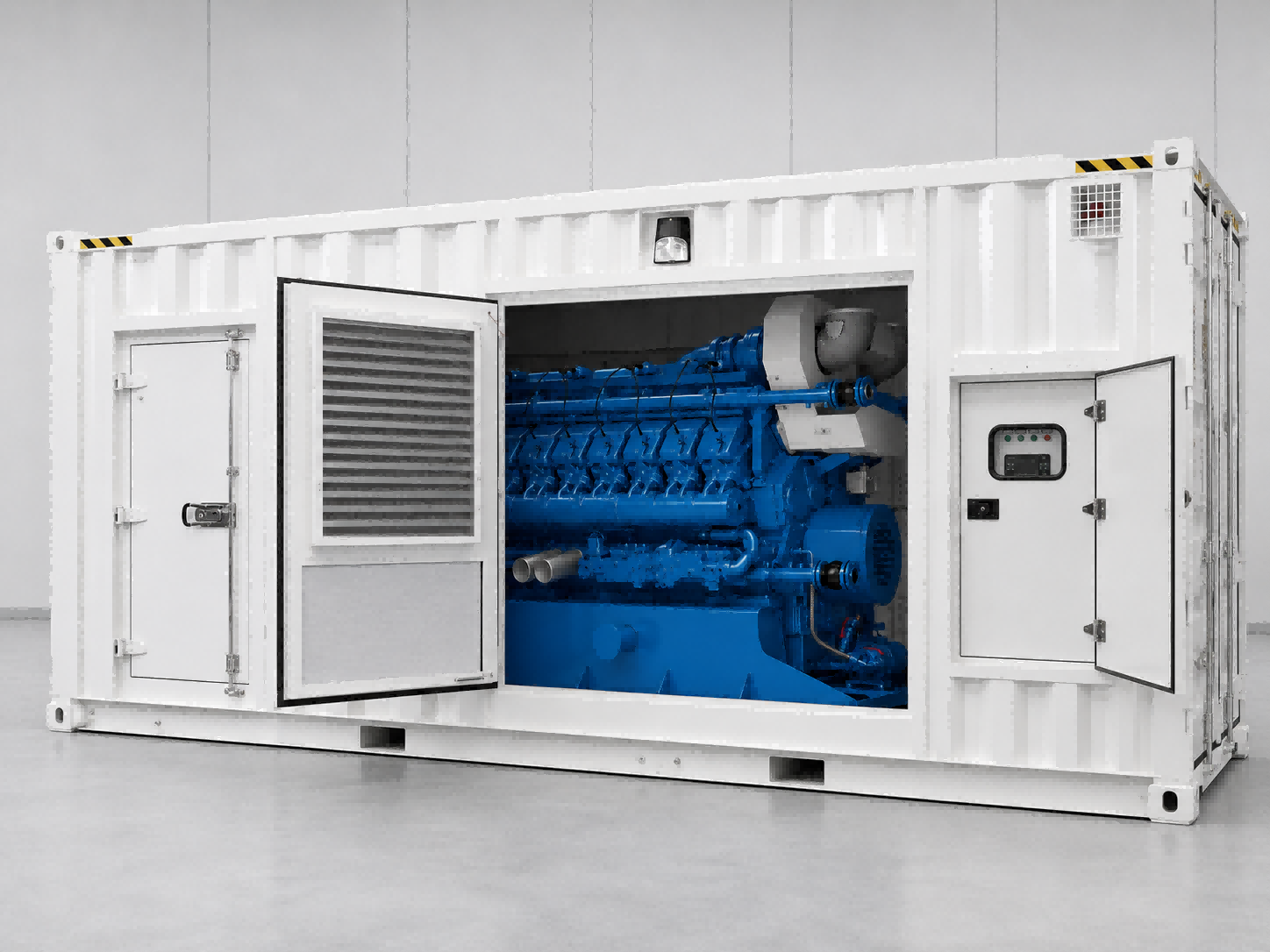
Data centers depend on reliable energy to ensure continuous operations. Leading suppliers like SWT, Aggreko, VoltaGrid, Schneider Electric, Eaton, Vertiv, ABB, Caterpillar, and Cummins offer bridge power solutions that help maintain uptime and protect critical data. Power outages often cause unplanned downtime and lost revenue for businesses. Effective strategies combine permanent systems, like backup generators, with scalable temporary support to reduce risks. Technologies in this space include diesel and gas generators, advanced battery systems, microgrids, and hybrid solutions. Schneider Electric holds a 21.4% global market share, while Eaton maintains a 12.5% share, reflecting their strong presence in the industry.
- Data centers rely on bridge power solutions to maintain uptime during outages. Choosing the right supplier is crucial for operational continuity.
- Leading suppliers like SWT, Aggreko, and Schneider Electric offer diverse products, including generators and battery systems, to meet various power needs.
- Sustainability is key. Solutions like natural gas microgrids and lithium-ion batteries help reduce environmental impact while ensuring reliable power.
- Scalability matters. Data centers should select suppliers that provide flexible solutions to adapt to growing power demands without major disruptions.
- Strong after-sales support enhances reliability. Look for suppliers that offer comprehensive maintenance and rapid response services to minimize downtime.
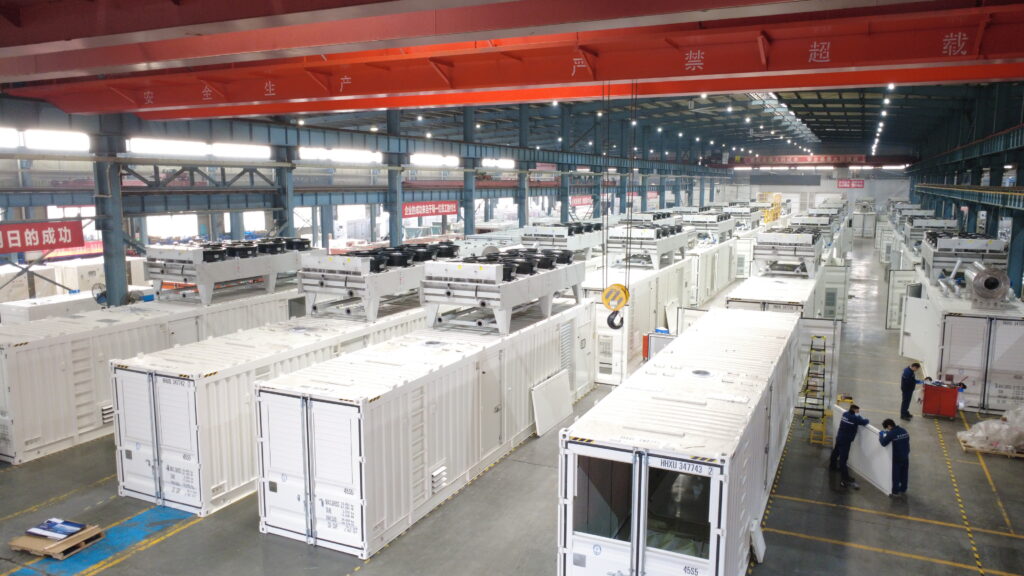
Top Bridge Power Solutions Suppliers
SWT
SWT stands out as a pioneer in the power equipment industry. The company has delivered reliable bridge power solutions for data centers since 1993. SWT offers a comprehensive range of products, including high-performance diesel generators, mobile lighting towers, and gas generator sets. Their mobile lighting towers, recognized as the world’s first LED lighting tower, improve safety and efficiency in various environments. SWT’s generator sets have proven their reliability in demanding situations, such as United Nations peacekeeping missions. The company’s integrated microgrid systems combine hydrogen, solar, storage, and gas technologies, providing adaptable and sustainable energy for critical operations. SWT serves customers in over 100 countries, earning a reputation for innovation and quality in the global market.
Aggreko
Aggreko is a global leader in temporary and bridge power solutions for data centers. The company specializes in rapid deployment of modular power systems, supporting data centers during construction, upgrades, or unexpected outages. Aggreko’s expertise spans multiple continents, as shown in the following table:
| Region | Achievement Description | Duration Covered |
|---|---|---|
| North America | Advanced operation of a 50 MW class temporary power plant | 3 years |
| Europe | Covered temporary power supply until substation enhancement | 18 months |
| Asia | Supplemented power shortages for AI/HPC expansion | Temporary solution |
Aggreko’s flexible approach ensures that data centers maintain uptime and operational continuity, regardless of location or scale.
VoltaGrid
VoltaGrid delivers advanced bridge power solutions tailored for modern data centers. The company focuses on sustainability and efficiency, using natural gas-powered microgrids and innovative control platforms. VoltaGrid’s StabilAI™ platform maintains voltage and frequency within strict limits, ensuring stable operations for high-demand environments. Key features include:
- Reduction of greenhouse gas emissions by up to 40% compared to dual-fuel sources.
- Reliable energy supply through natural gas-powered microgrids.
- StabilAI™ platform for stability and efficiency under demanding loads.
- Voltage deviation within ±5% and frequency deviation within ±2%.
- Low total cost of energy with guaranteed power quality.
VoltaGrid’s solutions support the next generation of data center power needs, combining expert consultation with advanced technology.
Schneider Electric
Schneider Electric holds a significant share of the global market for bridge power solutions. The company provides a wide array of products, including uninterruptible power supplies (UPS), modular data center infrastructure, and integrated energy management systems. Schneider Electric’s EcoStruxure platform enables real-time monitoring and optimization of power usage, helping data centers achieve both reliability and sustainability. The company’s global presence and commitment to innovation have made it a trusted partner for data centers seeking scalable and efficient power solutions.
Eaton
Eaton is a prominent supplier of bridge power solutions, known for its robust UPS systems, power distribution units, and backup generators. The company’s solutions help data centers maintain continuous operations during power interruptions or transitions. Eaton’s focus on energy efficiency and modularity allows data centers to scale their infrastructure as demand grows. With a strong reputation for quality and service, Eaton supports customers worldwide in building resilient and adaptable power systems.
Vertiv
Vertiv specializes in critical infrastructure for data centers, offering bridge power solutions that include UPS systems, power distribution, and integrated monitoring platforms. Vertiv’s products are designed for high availability and rapid deployment, supporting both large-scale and edge data centers. The company’s expertise in thermal management and remote monitoring further enhances operational reliability. Vertiv’s global service network ensures that data centers receive timely support and maintenance.
ABB
ABB brings a global perspective to bridge power solutions for data centers. The company collaborates with partners like VoltaGrid to deliver reliable and rapidly deployable power infrastructure, especially for AI workloads. ABB’s technologies, such as synchronous condensers and the HiPerGuard Medium Voltage Static UPS, enhance voltage stability and energy efficiency. ABB’s modular and prefabricated systems accelerate deployment and reduce operational costs. The company’s global production network enables rapid delivery and scaling of power solutions, meeting the demands of high-density data centers worldwide. ABB also works with Applied Digital to design energy-efficient solutions for AI-driven facilities, leveraging its expertise in electrical infrastructure.
- ABB’s global reach ensures rapid deployment and scalability.
- The company’s innovative technologies support reliability and efficiency.
- ABB’s collaborations drive advancements in energy-efficient data center operations.
Caterpillar
Caterpillar is a trusted name in power generation, providing bridge power solutions through its extensive range of diesel and gas generator sets. The company’s products are engineered for durability and performance, supporting data centers during outages or grid transitions. Caterpillar’s global dealer network offers comprehensive support, from installation to maintenance. The company’s focus on innovation and sustainability ensures that data centers receive reliable and efficient power, even in challenging environments.
Cummins
Cummins delivers bridge power solutions with a focus on reliability and flexibility. The company manufactures high-quality generator sets, transfer switches, and power management systems for data centers of all sizes. Cummins’ solutions are designed for rapid deployment and seamless integration with existing infrastructure. The company’s global presence and commitment to customer support make it a preferred choice for data centers seeking dependable backup power.
Supplier Overview
Product Range
Leading suppliers offer a diverse selection of products to meet the needs of data centers of all sizes. The following table shows the main types of bridge power products and their features:
| Product Type | Power Range | Features |
|---|---|---|
| Modular Generating Units (PGM) | 6MW – 8MW, up to 16.5MW | High efficiency, scalable configurations for various data center sizes. |
| Combined Cycle Modules | 15-30MW, 20-40MW, 40-80MW | High power density, suitable for larger data centers requiring significant power. |
| Solar Mobile Turbomachinery (SMT) | 6MW, 16.5Mwe | Mobile solutions for flexible power needs during construction or grid outages. |
| FlexPower Generation Package | 3MW | Can switch between prime power and backup, adaptable to changing grid conditions. |
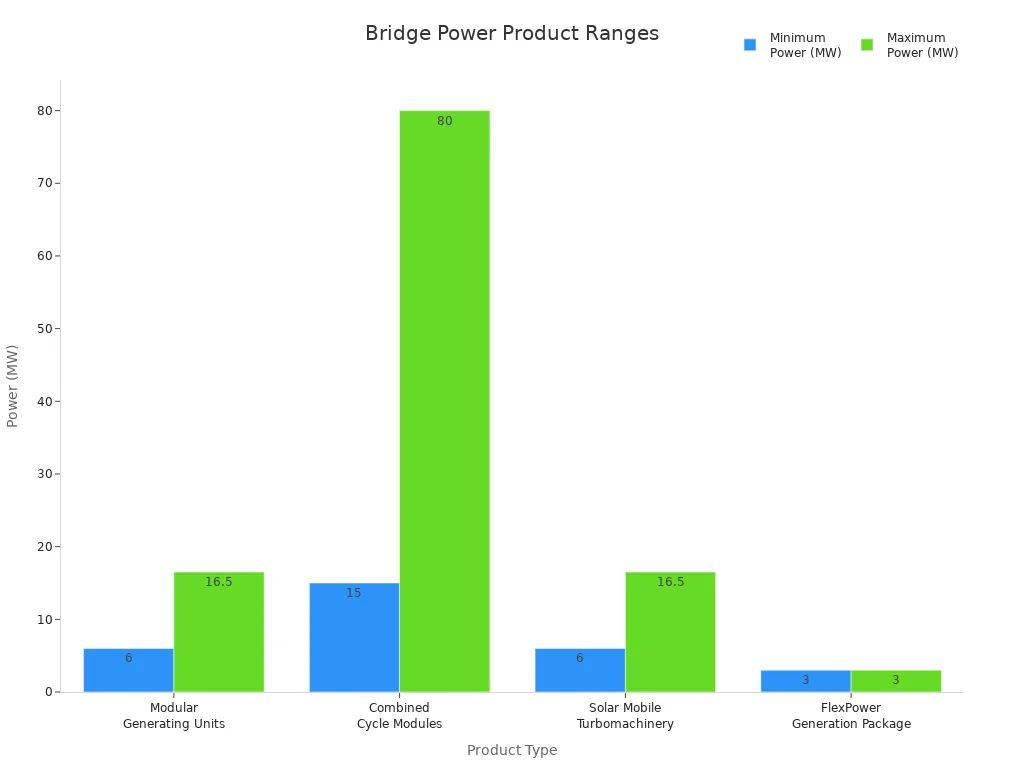
Suppliers design these products to support both small and large data centers. Modular units allow easy scaling as demand grows. Combined cycle modules deliver high power for facilities with greater requirements. Mobile turbomachinery provides flexibility during transitions or emergencies.
Technology & Innovation
Suppliers continue to advance technology in bridge power solutions. They introduce new features to improve efficiency, reliability, and sustainability. The table below highlights recent innovations:
| Technology Type | Key Innovations and Benefits |
|---|---|
| Diesel Generators | Reliable power solutions with swift mobilization and strong fuel availability. |
| Lean-Burn Gas Generators | Lower NOx emissions, superior fuel efficiency, and reduced operational costs due to advanced air-gas management. |
| Rich-Burn Gas Generators | High combustion efficiency, exceptional load acceptance, and reduced emissions with oxidation catalysts. |
| Natural Gas Turbines | Cost-effective, environmentally friendly, and can be integrated into CHP systems for enhanced energy efficiency. |
| Fuel Cells | Highly efficient with low emissions, ideal for sustainability-focused operations despite higher initial costs. |
| Battery Energy Storage Systems | Manage peak power demands effectively, ensuring stability and reliability in energy supply for data centers. |
Suppliers use these technologies to address environmental concerns and improve operational performance. Battery systems help manage peak loads. Fuel cells and gas turbines support sustainability goals.
Industry Experience
Suppliers bring decades of experience to the data center industry. They have supported critical operations in healthcare, finance, and technology. Many suppliers operate globally, serving customers in over 100 countries. Their expertise ensures reliable power during construction, upgrades, and emergencies. Suppliers adapt solutions to meet changing requirements and deliver consistent support.
Tip: Data centers benefit from choosing suppliers with proven experience and a wide product range. This ensures access to reliable power and innovative technology.
Types of Bridge Power Solutions
Generator Sets
Generator sets remain a cornerstone for data center power continuity. These systems use diesel or natural gas engines to produce electricity during outages or grid instability. Data centers rely on generator sets for their rapid start-up and ability to deliver large amounts of power. Many facilities choose modular generator sets to scale capacity as their needs grow. Generator sets support critical operations during construction, maintenance, or emergencies. Their proven reliability makes them a popular choice for bridge power solutions.
Battery Systems
Battery systems store energy and release it when needed, ensuring uninterrupted power for data centers. These systems play a vital role in supporting continuous operations and stabilizing the grid. Battery systems also help reduce reliance on non-renewable energy sources, which lowers environmental impact. Lithium-ion batteries offer several advantages over traditional VRLA batteries:
| Feature | Lithium-Ion Batteries | Traditional Batteries (VRLA) |
|---|---|---|
| Lifespan | Longer | Shorter |
| Recharge Time | Faster | Slower |
| Physical Footprint | Smaller | Larger |
| Integration with Renewables | Ideal | Limited |
Lithium-ion batteries provide greater installation flexibility and require fewer replacements. They integrate well with renewable energy, which is important for sustainability goals.
Microgrids & Hybrid Solutions
Microgrids and hybrid solutions combine multiple energy sources, such as solar, wind, fuel cells, and batteries. These systems offer lower carbon footprints and enhanced energy resilience. Data centers can operate off-grid for extended periods, which supports business continuity. For example, Equinix uses microgrids with fuel cells, solar PV, and battery storage to improve energy resiliency and reduce carbon impact. Google powers its data centers with wind and solar, showing the effectiveness of hybrid solutions. Experts highlight that distributed energy resources allow for localized power generation and better peak demand management. This approach increases the flexibility and reliability of data center operations.
Temporary & Customized Solutions
Temporary and customized solutions address unique or urgent power needs. These options include mobile generator sets, portable battery systems, and modular energy packages. Data centers use temporary solutions during construction, upgrades, or unexpected outages. Decentralized, modular energy systems, such as gas turbines, enable fast and flexible power expansion. These solutions help data centers respond quickly to changing demands and maintain uptime in a rapidly growing industry.
Tip: Choosing the right type of bridge power solution depends on the data center’s size, location, and sustainability goals.
Solution Comparison
Reliability
Reliability stands as a top priority for data centers. Leading suppliers design their systems to deliver consistent power during outages or grid instability. Many companies use proven technologies, such as diesel and gas generators, to ensure immediate backup. Suppliers like Schneider Electric and Eaton offer advanced monitoring tools that help detect issues early. Vertiv and ABB provide integrated systems that combine power distribution and real-time diagnostics. These features help data centers maintain uptime and protect sensitive data.
Scalability
Scalability allows data centers to grow without major disruptions. Suppliers offer several options to match expanding needs:
- Gas turbines with scalable configurations support diverse load requirements.
- Combined cycle solutions deliver prime power, ranging from 200 MW to multi-GW, for large facilities.
- Microgrids integrate multiple energy sources, improving reliability and response times.
- Temporary power solutions energize sites quickly, ideal for short-term needs.
- Bridging power keeps operations running while permanent systems are installed.
- Onsite generation reduces energy costs and increases efficiency.
- Carbon capture integration supports sustainability goals.
These options help data centers adapt to changing demands and future-proof their infrastructure.
Support & Service
Strong support and service networks set top suppliers apart. Companies like Caterpillar and Cummins maintain global dealer networks that provide installation, maintenance, and emergency repairs. ABB and Schneider Electric offer remote monitoring and technical support. Many suppliers provide training for onsite staff, ensuring quick response to any issues. Reliable service helps data centers minimize downtime and extend equipment life.
Pricing
Pricing varies based on technology, scale, and service level. Modular systems and temporary solutions often have lower upfront costs, making them attractive for short-term projects. Permanent installations, such as combined cycle modules or microgrids, require higher investment but offer long-term savings. Suppliers may offer flexible financing or leasing options. Data centers should compare total cost of ownership, including maintenance and energy efficiency, when selecting a solution.
Note: Comparing suppliers on reliability, scalability, support, and pricing helps data centers choose the best fit for their operational needs.
Choosing a Supplier
Assessing Needs
Selecting the right supplier starts with understanding the unique requirements of each data center. Operators examine several criteria to determine the best fit. The following table outlines key factors:
| Criteria | Description |
|---|---|
| Location | Factors such as power costs, access to fiber, and exposure to natural disasters. |
| Redundancy | Configurations like 2n or n + 1 to ensure backup power supply. |
| Power Efficiency | Measured by PUE, indicating how efficiently power is used. |
| Power Density | Measured in watts per square foot, indicating the power requirement per area. |
| Ratio of Critical Space | The ratio of critical computing space to total building area. |
Data center managers review these criteria to match their operational demands with available solutions. They prioritize reliability and efficiency to maintain uptime.
Evaluating Capabilities
Suppliers demonstrate their capabilities through product range, technology, and experience. Managers look for companies with proven track records in delivering power systems for critical environments. They assess the supplier’s ability to scale solutions, integrate new technologies, and provide rapid deployment. Industry reputation and global reach also influence the decision. Suppliers with expertise in microgrids, battery systems, and generator sets offer flexibility for evolving needs.
Cost Considerations
Cost plays a significant role in supplier selection. Operators weigh initial investment against ongoing expenses. The table below highlights main cost factors:
| Cost Consideration | Description |
|---|---|
| Environmental | Tech firms aim to reduce carbon emissions, impacting costs related to power generation and permitting. |
| Reliability | Dependable power supply is crucial to avoid downtime, which can lead to significant losses. |
| Capital and Operating | The choice of power technologies affects both the initial installation costs and ongoing operational expenses, especially in the context of economic pressures on tech companies. |
Managers compare total cost of ownership, including maintenance and energy efficiency, to ensure long-term value.
After-Sales Support
After-sales support ensures continued performance and reliability. Suppliers typically offer:
- Assessment and design services for new builds, expansions, and retrofits.
- Turnkey installation and startup, including project management and system integration.
- Preventative maintenance with scheduled inspections and testing.
- 24/7 emergency response for troubleshooting and urgent repairs.
- Compliance and documentation assistance for safety and regulatory requirements.
- Replacement and recycling programs for batteries and retired assets.
Strong support services help data centers minimize downtime and extend equipment life. Operators value suppliers who provide comprehensive maintenance and rapid response.
Tip: Data center managers benefit from evaluating both technical and service aspects when choosing a supplier.
Data centers rely on suppliers like SWT, Aggreko, VoltaGrid, Schneider Electric, Eaton, Vertiv, ABB, Caterpillar, and Cummins for bridge power solutions. Each supplier offers unique strengths, from innovative microgrids to robust generator sets. Matching supplier capabilities to data center requirements involves several key steps:
- Assess enterprise needs for availability and performance.
- Identify risk levels and potential disruptions.
- Evaluate internal needs and vendor certifications.
- Map systems to tiers for clear decision-making.
The table below highlights technology advantages and market positioning:
| Technology Type | Key Advantages | Market Positioning |
|---|---|---|
| Lithium-ion (Li-ion) | Main battery chemistry for energy storage systems | Dominant in current market |
| Sodium-ion (Na-ion) | Potential for backup power storage | Emerging technology |
| Flow Batteries | Unique benefits for specific use cases | Still in development |
| Software Controls | Optimizes power usage and workload management | Essential for data centers |
| DC Electrical Systems | Efficiency advantages over traditional AC systems | Gaining traction |
| Standardization | Improves procurement and reliability | Industry evolving |
| Niche Solutions | Compete on cost, performance, and reliability | Segmented market |
Data center managers should use these criteria to make informed decisions. Next steps include contacting suppliers or requesting proposals to find the best fit for operational needs.
FAQ
What are bridge power solutions for data centers?
Bridge power solutions provide temporary or backup electricity during outages or transitions. Data centers use these systems to maintain uptime and protect critical data.
Why do data centers need bridge power solutions?
Data centers need bridge power solutions to prevent downtime. These solutions keep servers running during power failures, maintenance, or upgrades.
Which technologies do suppliers use in bridge power solutions?
Suppliers use diesel and gas generators, battery storage systems, microgrids, and hybrid solutions. Each technology offers unique benefits for reliability and sustainability.
How do data centers choose the right supplier?
Data centers compare suppliers based on reliability, scalability, support, and pricing. They also consider experience, technology, and after-sales service.