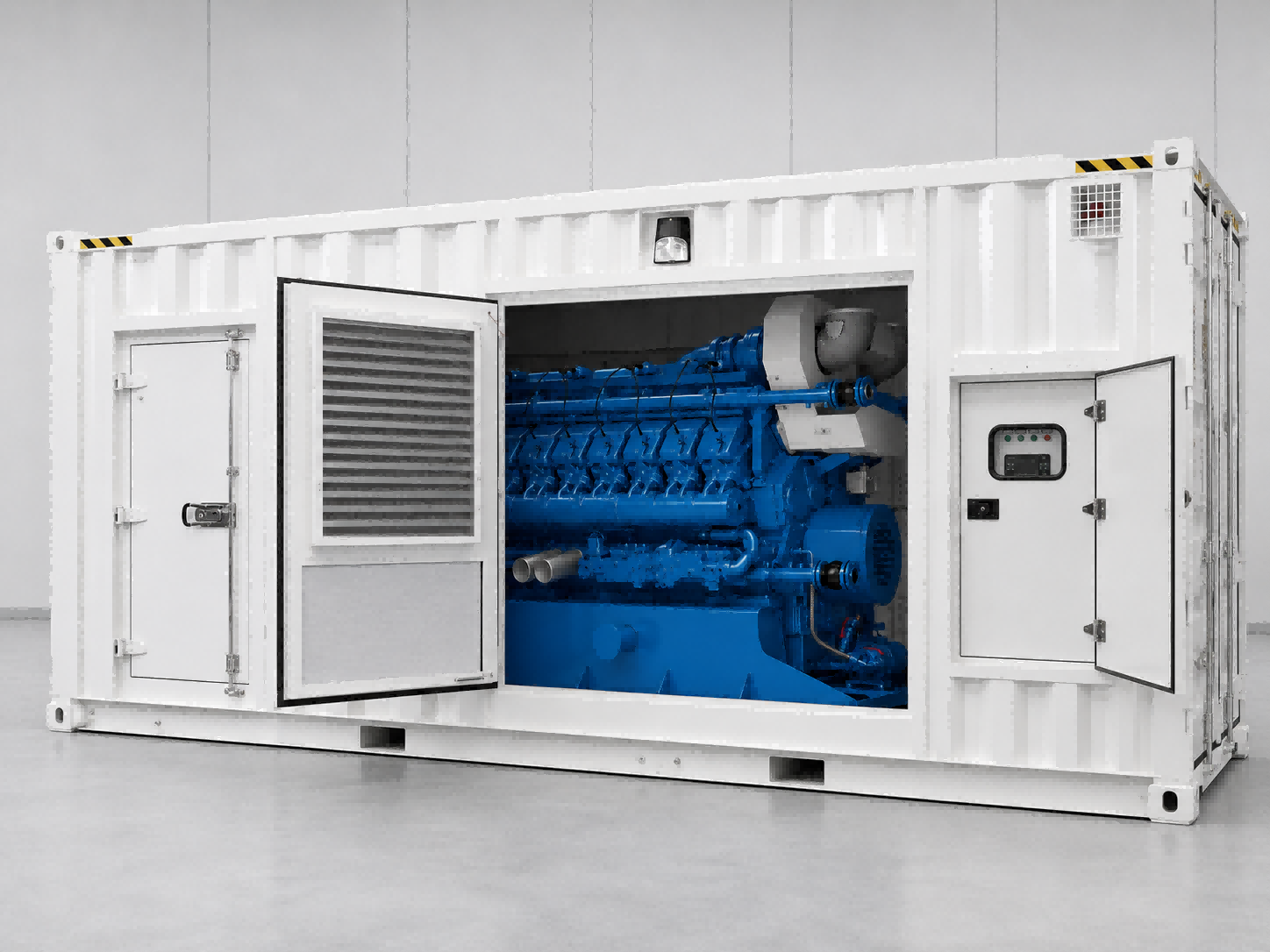
Power interruptions affect far more than lighting. A brief outage can stop production lines, interrupt communication networks, disable building management systems, and place critical facilities at risk. For this reason, backup power systems are no longer limited to large industrial plants. Commercial buildings, healthcare facilities, telecommunications infrastructure, agricultural operations, and construction projects increasingly depend on diesel generator sets to maintain continuous operation when the utility supply becomes unavailable.
Among engines used in compact and medium-capacity generating equipment, the Kubota Diesel Generator has earned a strong position in the global market. Rather than relying on high engine displacement or excessive power reserves, Kubota engines are widely specified because they provide stable operation, low fuel consumption, manageable maintenance requirements, and long service life within their intended operating range. These characteristics make them particularly suitable for applications where dependable performance is valued more than maximum horsepower.
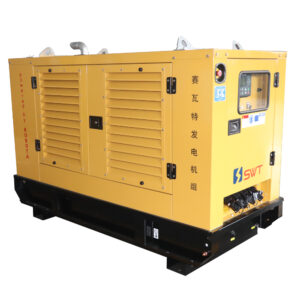
A common specification within this category is the 24kW / 30kVA Kubota Diesel Generator Set. This capacity is frequently selected for office buildings, telecom facilities, farms, workshops, retail buildings, construction sites, and municipal infrastructure because it balances electrical output, transportation convenience, installation flexibility, and operating economy.
Selecting a diesel generator, however, involves much more than comparing rated power. Engineers must evaluate electrical demand, starting currents, ambient conditions, operating hours, cooling methods, maintenance accessibility, control systems, and future expansion plans before deciding whether a generator will perform reliably throughout its service life.
This article examines the engineering principles behind Kubota Diesel Generator selection, explains why this engine platform is widely adopted in industrial backup power systems, and outlines the practical considerations procurement teams should evaluate before specifying a generator for long-term operation.
Why Kubota Diesel Engines Are Widely Used in Generator Applications
A generator engine operates under conditions that differ significantly from those of construction equipment or road vehicles. Excavators, loaders, and trucks experience frequent acceleration, deceleration, and varying engine speeds. A generator engine, by contrast, normally operates at a constant speed while maintaining stable electrical frequency.
Maintaining this steady operating condition requires an engine capable of delivering continuous torque without excessive vibration, unstable combustion, or abnormal thermal expansion. This operating profile explains why engine characteristics are often more important than peak horsepower when selecting an industrial Diesel Generator Set.
Kubota diesel engines have been adopted across many standby and prime power applications because they offer a combination of mechanical simplicity and predictable operating behavior.
Several design characteristics contribute to their widespread use:
- Water-cooled engine construction for stable thermal control
- Compact engine dimensions that simplify enclosure design
- Naturally balanced operation with relatively low vibration
- Fuel-efficient combustion suitable for extended running hours
- Straightforward maintenance procedures
- Stable operation under varying electrical loads
- Good parts availability in many international markets
These characteristics reduce the overall ownership cost throughout the generator’s operating life rather than simply lowering the initial purchase price.
Another factor frequently considered by EPC contractors is equipment integration. Because Kubota engines are relatively compact, manufacturers can optimize radiator layout, fuel tank positioning, alternator alignment, and service access within a smaller footprint. This becomes particularly valuable when generators must be installed inside equipment rooms where maintenance space is limited.
From an engineering perspective, compact equipment should never be confused with reduced durability. The objective is efficient mechanical packaging while maintaining adequate airflow, cooling capacity, and accessibility for routine servicing.
Why the 24kW / 30kVA Capacity Fits Many Commercial and Industrial Projects
Generator sizing begins with load analysis rather than equipment selection.
One of the most common mistakes during procurement is selecting a generator according to total connected load instead of actual operating load. In practice, not every electrical device starts simultaneously, nor does every load operate continuously at full capacity.
Electrical engineers normally evaluate several factors before determining generator size:
- Continuous operating load
- Motor starting current
- Future capacity expansion
- Load diversity
- Required power quality
- Emergency versus continuous operation
The 24kW / 30kVA Kubota Diesel Generator Set occupies a practical position between small residential generators and larger industrial units. It provides enough reserve capacity for medium-sized commercial facilities while remaining economical to transport, install, and maintain.
Typical applications include:
| Project Type | Typical Electrical Loads |
|---|---|
| Construction sites | Site offices, lighting towers, welding machines, portable tools |
| Commercial buildings | Emergency lighting, elevators, fire pumps, security systems |
| Telecom stations | Base station equipment, HVAC, battery charging systems |
| Farms | Irrigation pumps, grain handling equipment, cold storage |
| Small factories | Compressors, conveyors, production equipment |
| Municipal infrastructure | Water pumps, monitoring systems, control cabinets |
For these installations, selecting a much larger generator often produces unintended consequences. Diesel engines operate most efficiently within an appropriate load range. When generators spend prolonged periods operating at very low loads, combustion efficiency decreases and carbon deposits gradually accumulate inside the exhaust system.
This condition, commonly known as wet stacking, occurs when exhaust temperatures remain too low to burn fuel residues completely. Over time, incomplete combustion may lead to injector contamination, carbon buildup, increased maintenance requirements, and higher fuel consumption.
Because of this, engineers generally prefer selecting a generator that will operate between approximately 60% and 80% of its rated output during normal service rather than specifying an excessively oversized unit “just in case.”
The objective is not to maximize installed capacity but to maximize operating efficiency throughout the generator’s service life.
Prime Power and Standby Power Are Not the Same Rating
Another specification frequently misunderstood during procurement is the distinction between Prime Power and Standby Power.
These ratings describe two completely different operating conditions, even when the generator itself appears identical.
Prime Power refers to generators that serve as the primary source of electricity. Such units may operate for thousands of hours each year where no utility supply exists or where grid reliability cannot be guaranteed.
Standby Power, by contrast, is intended for emergency operation. The generator remains idle until utility power fails, after which it automatically starts, supplies the connected loads, and shuts down once the normal electrical supply has been restored.
The engineering requirements therefore differ considerably.
| Prime Power | Standby Power |
|---|---|
| Main electrical supply | Emergency backup only |
| Long annual operating hours | Limited operating hours |
| Variable daily load profile | Operates only during outages |
| Planned maintenance while in service | Maintenance between emergency events |
This distinction influences maintenance planning, fuel storage, cooling system sizing, and expected engine life.
For example, a telecommunications station located in a remote region without reliable utility power may depend on a Kubota-powered generator as its primary energy source. Conversely, a hospital may only require generator operation during occasional grid failures, yet it demands rapid startup and dependable performance whenever an outage occurs.
Selecting the wrong operating classification can lead to incorrect maintenance schedules and unrealistic service life expectations.
Why Water-Cooled Engines Provide Greater Operational Stability
Nearly every industrial generator above small portable capacities adopts a water-cooled engine, and the reasons extend well beyond temperature reduction.
Combustion temperatures inside a diesel engine fluctuate continuously as electrical loads increase or decrease. During a typical emergency event, a generator may first energize emergency lighting, then elevators, followed by HVAC equipment, fire pumps, and other motor-driven systems. Each load change increases thermal stress within the engine.
A properly designed water-cooling system helps absorb these fluctuations by circulating coolant through the cylinder block and cylinder head before transferring heat to the radiator.
Compared with air-cooled systems, water-cooled engines generally provide:
- More stable cylinder temperatures during load transitions
- Better lubrication stability through controlled oil temperature
- Reduced thermal expansion of pistons and liners
- Improved combustion consistency
- Longer continuous operating capability
- Lower mechanical noise under comparable loads
These characteristics become particularly valuable in projects requiring continuous operation during extended utility failures.
For facilities such as hospitals, hotels, manufacturing plants, and telecommunications hubs, thermal stability directly affects generator reliability. Maintaining consistent operating temperatures reduces mechanical stress throughout the engine, helping preserve component life over thousands of operating hours.
A water-cooled Kubota Diesel Generator is therefore not simply quieter or easier to cool; it is engineered to sustain predictable performance under prolonged operating conditions where backup power cannot afford unexpected interruptions.
1500 RPM vs. 1800 RPM: Matching Generator Speed to Grid Requirements
One of the first specifications engineers confirm before selecting a Kubota Diesel Generator is operating speed. Unlike mobile equipment, where engine speed changes continuously with demand, a generator operates at a fixed speed to maintain a constant electrical frequency.
The relationship is straightforward:
- 1500 RPM = 50 Hz
- 1800 RPM = 60 Hz
The correct choice depends entirely on the electrical standard used in the destination country rather than on which speed is “better.”
| Engine Speed | Output Frequency | Typical Markets |
|---|---|---|
| 1500 RPM | 50 Hz | Europe, Middle East, Southeast Asia, Africa, Australia |
| 1800 RPM | 60 Hz | United States, Canada, parts of Latin America, Japan |
Although both engines may share the same displacement, operating speed influences several engineering characteristics.
A 1500 RPM engine generally experiences lower average piston speed, reduced friction losses and lower mechanical wear over long operating periods. For installations expected to accumulate thousands of running hours each year, this contributes to longer overhaul intervals and lower maintenance costs.
An 1800 RPM engine delivers the frequency required by 60 Hz electrical systems while maintaining similar reliability when operated within its design limits.
For international EPC projects, confirming local frequency before procurement is essential. Supplying a 50 Hz generator to a 60 Hz installation—or vice versa—may affect motor speed, pump performance, HVAC equipment, compressors and frequency-sensitive electronic devices.
Frequency selection should therefore always be determined during the project design stage rather than after equipment manufacture.
Why Automatic Transfer Switches Are Standard Equipment in Modern Backup Systems
A standby generator is only one part of an emergency power system. The entire backup process depends on coordinated operation between the generator, controller and Automatic Transfer Switch (ATS).
During a utility outage, the ATS continuously monitors incoming voltage. Modern transfer switches do not immediately start the generator after detecting a brief voltage dip. Instead, they use programmable delay timers to distinguish between a genuine power failure and a short-duration voltage disturbance.
A typical operating sequence is as follows:
- Utility voltage disappears.
- ATS confirms the outage exceeds the preset delay.
- Generator controller receives the start command.
- Engine accelerates to rated speed.
- Voltage and frequency stabilize.
- ATS transfers the building load to the generator.
- Utility supply returns and remains stable.
- ATS reconnects utility power.
- Generator completes its cooling cycle before shutting down.
These intentional delays prevent unnecessary engine starts while protecting electrical equipment from unstable switching conditions.
ATS systems are particularly valuable in facilities where even a short interruption creates significant operational or financial consequences.
Typical examples include:
- Hospitals
- Data centers
- Hotels
- Water treatment plants
- Manufacturing facilities
- Airports
- Telecommunication base stations
- Commercial office towers
In many of these projects, restoring power within several seconds is considerably more important than the generator’s maximum output rating.
Generator Controllers Influence Reliability as Much as the Engine
The engine provides mechanical power, but the controller determines how intelligently the generator operates.
Modern controllers continuously monitor both electrical and mechanical parameters, allowing operators to identify abnormal conditions before they develop into major failures.
Widely used controller platforms include:
| Controller | Typical Applications |
|---|---|
| Deep Sea (DSE) | Commercial buildings, telecom and industrial backup systems |
| ComAp | Parallel generator plants and utility applications |
| DEIF | Critical infrastructure, marine and synchronized power systems |
| SmartGen | General commercial and industrial installations |
Regardless of manufacturer, advanced controllers typically supervise:
- Engine speed
- Oil pressure
- Coolant temperature
- Battery voltage
- Fuel level
- Output voltage
- Frequency
- Generator current
- Running hours
- Alarm history
Remote monitoring has become increasingly common, particularly for unmanned facilities such as telecom stations and pumping stations. Engineers can review operating hours, receive fault notifications and schedule preventive maintenance without travelling to each installation.
Alternator Selection Determines Electrical Performance
While the diesel engine attracts most attention during procurement, the alternator determines how effectively mechanical power is converted into stable electrical output.
A high-quality alternator should maintain voltage stability despite changing loads while resisting thermal stress during continuous operation.
Manufacturers frequently specify alternators from suppliers such as Stamford and Mecc Alte because of their long-established performance in industrial power generation.
When evaluating an alternator, engineers usually compare:
- Voltage regulation
- Insulation class
- Temperature rise
- Protection rating
- Harmonic distortion
- Efficiency
- Short-circuit capability
- Ease of maintenance
Voltage regulation deserves particular attention.
Sensitive equipment—including PLC systems, building automation controllers, variable frequency drives and medical instruments—requires stable voltage. Excessive voltage variation may not immediately damage equipment, but repeated fluctuations can reduce reliability over time.
For projects supporting server rooms or communication equipment, engineers also evaluate waveform quality and total harmonic distortion (THD), especially where non-linear electronic loads are significant.
Silent or Open Generator: Which Configuration Is More Suitable?
Choosing between a silent enclosure and an open generator depends on installation conditions rather than generator performance.
| Silent Generator | Open Generator |
|---|---|
| Lower operating noise | Better maintenance accessibility |
| Weather protection | Suitable for generator rooms |
| Outdoor installation | Indoor installation |
| Higher purchase cost | Lower initial investment |
| More compact appearance | Requires additional acoustic treatment |
Silent generators are commonly selected for:
- Hotels
- Hospitals
- Residential developments
- Commercial buildings
- Schools
- Urban construction projects
Open generators remain practical where dedicated equipment rooms already provide ventilation and sound insulation.
When evaluating enclosure design, engineers also consider airflow.
A well-designed canopy should reduce noise without restricting radiator airflow. Poor enclosure ventilation can increase coolant temperatures during continuous operation, particularly in regions with high ambient temperatures.
Improving Fuel Economy Requires More Than an Efficient Engine
Fuel cost represents one of the largest operating expenses throughout the service life of a diesel generator.
Although Kubota engines are recognized for efficient fuel consumption, operating practices have an equally important influence on overall fuel economy.
Several engineering measures help reduce fuel usage:
- Select the correct generator capacity instead of oversizing.
- Operate within approximately 60–80% of rated load whenever practical.
- Replace clogged air filters promptly.
- Maintain clean fuel injectors.
- Monitor coolant temperature to ensure proper combustion.
- Use fuel that meets manufacturer recommendations.
- Perform scheduled engine maintenance.
- Avoid prolonged idling or extended low-load operation.
Running a generator continuously below approximately 30% load often results in incomplete combustion, lower exhaust temperatures and wet stacking.
Conversely, operating near maximum capacity for extended periods increases thermal loading and accelerates component wear.
The most economical operating point generally lies between these two extremes, where fuel efficiency, combustion quality and engine durability remain well balanced.
Common Generator Problems and Their Causes
Even well-maintained diesel generators occasionally experience faults. Most failures originate from maintenance deficiencies, fuel contamination or improper operating conditions rather than manufacturing defects.
Some of the most frequently encountered problems include:
| Fault | Typical Cause |
|---|---|
| Engine fails to start | Weak battery, fuel supply interruption, starter fault |
| Low oil pressure | Insufficient lubrication, worn oil pump, blocked filter |
| High coolant temperature | Radiator blockage, coolant loss, defective fan |
| Black exhaust smoke | Overloading, restricted air intake, injector problems |
| White smoke | Cold combustion, injector malfunction, coolant leakage |
| Voltage fluctuation | AVR failure, unstable engine speed, alternator fault |
| Fuel contamination | Water or microbial growth inside storage tanks |
| Coolant leakage | Loose hose connections, damaged radiator or water pump |
Early fault detection significantly reduces repair costs.
Many facilities now perform routine inspections that include battery testing, coolant analysis, oil sampling and load-bank testing to identify developing issues before they interrupt normal operation.
Maintenance Determines Generator Life More Than Engine Brand
No diesel generator is maintenance-free.
Routine servicing remains the most effective way to maximize reliability while reducing unexpected failures.
A practical maintenance program normally includes:
- Checking engine oil level before operation
- Replacing lubricating oil at recommended intervals
- Changing oil, fuel and air filters
- Inspecting coolant concentration
- Testing battery condition
- Examining belts and hoses
- Verifying fuel quality
- Running the generator under load periodically
- Testing ATS operation
- Recording operating hours and maintenance history
Facilities that only start emergency generators during actual power failures often discover hidden problems too late.
Monthly operational testing allows engineers to verify engine starting performance, charging systems, cooling efficiency and transfer switch operation under controlled conditions.
Selecting the Right Kubota Diesel Generator
Choosing a generator begins with the application rather than the equipment specification.
Before purchasing, engineers typically evaluate:
- Total running load
- Motor starting current
- Prime or standby duty
- Ambient temperature
- Installation altitude
- Noise limitations
- Fuel storage capacity
- ATS requirements
- Future expansion plans
- Maintenance accessibility
For many commercial projects, a 24kW / 30kVA Kubota Diesel Generator Set offers a practical balance between output capacity, transportation convenience and operating economy.
However, no single capacity suits every project. Proper sizing should always be based on electrical calculations rather than estimated demand.
Industry Applications Continue to Expand
Reliable backup power remains essential across numerous sectors.
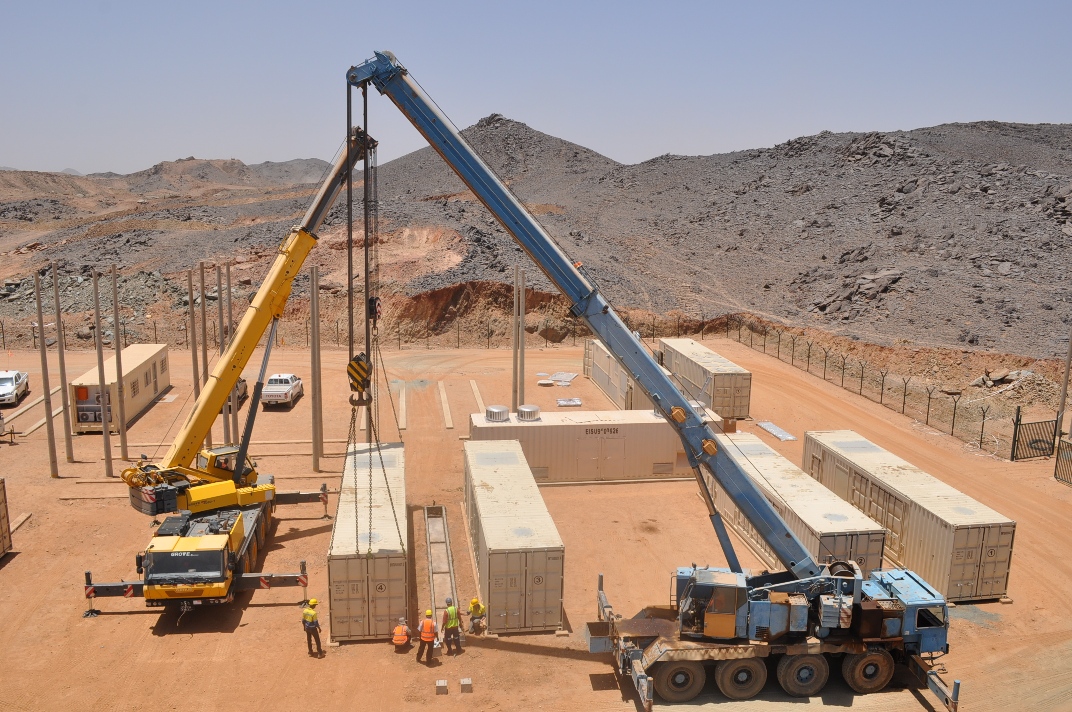
Construction contractors depend on generators where utility power has not yet been established.
Manufacturing plants use standby generators to prevent production interruptions and protect automated equipment during utility failures.
Hospitals require uninterrupted electricity for operating theatres, diagnostic equipment and life-support systems.
Hotels rely on emergency power to maintain lighting, elevators, communication systems and guest services.
Agricultural facilities operate irrigation systems, refrigeration units and grain storage equipment in remote locations.
Telecommunication operators protect network continuity by supplying base stations and communication shelters.
Data centers maintain critical servers, cooling systems and communication infrastructure through integrated standby power systems.
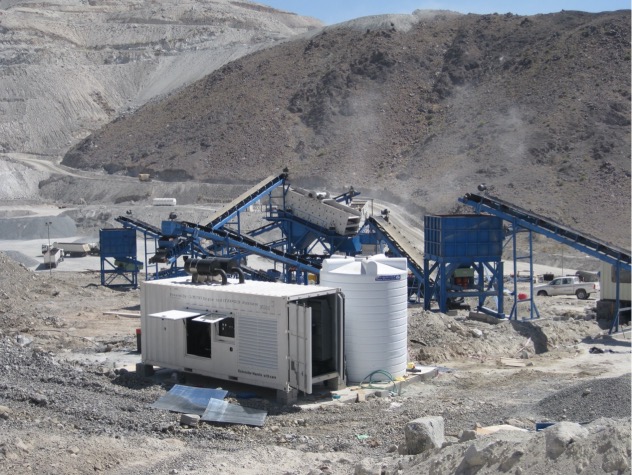
Mining operations often depend on diesel generators as their primary electrical supply where public utility networks are unavailable.
Each application places different demands on the generator, reinforcing the importance of selecting equipment according to operating conditions rather than simply comparing rated power.
A Kubota Diesel Generator is more than an emergency power source. Its long-term value depends on the interaction between engine performance, alternator quality, cooling efficiency, control systems, installation design and maintenance planning.
The 24kW / 30kVA Kubota Diesel Generator Set continues to be specified across commercial buildings, telecommunications facilities, agricultural projects, construction sites and industrial operations because it provides a practical balance of compact size, dependable performance and economical operation.
For engineers and procurement teams, successful generator selection is rarely determined by a single specification. Careful assessment of load characteristics, operating duty, environmental conditions, maintenance strategy and future expansion requirements contributes far more to system reliability than focusing solely on rated output. A generator that is correctly sized, properly installed and routinely maintained is far more likely to deliver dependable service throughout its operating life than one selected purely on initial purchase cost.