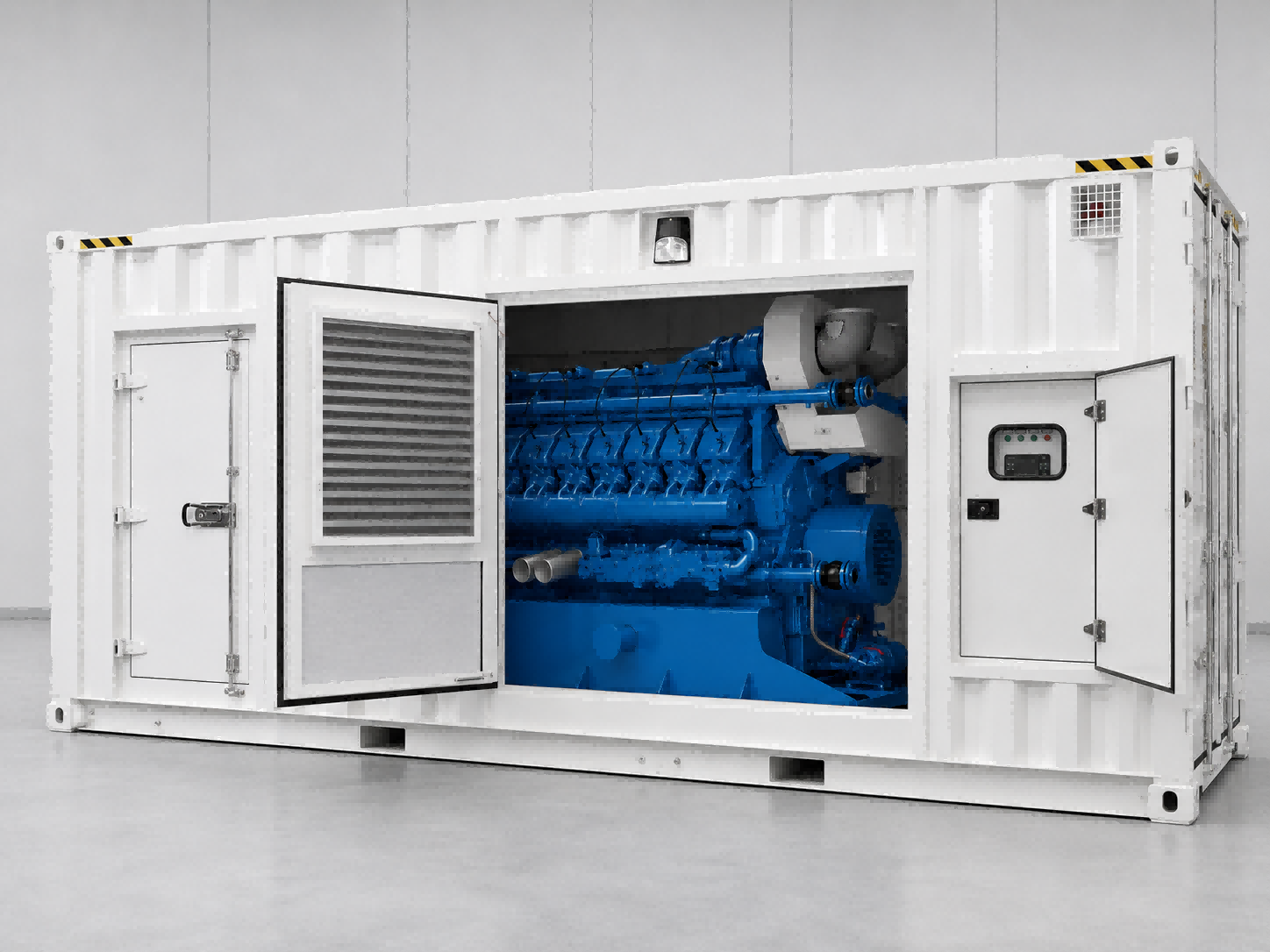
Large-scale combined heat and power projects require a different approach to generator selection from conventional standby power systems. Electrical output is only one part of the calculation. The value of a CHP plant comes from converting fuel into electricity and useful thermal energy at the same site, with the engine, gas supply, heat recovery system, electrical equipment, controls, and operating profile working as one system.
The MWM TCG 3020 sits in the medium-scale distributed generation range, with configurations from 1,380 to 2,300 kW electrical output. MWM specifies electrical efficiency of up to 45% on natural gas and up to 43.6% on biogas, while total efficiency can exceed 87% when useful heat is recovered.
That combination makes the platform relevant to industrial plants, district energy systems, commercial facilities, wastewater treatment sites, agricultural biogas projects, and other installations where electricity and recoverable heat have substantial value.
Why 1200 to 2300 kWel Is a Useful CHP Range
The 1.2–2.3 MW electrical class fills an important gap between small gas generator sets and utility-scale power generation.
A factory, hotel complex, food-processing facility, wastewater treatment plant, or commercial energy center may have a continuous electrical demand that is too large for a single small gas generator but does not justify a centralized power station. A generator in the 1–2 MW class can be installed close to the load and operated as part of a distributed energy system.
The key question is not simply, “How much electricity can the engine produce?” The more useful question is, “How much of the engine’s electrical and thermal output can the site actually use?”
A 2,300 kW generator operating at high load can produce a substantial amount of electricity, but its CHP economics depend on what happens to the heat produced by the engine. If recovered heat is used for process heating, hot water, absorption cooling, or other thermal demand, the fuel utilization of the complete plant can be dramatically higher than electricity-only generation.
For a project developer, this changes the sizing method. The engine should be matched against the site’s electrical base load and thermal demand rather than selected according to the highest possible generator rating.
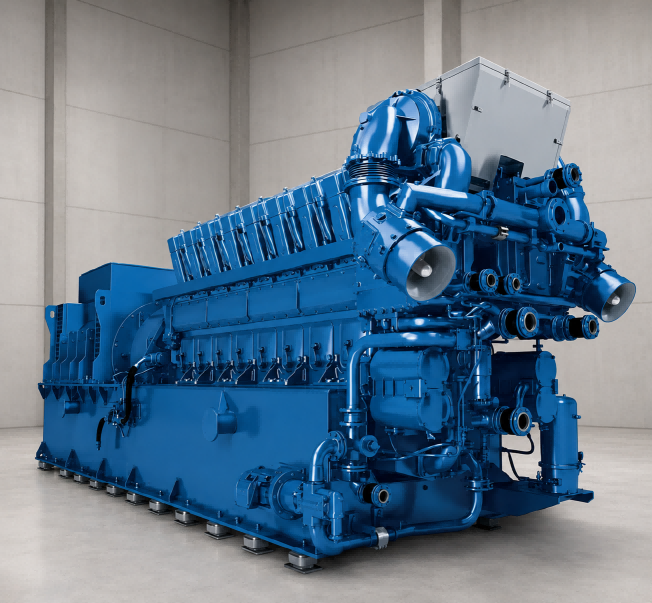
Why Electrical Output Alone Is Not Enough for CHP
A conventional gas power project may focus heavily on electrical efficiency because electricity is the primary product. CHP projects have two useful energy streams.
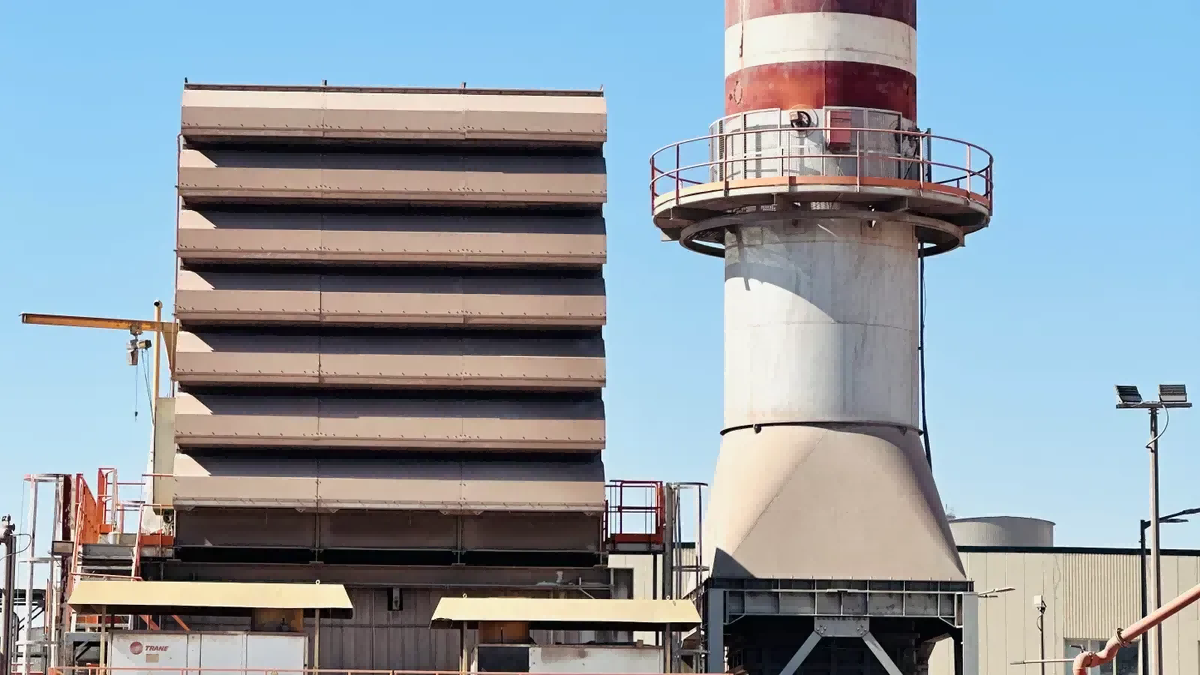
The engine converts fuel into electrical power and thermal energy. Heat can be recovered from engine cooling circuits and exhaust gas, then transferred to a site’s heating or process system.
For example, a natural-gas TCG 3020 configuration can reach approximately 45% electrical efficiency under specified conditions. MWM’s published data for the 50 Hz V20 configuration also show thermal efficiency in the low-to-mid 40% range, with overall efficiency above 87% when the available heat is utilized.
That distinction has a direct financial consequence.
If a facility requires both electricity and heat throughout the year, a CHP system can offset two separate energy purchases with one fuel input. If thermal demand is highly seasonal and most recovered heat cannot be used, the economics become less attractive.
This is why CHP feasibility studies normally examine:
- Annual electrical load profile
- Annual thermal demand
- Operating hours
- Fuel price and gas quality
- Electricity tariff
- Export or grid-parallel requirements
- Heat recovery temperature requirements
The useful output is therefore determined by the site, not by the engine nameplate alone.
Where the MWM TCG 3020 Fits in Distributed Energy Projects
The TCG 3020 platform covers several configurations within the 1,380–2,300 kW electrical range. The V12 is listed at 1,380 kW, the V16 at 1,840 kW, and the V20 reaches 2,300 kW in the published performance data.
This gives EPC contractors and plant developers several ways to approach capacity planning.
A site with a relatively stable 1.3 MW electrical demand may be better served by a V12 than by oversizing a 2.3 MW unit. A larger industrial facility with a stronger base load may justify a V16 or V20. For a project requiring redundancy, multiple smaller units can also provide a different operational profile from one large machine.
The choice becomes particularly important when maintenance is considered. Multiple generating units can allow part of the plant to remain operational while another unit is undergoing planned maintenance. A single larger unit may provide simpler plant architecture, but its outage represents a larger portion of total site capacity.
Natural Gas and Biogas Require Different Engineering Decisions
Gas type has a direct influence on engine configuration, fuel treatment, combustion settings, emissions, maintenance intervals, and expected performance.
Natural gas generally provides a relatively stable fuel composition when supplied through an established gas network. Industrial gas engines can therefore be optimized around predictable methane content, pressure, and heating value.
Biogas presents a different engineering environment. Gas from anaerobic digestion, wastewater treatment, landfill, or agricultural processes may contain methane together with carbon dioxide, moisture, hydrogen sulfide, siloxanes, and other contaminants.
MWM lists TCG 3020 applications for biogas, sewage gas, landfill gas, and other special gases, with performance dependent on the actual fuel composition. Its published data also distinguish special-gas applications from natural-gas operation.
For an EPC project, sending the engine supplier a generic statement such as “biogas available” is not sufficient.
The gas analysis should normally establish:
| Gas parameter | Why it matters |
|---|---|
| Methane content | Influences heating value and combustion |
| CO₂ concentration | Reduces fuel energy density |
| H₂S | Creates corrosion and emissions concerns |
| Moisture | Can affect gas equipment and combustion |
| Siloxanes | Can form deposits and damage engine components |
| Gas pressure | Determines gas train and regulation requirements |
| Heating value | Affects fuel flow and engine operation |
| Gas contaminants | Influences treatment and maintenance requirements |
Gas quality can also change over time. A plant using digester gas may experience seasonal or process-related variations that need to be considered during engine and gas-treatment design.
Why Gas Treatment Can Determine Engine Reliability
A gas engine is only as reliable as the fuel supplied to it.
This becomes particularly important with biogas. Moisture and corrosive compounds can enter the engine if the gas conditioning system is undersized or poorly maintained. Contaminants may increase deposits, oil degradation, component wear, and maintenance requirements.
A complete CHP package may therefore require filtration, moisture separation, pressure regulation, gas cooling, desulfurization, siloxane removal, or other treatment depending on the fuel source.
The treatment system should be engineered around an actual gas analysis rather than a generic specification.
For procurement teams, the gas-conditioning scope should be clearly divided between the engine supplier, EPC contractor, and specialist gas-treatment supplier. Ambiguous scope boundaries are a common source of commissioning delays.
Load Profile Is More Important Than Peak Load
Generator sizing based only on the site’s maximum demand often leads to inefficient operation.
Consider an industrial facility with a peak electrical demand of 2.2 MW but a daytime base load around 1.5 MW. Selecting a 2.3 MW engine solely because it matches the peak may leave the generator operating at relatively low load for significant periods.
A better assessment examines the hourly load profile.
A plant with a stable 1.7–2.0 MW demand may be an excellent candidate for a larger engine. A site with highly variable loads may benefit from multiple generating units or a configuration optimized for response at the required operating point.
This is also where CHP and distributed generation planning overlap. Electrical output should correspond to the site’s realistic operating load, while recovered heat should have a matching demand profile.
High Electrical Efficiency Has a Direct Fuel Cost Impact
Electrical efficiency determines how much fuel is required to produce a given quantity of electricity.
For example, at 45% electrical efficiency, approximately 45 units of fuel energy are converted into electricity for every 100 units of fuel energy entering the engine under the specified test conditions. The remaining energy is distributed mainly into recoverable heat and other losses.
At a large operating-hour count, even a small efficiency difference can create a significant annual fuel-cost difference.
MWM’s current TCG 3020 information specifies electrical efficiency of up to 45% for natural gas and 43.6% for biogas. The exact result depends on engine configuration, gas composition, operating conditions, emissions setting, and other project parameters.
For project evaluation, EPC teams should therefore compare fuel consumption at the actual requested electrical output rather than comparing headline efficiency values from different operating points.
Engine Configuration Should Follow the Project Load
The TCG 3020 range provides several output levels rather than forcing every project into one generator size.
The basic engineering sequence should be:
Site load → operating profile → required electrical capacity → thermal demand → gas availability → engine configuration → plant arrangement
This approach prevents oversizing and makes the final system easier to justify financially.
For example, a manufacturing plant operating continuously at a relatively stable load may prioritize high electrical efficiency. A facility with fluctuating demand may place greater value on load response and multiple-unit flexibility. A wastewater treatment plant with continuous biogas production may place greater emphasis on fuel quality, gas treatment, thermal utilization, and long operating hours.
MWM also identifies different TCG 3020 configurations optimized for high electrical efficiency, high total efficiency, or requested-power/high-response applications.
Natural Gas, Biogas, and Special Gas Should Not Be Treated as Equivalent Fuels
The same generator model family can support different gases, but that does not mean a project can switch fuels without engineering review.
Natural gas generally provides the most predictable operating conditions. Biogas can offer strong project economics when it is produced as a by-product of wastewater treatment, anaerobic digestion, landfill operations, or agricultural processes, but the gas-cleaning system becomes an important part of the power plant.
Special gases require even more detailed analysis because heating value and contaminant concentrations may differ significantly from standard pipeline gas.
The project specification should therefore identify the actual gas source, composition, pressure range, temperature, contaminant levels, and expected variation.
When Containerized Solutions Make Sense
Containerized CHP or gas generator solutions can be useful when site conditions place a premium on installation speed, modularity, or environmental protection.
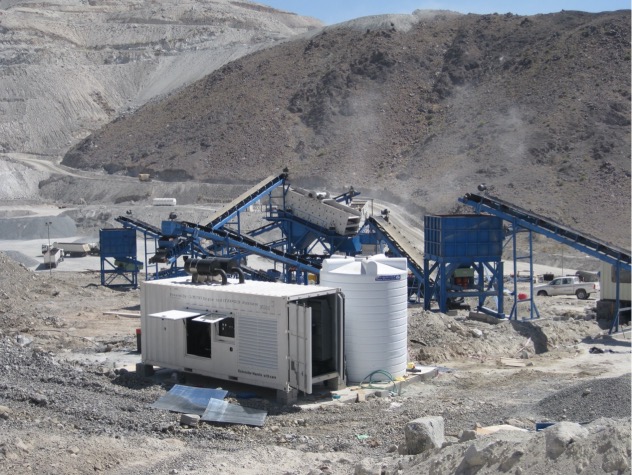
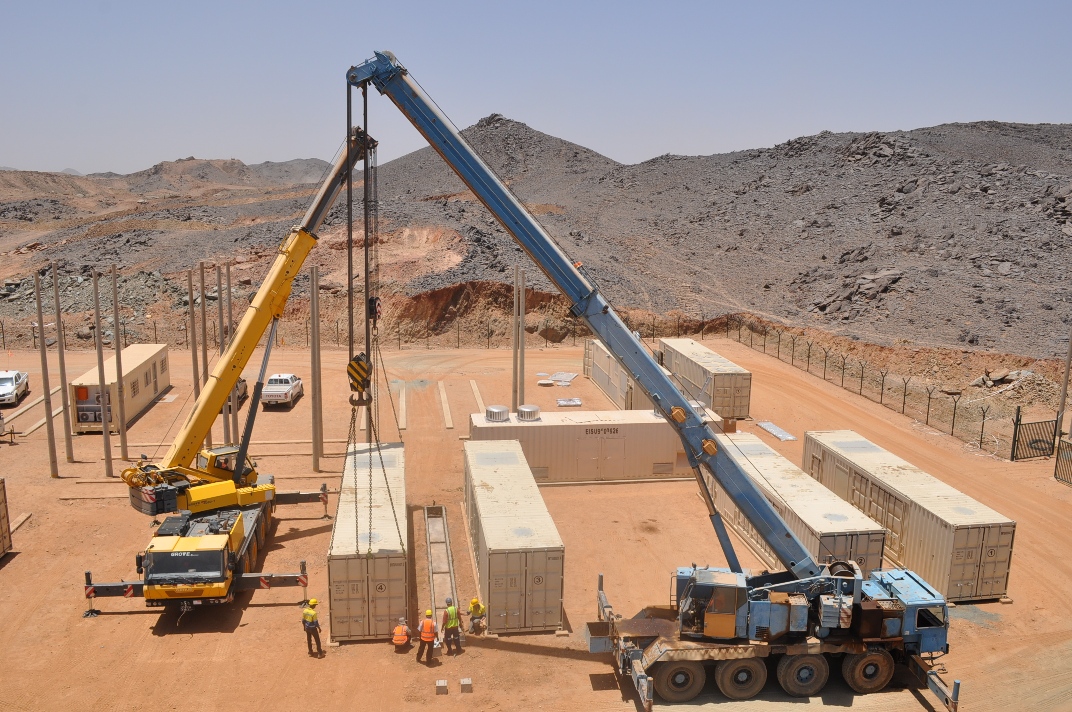
A container can integrate major equipment into a factory-prepared enclosure, reducing some site installation work and simplifying transport between locations. This can be particularly useful for remote industrial sites, temporary energy infrastructure, modular commercial projects, or locations where conventional engine-room construction is difficult.
However, containerization does not eliminate engineering requirements.
Ventilation, combustion air, exhaust routing, acoustic treatment, fire protection, gas detection, cooling, maintenance access, and electrical interfaces must all be considered. A container that fits physically on a site may still be unsuitable if airflow or maintenance clearances are inadequate.
The decision should therefore be based on total project requirements rather than assuming a containerized package is automatically simpler.
Generator and Electrical System Integration
The gas engine is only one part of a distributed power plant.
The generator must be matched to the engine’s mechanical output, voltage, frequency, power factor requirements, protection system, and grid-connection conditions. For grid-parallel CHP, synchronization and protection become critical engineering functions.
Multiple-generator plants require additional coordination. Load sharing, synchronization, breaker sequencing, protection settings, and plant-level control must work together.
The control system therefore has a much broader role than simply starting and stopping the engine. MWM’s TCG 3020 platform uses its TPEM plant and energy management system to integrate genset and plant control functions, data analysis, and operational management.
For EPC contractors, the interface between engine controls, switchgear, PLC systems, SCADA, grid protection, and heat-recovery controls should be defined before equipment orders are finalized.
50 Hz and 60 Hz Requirements Must Be Confirmed Early
Frequency is a fundamental project parameter.
MWM currently offers TCG 3020 variants in 50 Hz configurations, while the V20 is also available in a 60 Hz version. MWM announced the 60 Hz TCG 3020 V20 in 2024, extending the platform to additional markets.
Frequency affects generator speed, electrical design, synchronization, protection, and compatibility with the local power network.
A project specification should therefore confirm:
- Grid frequency
- Generator voltage
- Grid connection method
- Island or parallel operation
- Applicable grid code
- Power factor requirements
- Short-circuit contribution
- Synchronization requirements
These details should be settled before the alternator and switchgear configuration is finalized.
What EPC Buyers Should Check Before Ordering
A serious procurement review should go beyond engine model and rated power.
The equipment specification should address the entire plant boundary, including fuel, electrical, thermal, civil, control, and environmental interfaces.
For a TCG 3020 project, EPC teams should verify:
- Actual electrical base load and peak load.
- Required thermal output and useful heat temperature.
- Gas composition and expected seasonal variation.
- Gas pressure and gas-treatment requirements.
- Required operating hours and maintenance strategy.
- 50 Hz or 60 Hz electrical requirements.
- Grid-parallel, island, or dual-mode operation.
- Generator, switchgear, protection, and synchronization scope.
- Heat recovery and exhaust treatment scope.
- Containerized or building-installed configuration.
- Site altitude, ambient temperature, and cooling conditions.
- Emissions requirements and local permitting.
These points determine the actual project configuration far more effectively than comparing catalog output alone.
TCG 3020 Versus Smaller Gas Generator Sets
A small gas generator set may be perfectly suitable for a commercial building, backup application, or low-demand industrial site. The engineering logic changes when electrical demand moves into the multi-megawatt range and the plant is expected to operate continuously.
A platform such as the TCG 3020 is intended for applications where operating hours, fuel economics, heat recovery, plant control, and long-term availability become major parts of the business case.
| Project requirement | Smaller gas generator | TCG 3020 class |
|---|---|---|
| Typical application | Small commercial or industrial load | Large industrial and distributed power |
| Electrical scale | Hundreds of kW to low MW | 1,380–2,300 kW per engine |
| CHP potential | Project dependent | Strong fit for continuous thermal demand |
| Multiple-unit plant | Possible | Well suited to modular capacity planning |
| Fuel flexibility | Model dependent | Natural gas, biogas and other gas options |
| Long operating hours | Application dependent | Designed for continuous-duty projects |
| Plant-level control | Basic to advanced | Integrated plant and energy management options |
The important distinction is not that one class is universally better. It is that the TCG 3020 is engineered around a different operating model: continuous distributed generation with substantial electrical and thermal output.
Why the MWM TCG 3020 Can Fit Large CHP Projects
The TCG 3020 combines several characteristics that matter in large CHP and distributed energy projects: electrical output up to 2,300 kW, electrical efficiency up to 45% on natural gas, suitability for biogas and other gas types, plant-level control, and configurations intended for different efficiency and response priorities.
Its relevance, however, depends on the project around it.
A well-matched engine can deliver strong economics when the electrical load is stable, the gas supply is properly conditioned, and recovered heat has a dependable use. Poor load matching or insufficient gas treatment can reduce the value of an otherwise capable generator.
For EPC contractors, industrial energy users, CHP developers, and plant operators, the better procurement approach is to start with the site’s energy balance and work toward the generator configuration. Fuel composition, load profile, thermal demand, electrical requirements, operating environment, and maintenance strategy should all be confirmed before final equipment selection.
For projects where these conditions align, the MWM TCG 3020 provides a practical platform for moving beyond simple electricity generation toward an integrated distributed energy system in which electrical power, useful heat, fuel efficiency, and plant availability are evaluated together.