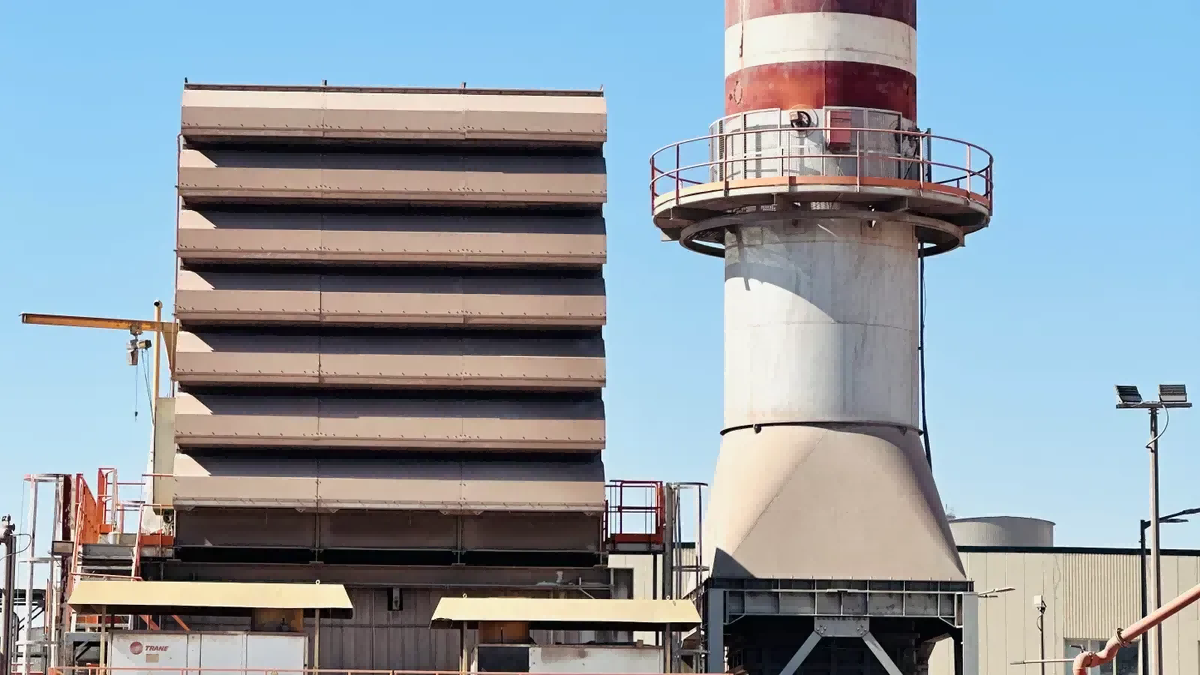
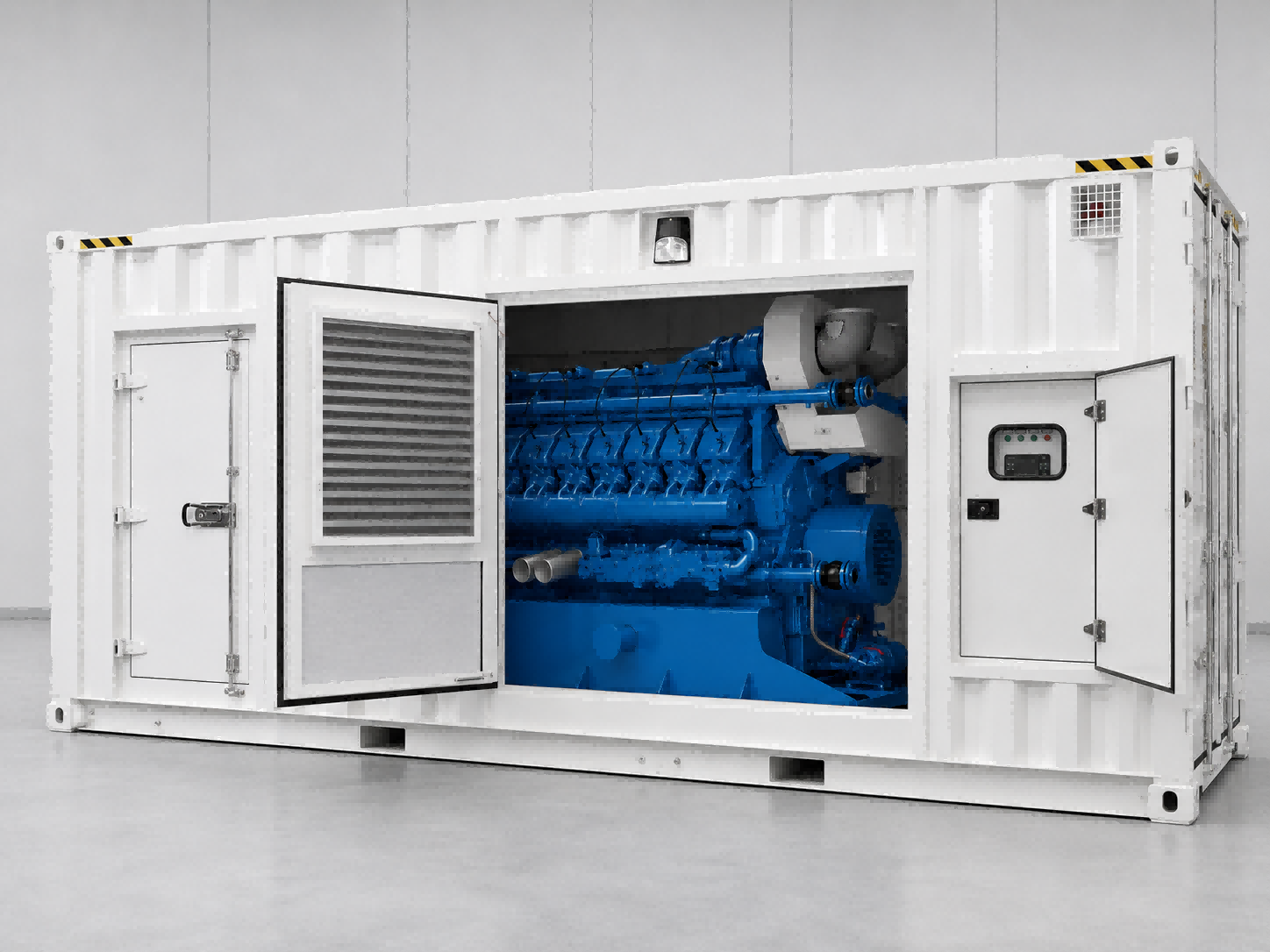
Global data center buyers face a concentrated market. According to the 2024–2028 market analysis, Caterpillar, Cummins, MTU, and Rehlko together command over 80% of global revenue in this segment. Their dominance is strongest in hyperscale projects.
Yet each diesel genset supplier brings distinct advantages. Caterpillar excels at high-power density for hyperscale facilities. Cummins offers flexibility for multi-region colocation deployments. MTU and Kohler deliver reliability for edge sites. Generac provides cost-effective regional backup. SWT Power Solutions stands out with integrated microgrid capabilities and cost advantages for emerging markets.
Selecting the right partner demands careful evaluation of global service networks, regulatory compliance, and scalability. This guide breaks down suppliers by project scale and provides a practical decision matrix.
Key Criteria for Choosing a Diesel Genset Supplier for Data Centers
Global Service Network and Compliance
Global data center buyers prioritize reliability above all other factors. A diesel genset supplier must demonstrate durable equipment and long-term performance. Rapid deployment capability is equally critical. Time-to-power drives project success for urgent data center builds.
Regulatory Warning for 2026: Local air quality boards (e.g., California’s SCAQMD) are denying permits for hyperscale campuses unless they voluntarily adopt Tier 4 Final standards, even for emergency-only generators. Buyers must clear air permits before finalizing purchase orders.
Emissions compliance is non-negotiable. EPA Tier 4 Final standards require advanced after-treatment systems. Buyers must verify a supplier’s ability to meet these regulations across deployment regions. After-sales support and parts availability ensure long-term operational uptime. A supplier without a robust global service network introduces unacceptable downtime risks.
Procurement strategy demands careful planning. Lead times can reach 110 weeks. Buyers must shift from traditional procurement to an EPCM model. Treating manufacturers as engineering partners and locking in production slots during the design phase secures hardware early.
Product Range and Data Center Features
The product range must align with specific data center requirements. Key variables demand careful evaluation.
| Variable | Critical Consideration for Buyers |
|---|---|
| Rating Basis | Verify ISO 8528 definitions (ESP vs. COP) to ensure apples-to-apples comparison across supplier bids. |
| Site Conditions | Demand de-rated performance data for specific altitude, temperature, and humidity to avoid underpowered generators. |
| Enclosure Design | For sensitive data centers, require dual-layer low-noise designs (10-15 dB reduction) that maintain ventilation. |
| Factory Testing | Insist on documented test reports covering load, parallel operation, and protection interlocks to validate performance. |
| Operational Risk | Evaluate the OEM’s plan for installation, training, and intelligent control systems to reduce unplanned downtime. |
Parallel capability enables scalability and modularity. Major suppliers offer modular systems for expansion. Scalable generator sets support growing power demands. Remote monitoring features provide critical operational visibility. Cloud-based platforms send real-time information and alerts. IoT-enabled sensors track generator performance and maintenance needs. Predictive maintenance software forecasts service requirements. AI-based analytics offer insights for smarter energy use. Advanced energy management systems allow remote check and control of energy systems. Delivery timelines require careful planning. Lead times for major suppliers vary significantly. Buyers must confirm availability before committing to project schedules.
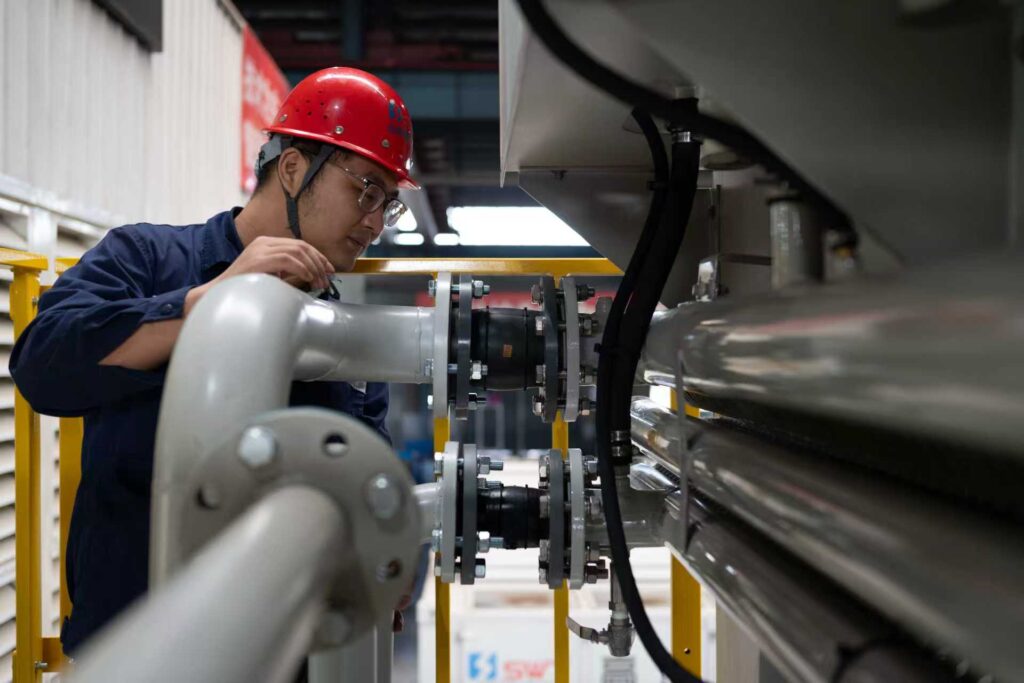
Top Diesel Genset Suppliers for Hyperscale and Colo Projects
Caterpillar: High-Power Density for Hyperscale
Hyperscale data centers demand massive power blocks in compact footprints. Caterpillar addresses this requirement with heavy-duty engines engineered for continuous, high-load operation. DCC-certified models in this class span from 1850 kW to 6250 kW, powered by both Cummins and Weichai engines. These units deliver 100% rated power for unlimited hours, a critical distinction for facilities running at near-full capacity around the clock.
The overload capability of these systems provides operational headroom. Each generator supports 110% of rated power for one hour every twelve hours, accommodating transient spikes during equipment cycling or grid disturbances. Transient response meets ISO 8528-5 G3 compliance for voltage and frequency regulation, ensuring stable power during load acceptance and rejection events. Alternators operate at Class F temperature rise with Class H insulation, creating a thermal safety buffer that extends component life.
For every 1,000 meters of altitude gain, power output drops by 8% to 12%. At 5,500 feet, a required load of 400 kW needs a generator rated at least 479 kW due to a derating factor of 0.835.
Site conditions demand careful derating calculations. Hyperscale buyers at high elevations must size equipment accordingly, as the evidence above demonstrates. Caterpillar’s global dealer network supports these deployments throughout the equipment’s lifetime. According to the company’s official communications, buyers receive “complete on-site dealer support from the largest network in the industry” plus access to “a robust worldwide parts network through Cat dealers and parts.cat.com.” This infrastructure reduces downtime risk across multi-site hyperscale campuses.
Cummins: Flexible Solutions for Multi-Region Colo
Colocation operators face a different challenge than hyperscale builders. They must deploy standardized power solutions across diverse regions while accommodating varying utility requirements and grid conditions. Cummins addresses this need with a flexible product architecture that adapts to regional specifications without compromising performance.
The same DCC-certified platform that serves hyperscale projects scales down effectively for colo deployments. Operators gain access to the 1850 kW to 6250 kW range with identical overload and continuous operation characteristics. This consistency simplifies fleet management, spare parts inventory, and technician training across multiple facilities. Environmental derating follows predictable curves, allowing colo engineers to calculate required capacity for each site using altitude and temperature data.
Cummins’ multi-region strength lies in its manufacturing footprint and service distribution. Colo operators expanding into new markets benefit from localized support infrastructure that mirrors their own growth trajectory. The company’s parallel capability enables modular expansion, allowing facilities to add capacity incrementally as tenant demand grows. Remote monitoring platforms provide real-time visibility into generator health, fuel consumption, and maintenance intervals across distributed portfolios. For colo operators managing dozens of sites, this centralized oversight transforms reactive maintenance into predictive operations. The flexibility of the platform, combined with consistent global support, positions Cummins as a reliable diesel genset supplier for colo operators with aggressive expansion plans.
Suppliers for Edge and Regional Deployments
MTU and Kohler: Reliable Options for Edge Sites
Edge data centers operate closer to end users. These facilities often occupy remote locations with limited space. Power reliability remains paramount, but the scale and complexity shrink. MTU and Kohler address this niche with compact, highly reliable generator sets.
MTU, a trusted diesel genset supplier, brings decades of engineering heritage to the edge segment. Its generator sets offer rapid start-up and load acceptance. These features matter for sites that must restore power within seconds. The brand’s durability reduces maintenance frequency, a real advantage for facilities with small on-site teams. MTU engines also deliver consistent performance across varying environmental conditions. This reliability proves essential for edge sites in extreme climates.
Kohler complements this offering with integrated power systems. These include automatic transfer switches and paralleling controls. Such components simplify deployment and reduce the number of vendors needed. Kohler’s industrial-grade generators match well with the demands of regional data centers. Both suppliers maintain strong service networks that extend to less populated regions. Edge sites lack the infrastructure of urban data centers. A supplier with local parts depots becomes essential. MTU and Kohler provide this coverage, ensuring uptime for distributed edge networks.
Generac: Cost-Effective Backup for Regional Data Centers
Regional data centers operate under different budget realities. Generac positions itself as a cost-effective alternative to premium brands. The company’s product line covers the 100 kW to 500 kW range, an ideal size for many regional deployments. Generac’s generators deliver reliable backup power without the premium price tag of larger suppliers.
Generac’s manufacturing efficiency drives down unit costs. The company produces high volumes of generator sets, benefiting from economies of scale. Regional operators gain competitive pricing and shorter lead times. Remote monitoring capabilities allow operators to track generator health across multiple sites. The widespread dealer network ensures parts availability in suburban and rural markets. For operators expanding their regional footprint, Generac provides a practical balance of cost and reliability.
SWT Power Solutions has also made inroads in this segment. The company’s integrated microgrid approach offers cost advantages for operators in emerging markets. SWT combines diesel generators with solar and storage, cutting fuel consumption. This flexibility appeals to regional data center operators seeking lower total cost of ownership. As a diesel genset supplier, SWT brings a compelling alternative to established brands.
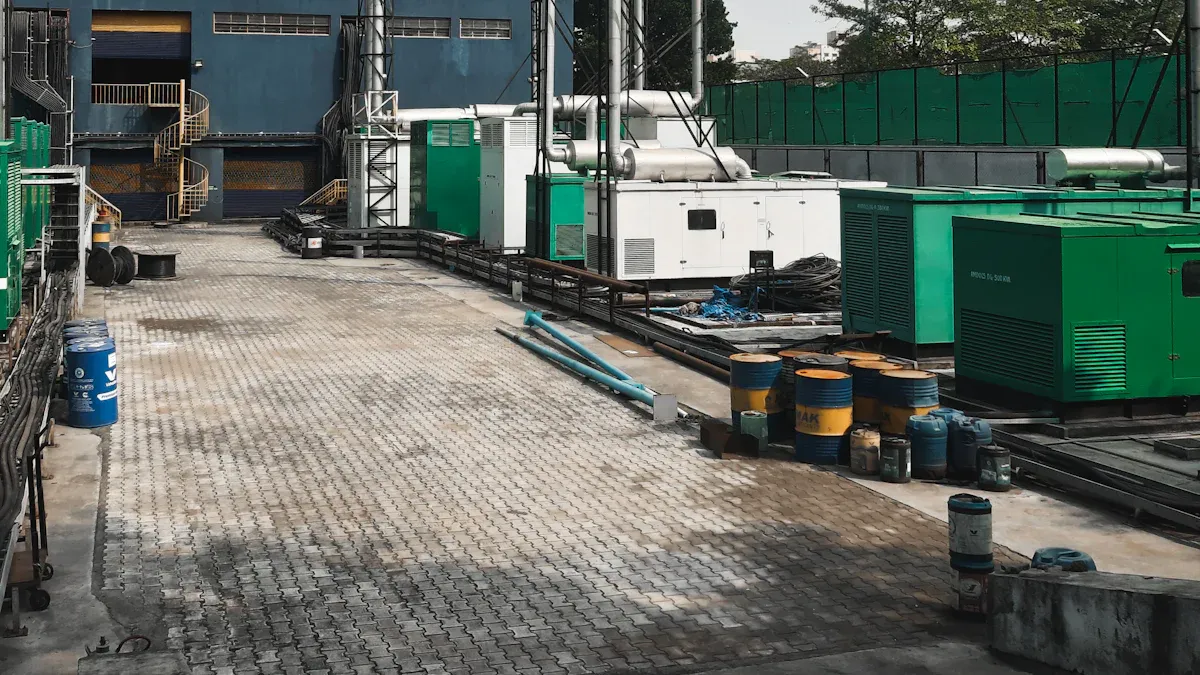
Emerging Diesel Genset Supplier for Global Data Centers: SWT Power Solutions
SWT: Global Track Record and Cost Advantage
SWT Power Solutions has operated since 1993, accumulating over three decades of manufacturing expertise. The company’s journey from domestic Chinese manufacturer to global power equipment provider demonstrates consistent capability growth. A pivotal moment arrived in 2005 when SWT secured a US$30 million contract from the United Nations. This agreement followed a comprehensive assessment of the company’s manufacturing systems and quality control procedures. SWT successfully delivered silent container-type generator sets to UN peacekeeping bases across Chad, Sudan, Liberia, and Lebanon. These units have operated with high reliability in demanding environments, proving the equipment’s durability under extreme conditions.
The manufacturing operation supports this global reach. SWT’s plant includes sheet metal fabrication, assembly lines, and high and mid-voltage testing facilities equipped with advanced CNC machinery. Independent processing and assembly lines operate under strict quality management protocols. This infrastructure enables an annual output of 7,000 sets of intelligent, green power units, positioning SWT as a domestic industry leader. For data center buyers, this production capacity translates into shorter lead times compared to competitors facing 110-week backlogs. The cost structure benefits from vertical integration, allowing SWT to offer competitive pricing without compromising component quality. Customers across more than 100 countries, including Southeast Asia, Australia, the Middle East, Africa, the Americas, and Europe, rely on SWT equipment. Domestic partnerships with Vanke, China Huaneng Group, and Peking Union Medical College Hospital further validate the brand’s reliability across sectors.
SWT: Integrated Microgrid and Intelligent Systems
SWT differentiates itself through integrated power solutions rather than standalone generator sales. The company combines hydrogen, solar, storage, and gas power technologies with diesel generation to build resilient microgrid systems. This approach delivers the most economical, reliable, and cleanest power supply configurations tailored to specific energy needs. For data center operators in emerging markets, this integration reduces fuel consumption and total cost of ownership. A facility can pair diesel generators with solar arrays and battery storage, cutting runtime hours and extending equipment life.
Intelligent control systems form the backbone of SWT’s offering. Cloud-based platforms provide real-time monitoring of generator health, fuel levels, and maintenance intervals. Predictive analytics identify potential failures before they disrupt operations. Remote diagnostics allow technicians to troubleshoot issues without dispatching to site, reducing downtime in distributed edge deployments. SWT’s vision centers on becoming the world’s most trusted manufacturer of light towers and generator sets. The company’s commitment to innovation, customization, and environmental awareness positions it as a forward-thinking diesel genset supplier for data center buyers seeking cost-effective alternatives to legacy brands. For global operators balancing budget constraints with reliability requirements, SWT presents a compelling option worth serious evaluation.
Decision Matrix: Matching Supplier to Project Scale
Project Scale Comparison
Matching a diesel genset supplier to a data center project requires evaluating several factors. The table below maps each supplier to its ideal project scale based on power range, reliability, lead time, compliance, and service network coverage.
| Project Scale | Best-Fit Supplier | Power Range | Lead Time | Compliance | Service Network |
|---|---|---|---|---|---|
| Hyperscale | Caterpillar / SWT | 1850–6250 kW | 12–18 months | EPA Tier 4, EU Stage V | Global dealer network |
| Colo | Cummins / MTU | 500–6250 kW | 8–14 months | Multi-region certifications | Regional service centers |
| Edge | Kohler / Generac | 100–500 kW | 3–6 months | Local emissions standards | Local parts depots |
Hyperscale projects demand the highest power density. Caterpillar delivers heavy-duty engines with continuous load capability. SWT offers integrated microgrid solutions that combine diesel with solar and storage. Both suppliers provide the scalability needed for multi-megawatt facilities. Colo operators benefit from Cummins’ flexible product architecture. The same platform works across regions, simplifying fleet management. MTU provides reliability for colo operators focused on uptime. Edge deployments favor Kohler’s integrated systems and Generac’s cost-effective backup. The 100–500 kW range matches the typical power needs of smaller facilities.
Reliability and uptime remain non-negotiable across all scales. Generators must comply with ISO 8528-G3 standards. Redundant starting systems ensure consistent performance. Compliance with tightening emissions regulations is critical. EPA Tier 4 and EU Stage V standards require advanced after-treatment systems. Buyers must verify that suppliers meet both local and global standards. Planning for future growth involves projecting IT load increases. Scalable architectures allow modular expansion without costly upgrades. Value ratings across reliability, cost, and support help match generators to specific project scales. Hyperscale buyers should prioritize power density and global service. Colo operators need flexibility and multi-region compliance. Edge deployments benefit from compact designs and local support.
Lead Times and Support Considerations
Lead times vary significantly among suppliers. Some models ship within 3–6 months. Other brands require up to 12 months. Caterpillar and SWT face extended lead times for hyperscale projects. Buyers must plan procurement early to avoid schedule delays. Expedited options may be available for urgent deployments. Treating manufacturers as engineering partners during the design phase secures hardware early.
Planned maintenance is non-negotiable for long-term reliability. Regular routines include engine fluid checks, filter changes, battery inspection, block heater checks, load bank testing, and full system inspections. These procedures prevent unexpected failures and extend equipment life. 24/7 technical assistance must be available. Factory-trained technicians located locally enable rapid emergency response. Spare parts availability is equally critical. Fluid analysis programs predict failures before they occur. Local support via dealer locator tools helps identify nearby service centers by city, country, or postal code. Quick response times depend on this infrastructure.
Rental power or equipment rentals should be offered during extended maintenance periods. This service maintains uptime while generators undergo scheduled service. Supplier selection must go beyond hardware specifications. Buyers should evaluate the manufacturer’s depth of experience in data centers. Global presence with local support is essential. Reputation verified through case studies or peer references provides additional confidence.
For data center buyers, the decision matrix above simplifies the selection process. Each project scale has a clear set of recommended suppliers. Lead times, compliance requirements, and service network capabilities must align with project goals. A careful evaluation of these factors ensures the right match between supplier and project scale.
Hyperscale buyers benefit from Caterpillar’s power density or SWT’s integrated microgrid. Colo operators gain flexibility with Cummins and reliability with MTU. Edge deployments suit Kohler or Generac’s cost-effective backup. SWT emerges as a compelling alternative for cost-conscious global deployments.
Selecting the right diesel genset supplier requires aligning capabilities with project scale. Service needs, compliance, and lead times matter equally. A diesel genset supplier must match the operational requirements of each facility. Contact our team for a personalized recommendation or a detailed supplier comparison spreadsheet.