Hybrid power improves data center backup reliability by layering instantaneous battery response with long-duration generator support, all coordinated by intelligent software. Traditional diesel-only backup has a critical gap—the 10-15 seconds it takes for generators to start. The hybrid system bridges this gap with batteries.
This article explains the mechanics of this layered approach. It covers the role of renewables like solar and wind. It also explores the financial and sustainability benefits of hybrid systems. Real-time software decides when to draw from batteries, generators, or renewable sources. Understanding these elements helps data centers achieve higher uptime and lower costs.
Defining Hybrid Power vs. Diesel Backup
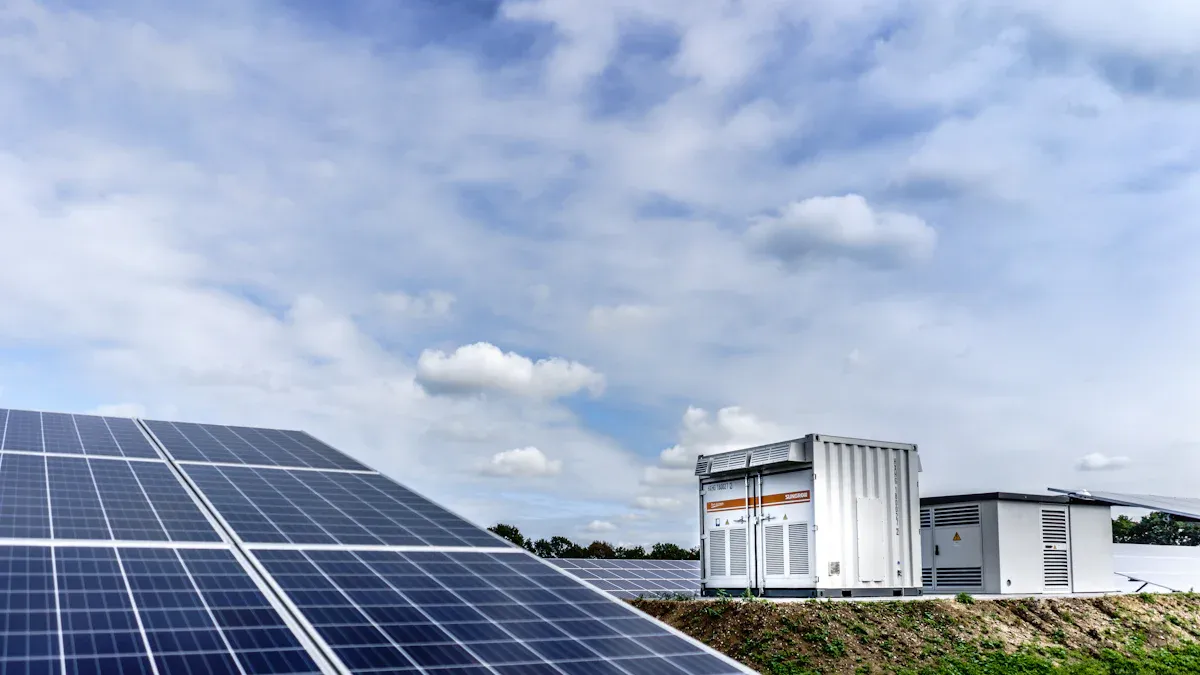
A hybrid power system integrates multiple energy sources into one coordinated architecture. Unlike a conventional setup that relies solely on diesel generators, this approach combines on-site generation, battery storage, intelligent controls, and grid connectivity. SWT’s Hybrid & Energy Storage Solutions exemplify this integration, merging solar and wind inputs with advanced storage to create a resilient microgrid capable of operating independently from utility failures.
The core components of a hybrid system work together seamlessly:
- On-site power generation: Traditional standby diesel or natural gas engines pair with renewable sources, fuel cells, or microturbines to produce continuous electricity locally.
- Energy storage systems (BESS): Industrial batteries capture surplus power during low-demand periods and release it instantaneously during load surges or grid dropouts.
- Control systems: Intelligent automation algorithms monitor utility stability, fuel reserves, battery state-of-charge, and server loads to direct power traffic efficiently.
- Grid integration: High-voltage switchgear and transfer controls connect the microgrid to the municipal grid, allowing fluid import, export, or isolation of power.
The Core Components of a Hybrid System
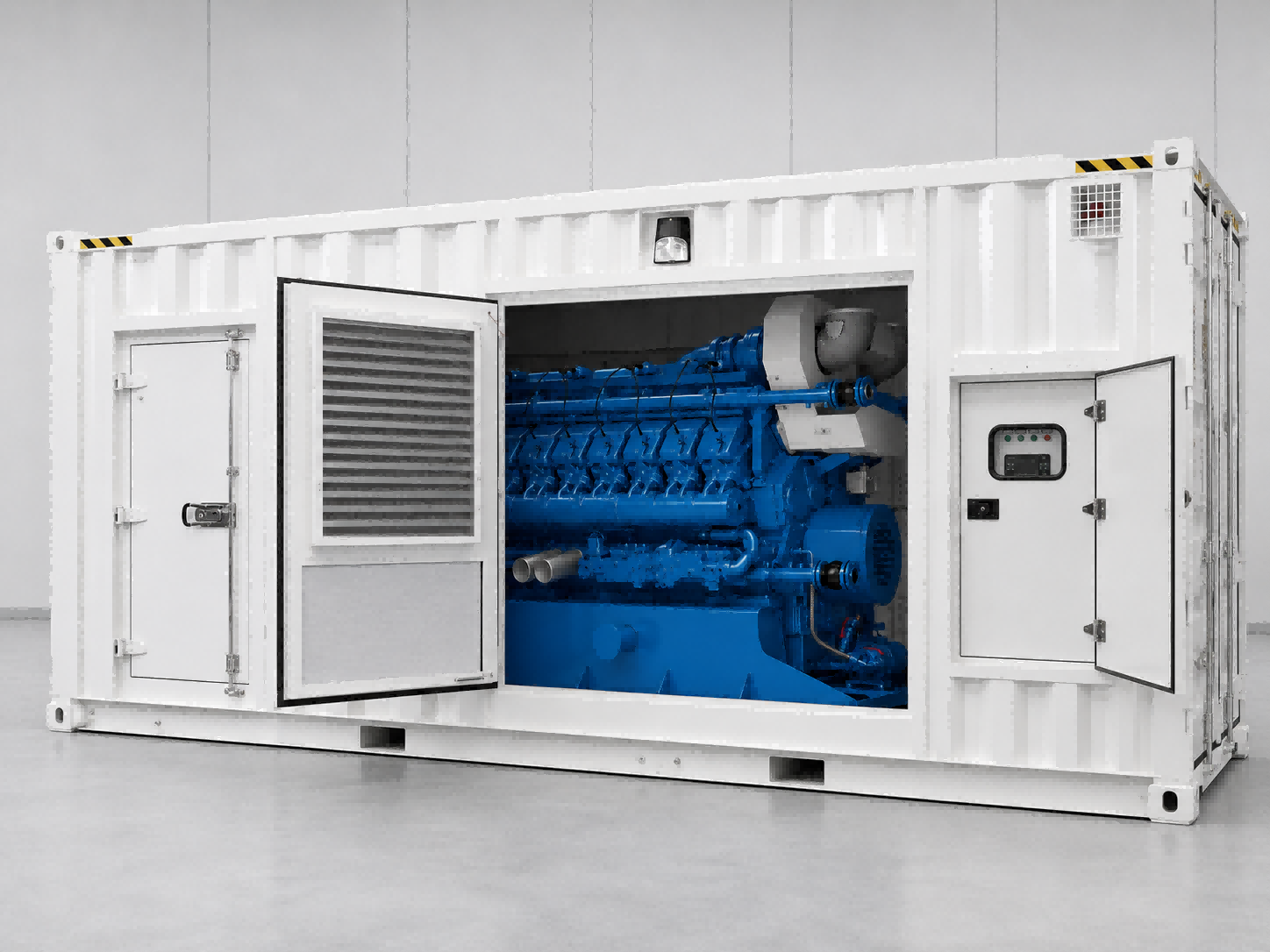
Each component serves a distinct role in maintaining uptime. UPS systems provide instantaneous backup power during the transition from utility power to generators, using lithium-ion batteries for faster charging and higher power density. Generator systems offer extended backup during prolonged outages, typically deployed in N+1 or 2N configurations. Large-scale battery systems provide backup power without emissions, noise, or fuel requirements. Redundant utility connections to different substations include automatic transfer systems that switch within milliseconds. Hydrogen fuel cells operate continuously as long as fuel is available, producing only water vapor.
Why Generator-Only Backup Falls Short
Traditional diesel-only backup has a fundamental weakness: the startup gap. Generators require 10-15 seconds to reach full power after a grid failure. During those seconds, critical loads experience interruption unless another power source bridges the gap. Generator-only systems also suffer from mechanical wear, fuel degradation, and maintenance demands that increase with runtime.
Hybrid power addresses these limitations through redundancy and intelligence. The system can operate as a microgrid, isolating from utility failures entirely. When one source falters, another compensates instantly. This layered approach eliminates the single point of failure inherent in generator-only designs. The result is a backup architecture that responds in milliseconds, sustains operations for days, and optimizes fuel consumption automatically.
Key Mechanisms for Enhanced Reliability
Instantaneous Ride-Through with Battery Storage
The ride-through capability represents the most significant reliability upgrade in modern backup architecture. When utility power fails, a battery energy storage system detects the outage and begins discharging within 10 to 50 milliseconds. This speed far exceeds human perception. A facility manager would not even notice a flicker before critical loads receive stable power.
The technical sequence unfolds with remarkable precision. The Power Conversion System detects the grid outage in less than 2 milliseconds using modern DSP-based control boards. The Static Transfer Switch then completes the switch to off-grid mode in 4 to 8 milliseconds. The entire process, from initial detection to forming a stable microgrid and beginning discharge, completes in under 20 milliseconds. This speed eliminates the dangerous gap that plagues generator-only designs.
During this ride-through period, the battery system maintains strict voltage and frequency parameters. The system operates in grid-forming mode, effectively meeting voltage ride-through and post-fault recovery requirements set by IEEE 2800 standards. Voltage at the point of interconnection may briefly drop below acceptable limits following grid disconnection. The battery system adjusts its output to restore voltage to an acceptable range. Frequency may dip slightly below 60 Hz during the fault, then quickly stabilizes back to nominal levels after fault clearance. The battery inverter current responds dynamically, supplying the required active and reactive power to maintain system balance.
These IEEE 2800 limits define clear operational boundaries. The system must maintain continuous operation within a voltage range of 0.9 to 1.1 per unit. During mandatory operation, it must withstand 0.3 to 0.9 per unit for up to 20 seconds. Below 0.3 per unit, the system must not trip for less than 0.15 seconds. Frequency stability requires operation between 59.5 and 60.5 Hz. These specifications confirm that the battery system remains connected and operational throughout the transition, providing uninterrupted power to servers and cooling equipment.
Intelligent Load Management and Fuel Optimization
Smart management technology elevates hybrid power from a simple backup source to an active energy optimization platform. SWT’s control systems continuously monitor utility stability, battery state-of-charge, generator fuel levels, and real-time server loads. The automation algorithms then direct power traffic according to a priority hierarchy that maximizes efficiency.
The optimization logic follows a clear sequence. Solar generation supplies power first during daylight hours, offsetting grid consumption entirely when production exceeds demand. Battery storage discharges next, particularly during peak rate periods or when solar output diminishes. Generators activate only when both renewable sources and battery reserves cannot meet the load. This approach extends runtime substantially while reducing fuel consumption to the minimum necessary for continuous operation.
Consider a practical scenario during a prolonged outage. At midday, solar panels generate ample power for the facility’s needs. The control system routes this energy directly to critical loads while simultaneously charging the battery bank. As the sun sets, solar output declines. The system shifts to battery discharge, drawing stored energy to maintain operations through the evening. Only when battery state-of-charge drops to a predetermined threshold does the generator start. The generator then runs at optimal efficiency, charging batteries while powering the facility, rather than operating continuously at partial load.
This intelligent coordination delivers measurable benefits. Reduced generator runtime translates directly to lower fuel costs, fewer oil changes, and diminished mechanical wear. The system also enables peak shaving during normal grid operation, storing energy during low-rate periods and discharging during expensive peak hours. SWT’s smart management technology ensures power availability precisely when needed, creating a backup architecture that responds in milliseconds, sustains operations for extended periods, and optimizes every kilowatt of energy consumed.
Cost and Sustainability Benefits of Hybrid Power
Reducing Fuel Costs and Maintenance Burdens
The financial case for hybrid power rests on one simple fact: generators that run less cost less. A diesel generator consumes fuel every hour it operates, whether at full load or idle. Each running hour also counts toward mandatory maintenance intervals. Oil changes, filter replacements, and coolant top-offs all accumulate with runtime. A hybrid system slashes these expenses by keeping generators offline during normal conditions and using them only when renewable sources and batteries cannot meet demand.
Consider the maintenance schedule. Most industrial generators require oil changes every 250 to 500 running hours. A facility that runs its generator only 50 hours per year instead of 500 hours reduces oil changes by roughly 90 percent. Fuel consumption follows a similar pattern. A typical 1-megawatt generator burns approximately 75 gallons of diesel per hour at full load. Eliminating 400 hours of runtime saves roughly 30,000 gallons of fuel annually. These figures translate directly to operational savings that compound year after year.
SWT’s Hybrid & Energy Storage Solutions deliver significant cost savings over time through this exact mechanism. The smart management system tracks battery state-of-charge, solar output, and facility load continuously. It starts the generator only when absolutely necessary. This approach minimizes fuel purchases, extends engine life, and reduces scheduled maintenance frequency. The result is a backup system that costs less to own and operate than a traditional diesel-only configuration.
Meeting Carbon Goals Without Sacrificing Uptime
Sustainability and reliability no longer conflict in data center design. Hybrid power integrates solar and wind generation directly into the backup architecture. During daylight hours, photovoltaic panels can power critical loads entirely from renewable energy. This reduces grid consumption during normal operation and extends battery reserves during outages. The carbon footprint of daily operations drops without compromising the ability to respond to emergencies.
SWT’s mission to keep the Earth green and clean drives this design philosophy. Their systems prioritize renewable sources first, drawing from solar arrays and wind turbines whenever available. Batteries store excess renewable energy for later use. Generators serve as a final safety net rather than a primary power source. This hierarchy ensures that every kilowatt of renewable energy displaces fossil fuel consumption.
The scalability of these systems makes them practical for facilities of all sizes. A small edge data center can deploy a compact hybrid unit with modest solar capacity. A large hyperscale facility can implement a multi-megawatt system with extensive battery banks and wind integration. Both configurations achieve the same goal: reduced emissions without sacrificing the milliseconds-fast response that modern workloads demand. As renewable technology costs continue to decline, the economic and environmental advantages of hybrid power will only grow stronger.
Hybrid Power Response to a Grid Outage
A grid outage triggers a precisely choreographed sequence in a hybrid power system. Each layer of the architecture responds according to its design, from millisecond-level electronics to fuel-burning generators that take seconds to spin up. Understanding this sequence reveals why hybrid power delivers reliability that single-source backup cannot match.
The First 10 Seconds: Seamless Transition
The moment utility power fails, the system detects the disturbance and begins islanding. One battery energy storage system inverter switches to grid-forming mode, establishing voltage and frequency references for the entire facility. The connection to the grid breaks, and the battery instantly powers critical loads.
Static transfer switches make this transition virtually imperceptible. High-speed detection methods monitor voltage changes and current transients continuously. Semiconductor switching completes commutation in 1 to 4 milliseconds. Complete detection-and-transfer processes finish in 12 milliseconds or less, according to FFD POWER specifications. LayerZero reports even faster performance, with sub-4 millisecond transfers using silicon-controlled rectifiers. Industry standards from PCBONLINE confirm switching times of 2 to 8 milliseconds, far shorter than the 15 to 30 millisecond hold-up time of most IT equipment.
This speed matters because servers and cooling systems cannot tolerate even brief interruptions. The battery bridges the gap that generator-only designs leave open. During those critical first seconds, the battery maintains voltage within acceptable ranges and keeps frequency stable near 60 Hz.
Decentralized control architecture ensures no single point of failure exists during this transition. Each asset—battery, generator, solar array—has its own local controller making autonomous decisions. These controllers communicate toward shared objectives without requiring a central brain. If communication with one device fails, the system continues operating. The handover from battery to generator is designed as a seamless coordination, preventing interruption during the entire sequence.
The Next 24 Hours: Efficiency and Extended Runtime
Once the battery stabilizes the microgrid, the energy management system evaluates available resources. Solar generation takes priority during daylight hours. Excess renewable energy charges the battery bank while simultaneously powering facility loads.
The prioritization sequence follows a clear logic:
- Solar powers the facility directly, with surplus stored in batteries.
- When solar output declines or darkness falls, the battery discharges to sustain operations.
- Only when battery state-of-charge drops to a predetermined threshold does the generator start.
- If solar continues generating during the outage, it works alongside the generator to reduce fuel consumption.
- Smart load shedding disconnects non-critical equipment to prevent generator overload and maximize efficiency.
Standard battery sizing for critical load coverage ranges from 8 to 24 hours. With three-tier load prioritization—focusing on life-safety, medical, and refrigeration loads—batteries can sustain operations for 12 to 24 hours. This extended duration excludes comfort loads and convenience items from battery power during outages.
The system prioritizes free battery backup and switches to generator power only as necessary to supplement energy needs and recharge the battery—minimizing fuel consumption and maximizing peace of mind.
This layered approach ensures no single failure point compromises uptime. Batteries handle immediate response. Generators provide endurance for extended outages. Solar reduces fuel consumption throughout. The coordination between these layers transforms backup power from a binary on-off proposition into a continuously optimized energy ecosystem.
Reliability has shifted from a single generator to a coordinated ecosystem of power sources. Speed from batteries, endurance from generators, and intelligence from software form the three pillars of modern backup architecture. Each layer compensates for another’s weakness.
Data center operators should audit their current backup systems. Does your facility transition seamlessly during outages? Are you leveraging renewables to reduce operational costs? These questions reveal gaps in traditional designs.
As renewable costs decline and battery technology improves, this integrated approach becomes standard for critical facilities. It is no longer a luxury. It is the foundation of resilient, sustainable data center operations.