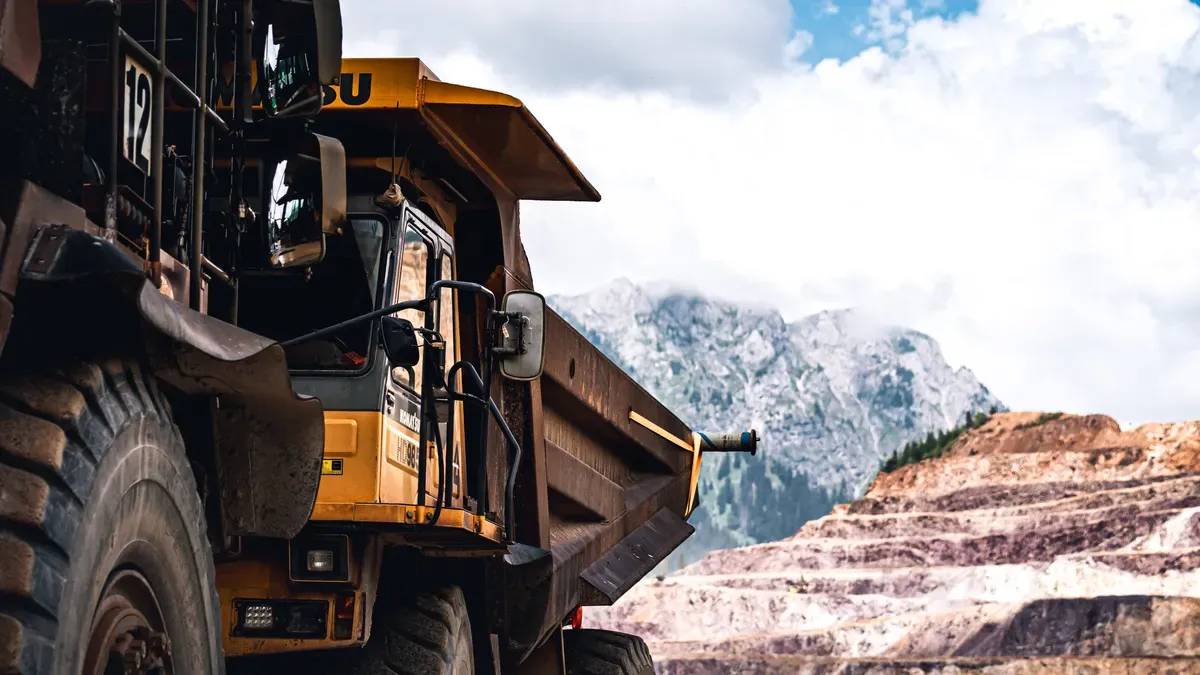
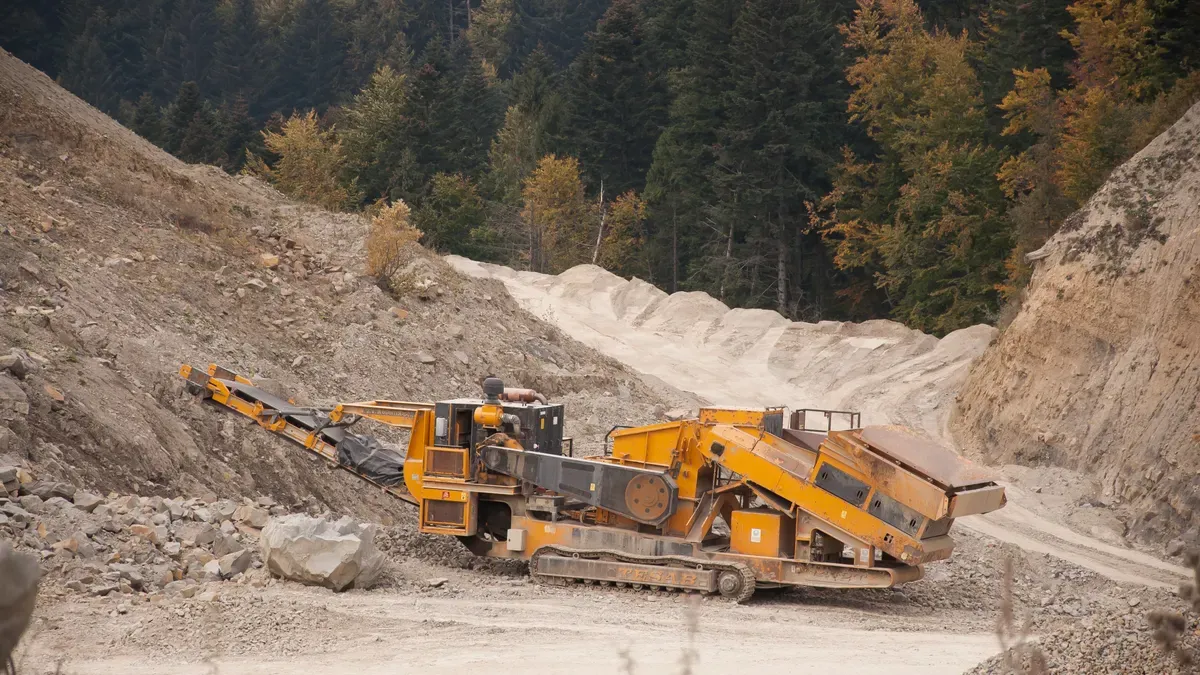
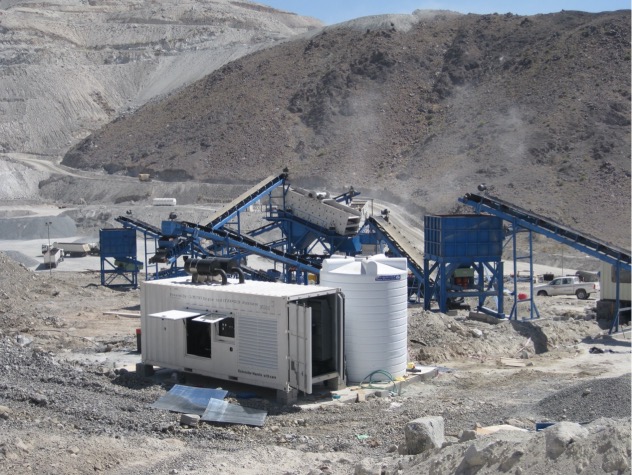
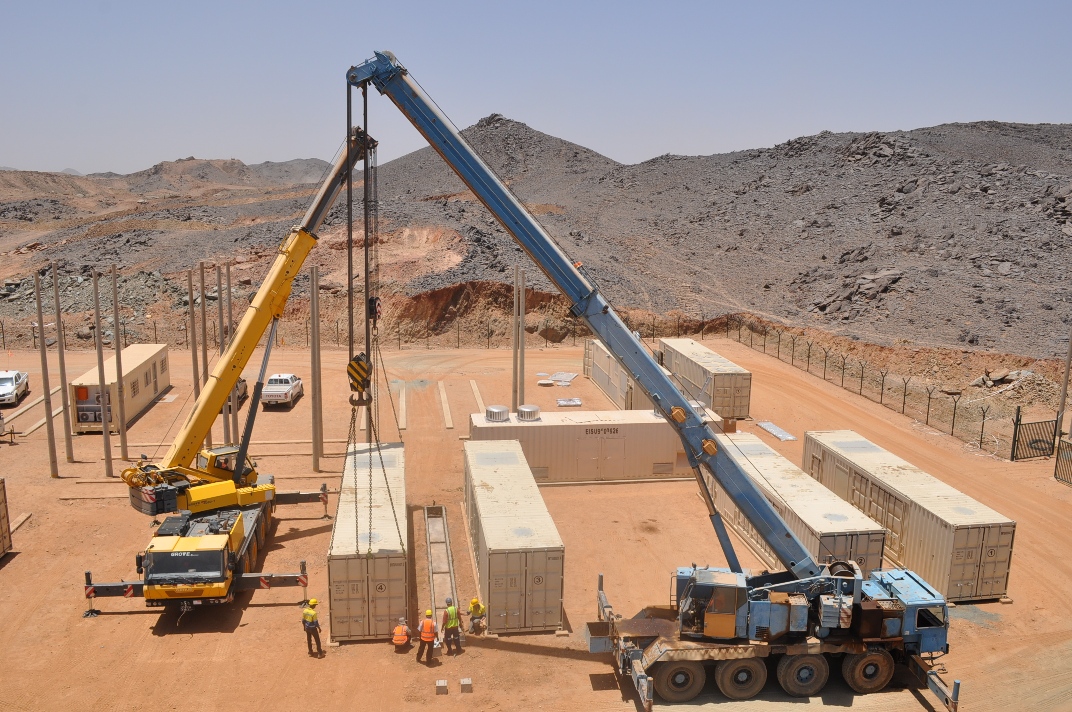
Mining operations rarely stop when daylight ends. Open-pit mines, quarries, construction areas, stockyards, road projects and remote industrial sites often require continuous work through the night. In these environments, lighting is not simply a matter of installing several high-power lamps around a work area. The equipment has to provide stable illumination, remain mobile as site conditions change, operate for long periods without frequent refueling and withstand rough ground, wind and demanding outdoor conditions.
A Mining Lighting Tower is designed around these requirements. Its value comes from the complete system rather than the lamp output alone. Mast height, light adjustment, generator configuration, engine performance, fuel capacity, chassis construction, stabilization and automatic controls all affect how effectively the lighting tower performs on a working site.
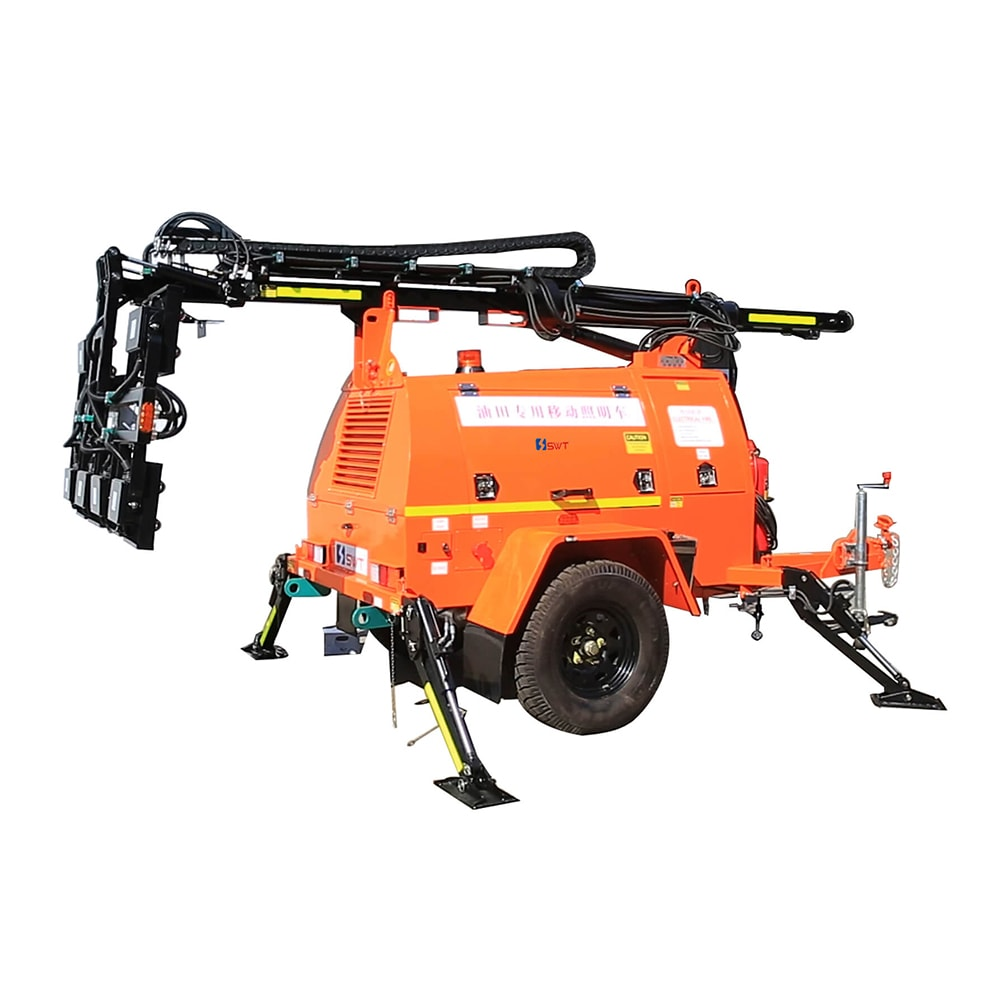
The 75M/H Mining Series Lighting Tower, equipped with eight 300 W DC LED lamps, a 9.1 m mast and a diesel-powered 48 V DC electrical system, is built around this type of application. Its configuration combines high-output LED lighting with extended operating time, a mine-spec chassis and multiple safety systems. The result is a mobile lighting unit intended for locations where conventional portable lighting equipment may not provide enough durability or operating autonomy.
What Makes a Mining Lighting Tower Different?
A standard portable lighting tower may be suitable for temporary construction work or general outdoor events. Mining environments impose a different set of requirements.
Ground conditions can change from one shift to another. Equipment may need to travel over gravel, compacted earth, uneven access roads or rough haul routes. Lighting positions can also change as excavation faces, stockpiles, maintenance areas and temporary work zones move.
For this reason, a Mining Site Lighting Tower needs to be considered as mobile site equipment rather than simply a lighting fixture mounted on a trailer.
| Requirement | General Lighting Tower | Mining Lighting Tower |
|---|---|---|
| Ground conditions | Relatively prepared surfaces | Rough and uneven terrain |
| Chassis | Standard trailer construction | Rugged, off-road configuration |
| Stabilization | Basic support | Heavy-duty stabilizer system |
| Operating time | Often designed around normal shifts | Extended runtime for continuous operations |
| Mobility | Road or site movement | Off-road site relocation |
| Safety | Basic engine and electrical protection | Multiple shutdown and warning systems |
| Lighting adjustment | Limited positioning | Mast rotation and adjustable lamp tilt |
| Towing | Standard trailer requirements | Higher-capacity site towing configuration |
The difference becomes particularly important when a lighting tower is deployed far from a workshop or permanent power supply. A unit that performs well on a flat construction site may not necessarily be the right choice for a mining worksite.
The equipment therefore has to be evaluated from the complete operating system: lighting coverage, power generation, runtime, mobility, stability and safety.
Lighting Coverage Starts With Mast Height and Lamp Position
The primary function of a lighting tower is to place sufficient light over the required working area. Two specifications are especially important: the height of the mast and the ability to direct the lamps.
The 75M/H Mining Series Lighting Tower uses a 9.1-meter mast. At this height, the lamps are positioned well above ground-level equipment and personnel, allowing light to be distributed from an elevated position.
The mast can rotate through 180°, while the light tilt is adjustable through 140°. These adjustment ranges are important on changing work sites because the most useful lighting direction is not always directly in front of the machine.
For example, a mine may require lighting toward an excavation area during one stage of a project and toward a maintenance or loading zone later in the shift. Being able to reposition the lighting direction reduces the need to move the complete trailer every time the working direction changes.
The eight 300 W DC LED lamps provide a combined installed LED power of 2,400 W. With a rated efficacy of 175 lumens per watt, the stated total light output reaches 420,000 lumens.
That figure provides a useful indication of the tower’s lighting capacity, but it should not be treated as a direct measurement of the illuminated area.
Lumens Are Not the Same as Lighting Coverage
Lumens describe the total amount of visible light produced by the lamps. A mining contractor, however, normally needs to know something more practical:
- How much of the work area can be illuminated?
- What illumination level will be available at ground level?
- Where will shadows appear?
- How should multiple towers be positioned?
- What happens when equipment or stockpiles block the light?
These questions require photometric information, beam distribution, mounting height and site layout.
A 420,000-lumen lighting tower can provide a large amount of light, but the final lighting arrangement depends on the actual worksite. An open stockyard, narrow access road and deep excavation face have very different lighting requirements.
For procurement teams, this means that LED Mining Lighting Tower selection should not be based on lumen output alone. Mast height, lamp adjustment and the intended placement of the tower should be evaluated together.
What Does 420,000 Lumens Mean on a Mining Site?
High-output LED lighting becomes particularly valuable where large work areas have to remain operational after dark.
Mining and quarrying sites commonly contain multiple activity zones. Haul roads may require visibility for vehicle movement, while loading areas, maintenance zones and material handling areas need stronger local illumination. A single fixed light source rarely provides an ideal solution for every location.
A mobile tower allows the lighting system to be positioned according to the current work plan.
The 9.1 m mast creates an elevated light source, while the 180° mast rotation and 140° lamp tilt provide additional flexibility. The eight-lamp arrangement also allows the light output to be distributed across a broad working direction rather than relying on one concentrated source.
Actual lighting coverage should still be confirmed against the project’s required lux level, beam pattern, terrain and equipment layout. For mining projects, this engineering step is more useful than simply comparing advertised lumen numbers between different manufacturers.
Long Runtime Reduces Refueling Interruptions
Lighting equipment used at remote sites faces another practical problem: fuel management.
A lighting tower that requires frequent refueling creates additional work for operators and maintenance personnel. More importantly, every refueling interval creates an opportunity for lighting downtime.
The 75M/H Mining Series Lighting Tower uses a 103-liter diesel fuel tank and has a stated fuel consumption of 0.877 L/h. Based on these figures, the theoretical operating duration is approximately 117 hours, which corresponds closely with the manufacturer’s stated 117-hour running time.
That runtime is significant for sites where lighting is required for extended periods.
Instead of treating the lighting tower as equipment that needs to be checked and refueled every few hours, site managers can plan fuel servicing around a much longer operating interval. The practical benefit is particularly relevant for remote mine areas where the distance between the lighting tower and fuel storage facility can be considerable.
| Parameter | 75M/H Mining Series Lighting Tower |
|---|---|
| Fuel | Diesel |
| Fuel tank | 103 L |
| Fuel consumption | 0.877 L/h |
| Stated running time | 117 h |
| Engine speed | 1,800 rpm |
| Engine | Kubota Z482 |
Fuel consumption also matters during procurement because operating cost is determined over the life of the equipment, not only by the initial purchase price.
For contractors running several lighting towers simultaneously, even a relatively small difference in hourly fuel consumption can become significant over thousands of operating hours.
Kubota Diesel Engine and 48 V DC Power System
The lighting system is powered by a diesel engine and generator combination designed specifically around the LED load.
The unit uses a Kubota Z482 diesel engine operating at 1,800 rpm. The engine drives a Leroy Somer SWT48-3.0 generator, which provides a 48 V DC output at 62.5 A.
This configuration is different from a conventional AC-powered lighting system. The generator produces DC power for the LED lighting circuit, creating a direct relationship between the power-generation system and the DC LED lamps.
The architecture can be viewed as three connected stages:
Diesel fuel → diesel engine → 48 V DC generator → DC LED lighting system
This arrangement is particularly relevant because the lamps themselves are specified as DC LED units. The electrical configuration is therefore closely matched to the lighting system rather than relying on a general-purpose power output for multiple unrelated loads.
For mining applications, system compatibility matters. Generator capacity, lamp load, control system and protection functions should all be evaluated together instead of selecting an engine and lamps independently.
Why the Mine-Spec Chassis Matters
A lighting tower may spend most of its operating life standing in one position, but it still needs to be moved.
Mining operations change continuously. Excavation faces advance, material stockpiles move, construction zones are completed and temporary maintenance areas appear. A Portable Mining Lighting Tower therefore needs a chassis capable of handling repeated relocation.
The 75M/H model uses a rugged mine-spec chassis with off-road suspension. The axle is rated at 2 tonnes, while the stated towing capacity reaches 2,500 kg with ADR.
The equipment uses 275/65R16 tyres, mechanical brakes and a standard 3-inch ring hitch. Four stabilizer legs provide additional support when the tower is deployed at the working location.
These specifications have practical consequences.
A lighting tower with a robust chassis can be treated as mobile worksite equipment rather than a stationary generator with lights attached. It can follow the work front and be relocated when the lighting requirement changes.
The suspension and tyre configuration also become important when moving the unit over uneven ground. However, towing speed, road access and operating conditions must always follow the manufacturer’s requirements and applicable local regulations.
Stabilization Is Part of the Lighting System
The mast is the highest point of the equipment and therefore introduces wind loading. The stability of the entire unit depends on the relationship between mast height, wind conditions, chassis weight and ground support.
The 75M/H Mining Series Lighting Tower has a stated 110 km/h wind rating. It is also equipped with four stabilizer legs, available in manual or hydraulic configurations.
Stabilizers are not merely trailer accessories. They create a wider and more stable support arrangement when the mast is deployed.
Ground conditions still need to be considered. A lighting tower positioned on compact, level ground has a different stability profile from one positioned on loose gravel or a sloped surface. Operators should follow the manufacturer’s deployment requirements, particularly when the mast is extended and wind conditions increase.
For mining sites, positioning is therefore part of safe lighting operation. The tower should be placed where the lighting objective can be achieved without compromising access, vehicle movement or equipment stability.
Safety Features for Continuous Worksites
Mining equipment operates around vehicles, machinery, maintenance crews and other site personnel. A lighting tower therefore needs more than basic electrical protection.
The 75M/H Mining Series Lighting Tower incorporates several safety functions covering engine protection, emergency shutdown, starting warnings, hydraulic movement and physical security.
| Safety Feature | Practical Function |
|---|---|
| Emergency stop | Provides rapid shutdown during an emergency |
| Low-fuel shutdown | Protects operation when fuel reaches a low level |
| High-temperature protection | Shuts down the engine under excessive temperature conditions |
| Low-coolant protection | Helps prevent operation with insufficient coolant |
| Oil-pressure shutdown | Protects the engine against unsafe oil-pressure conditions |
| Battery isolator | Allows the battery circuit to be isolated |
| Flashing LED beacon | Provides a visible warning around the equipment |
| Audible and visual pre-start warning | Alerts personnel before automatic starting |
| Hydraulic circuit limit switches | Controls mast/hydraulic movement limits |
| Mechanical locks on gas struts | Helps secure relevant access components |
| Fire extinguisher | Provides on-site emergency response capability |
| Wheel chocks | Helps secure the tower when parked |
The value of these features is most obvious during unattended or semi-automatic operation.
A tower operating for an extended period may start automatically according to a programmed schedule. Personnel may not be standing beside the equipment when the engine starts. Audible and visual warnings therefore provide an additional layer of site awareness.
Engine protection systems also help prevent continued operation under conditions that could damage the power unit.
Automatic Start and Stop for Scheduled Lighting
Lighting requirements often follow predictable work schedules.
A mine may require illumination from a particular evening hour through the early morning shift. A construction site may have defined night-working periods. In these situations, manual starting and stopping is not necessarily the most convenient operating method.
The tower includes an automatic start timer and automatic stop timer, controlled through the LT920PLC system.
This allows the operating schedule to be coordinated with site requirements. Automatic operation can also reduce unnecessary runtime when lighting is not required.
The control system should be considered part of the equipment management strategy rather than simply an electronic convenience. When several lighting towers are deployed across a large worksite, consistent operating schedules become easier to manage when the equipment supports programmed control.
Optional remote control and GPS tracking systems extend this concept further.
GPS tracking can be useful for fleets where equipment moves between multiple work areas or projects. Remote control can reduce the need for personnel to approach each individual unit for routine operation, subject to the system’s specified range and operating requirements.
Noise Levels in Mining and Industrial Applications
Noise is another factor that is sometimes overlooked during lighting tower selection.
Mining sites are naturally noisy, but lighting towers may also be positioned near maintenance workshops, offices, worker accommodation, access points or neighboring properties. A unit with a high engine noise level can become an additional source of disturbance during night operations.
The stated noise level for the 75M/H Mining Series Lighting Tower is:
- 67 dB(A) at 1 meter
- 62 dB(A) at 7 meters
The reduction with distance is useful when considering where the equipment will be positioned.
Noise assessment should still be based on the complete worksite rather than one equipment specification. Distance, surrounding machinery, barriers, terrain and operating schedules all influence the actual acoustic environment.
The tower also uses flame-retardant soundproofing, which forms part of its enclosure and safety configuration.
Wind Resistance and Outdoor Deployment
A Heavy Duty Lighting Tower intended for mining applications has to operate outdoors, where weather conditions cannot be controlled.
The stated 110 km/h wind rating provides an important reference for equipment selection. However, wind resistance is not a standalone specification. Mast position, stabilizer deployment, ground conditions and the manufacturer’s operating instructions all influence safe use.
The 9.1 m mast raises the lighting source above the working area, but it also increases the exposed structure. The equipment therefore needs to be deployed correctly rather than simply parked and switched on.
This is particularly important for temporary lighting because towers are often relocated according to production requirements. Every new position should be checked for ground condition, vehicle traffic, clearance and stability before the mast is raised.
Mobility for Changing Mine Work Areas
One of the strongest reasons to select a mobile lighting tower is that mining sites do not remain static.
Consider an open-pit operation where the active working face changes gradually. A fixed lighting installation would require new poles, cabling or electrical infrastructure as the work area moves.
A towable lighting tower takes a different approach.
The lighting source moves with the operation. Once the tower is no longer providing the required lighting position, it can be relocated to another area.
The 75M/H unit has a wet weight of 1,980 kg, a 2-tonne axle rating and a stated towing capacity of 2,500 kg with ADR. Its overall dimensions are approximately 5,100 mm long, 1,840 mm wide and 2,530 mm high when configured as specified.
These dimensions matter during logistics planning. Access roads, transport vehicles, storage areas and towing regulations should all be considered before deployment.
The optional skid base can also be relevant for projects where the equipment is installed in a more fixed position rather than frequently towed around the site.
Where Can a Mining Lighting Tower Be Used?
The product configuration is suited to applications where high-output mobile lighting is required and grid power may be unavailable or inconvenient.
Typical applications include mining operations, quarries, large construction projects, road works, industrial yards, remote infrastructure projects and temporary work areas.
The specific placement depends on the site’s lighting plan.
For example, a quarry may use the tower around extraction and loading areas. A construction contractor may position it near structural work during night shifts. A mining operation may use several units along haul routes, maintenance zones and active work faces.
The key advantage is not that one tower can illuminate every part of a large site. Instead, the equipment provides a flexible lighting point that can be repositioned as operational requirements change.
How to Select the Right Mining Lighting Tower
Purchasing teams should start with the worksite rather than the product catalogue.
The first question is the required lighting level and area. Once that has been established, mast height and lamp distribution can be assessed. Runtime should then be matched to the required operating schedule, followed by mobility, stabilization, control and safety requirements.
| Selection Factor | Questions for Procurement |
|---|---|
| Lighting requirement | What lux level and working area need to be covered? |
| Mast height | How high should the light source be positioned? |
| Lamp output | Is the total lumen output suitable for the application? |
| Lamp adjustment | Can the light be directed toward the required work zone? |
| Runtime | How long must the tower operate between refueling intervals? |
| Fuel consumption | What will the long-term fuel cost be? |
| Mobility | Will the tower move frequently between work areas? |
| Chassis | Can it handle the site’s road and ground conditions? |
| Stabilization | What support is required for the mast deployment? |
| Wind rating | What environmental conditions must the equipment accommodate? |
| Automation | Are automatic start/stop functions required? |
| Fleet management | Would remote control or GPS tracking add value? |
| Safety | What shutdown, warning and emergency functions are required? |
| Noise | Is the tower close to personnel or noise-sensitive areas? |
This approach prevents the procurement process from becoming a simple comparison of wattage or price.
A cheaper tower may have a lower initial purchase cost but require more frequent refueling, more manual intervention or more site relocation effort. Conversely, a higher-output unit is not automatically better if the lighting distribution does not match the work area.
The best Mine Site Lighting Equipment is the one whose complete configuration matches the actual operating conditions.
Why the 75M/H Mining Series Lighting Tower Fits Heavy-Duty Sites
The 75M/H Mining Series Lighting Tower brings several engineering decisions together in one mobile platform.
Its 9.1 m mast, 180° rotation and 140° light tilt give operators control over the direction of the lighting system. Eight 300 W DC LED lamps provide a stated total output of 420,000 lumens at 175 lm/W.
The diesel power system combines a Kubota Z482 engine with a Leroy Somer SWT48-3.0 generator, delivering 48 V DC at 62.5 A to the lighting system.
The 103-liter fuel tank and stated 117-hour runtime reduce the frequency of refueling operations. This is particularly valuable for remote work areas where every service visit requires additional labor and transport planning.
Mobility is supported by the rugged mine-spec chassis, off-road suspension, 2-tonne axle, 2,500 kg towing capacity with ADR, 275/65R16 tyres and four stabilizer legs.
Safety has also been considered at several levels, from emergency stop and battery isolation to engine shutdown protection, pre-start warnings, hydraulic limit switches and a flashing LED beacon.
For projects that require longer operating autonomy, additional management functions are available through options such as a 220-liter large fuel tank, remote control, GPS tracking and skid-base configuration.
This combination makes the unit particularly relevant where lighting equipment has to work as part of the site’s daily production system rather than as temporary auxiliary equipment.
Mining Lighting Is an Equipment Selection Decision
Night lighting affects more than visibility.
On a mining or construction worksite, lighting influences how equipment operators see their surroundings, how maintenance teams carry out inspections and how efficiently night shifts can continue. The lighting tower itself therefore needs to be reliable, mobile and appropriate for the environment in which it will operate.
The lamp specification is only one part of that decision.
Mast height determines the position of the light source. Lamp adjustment determines where the light is directed. Generator and engine selection determine how the lamps receive power. Fuel capacity affects operating autonomy. The chassis determines whether the tower can follow the worksite. Stabilizers and wind rating affect deployment. Automatic controls and protection systems influence how the equipment can be managed during long operating periods.
For a Mining Lighting Tower, these elements have to work together.
The 75M/H Mining Series Lighting Tower is configured around that complete requirement, combining high-output DC LED lighting, extended diesel runtime, off-road mobility and mine-oriented safety features in one towable platform.
For mining contractors, quarry operators and heavy-duty worksite managers, the right lighting tower is therefore not simply the unit with the highest lumen rating. It is the unit that can deliver the required illumination, remain operational for the required shift duration, move with the worksite and maintain safe operation under demanding outdoor conditions.
That is the standard by which a professional mining lighting solution should be evaluated.