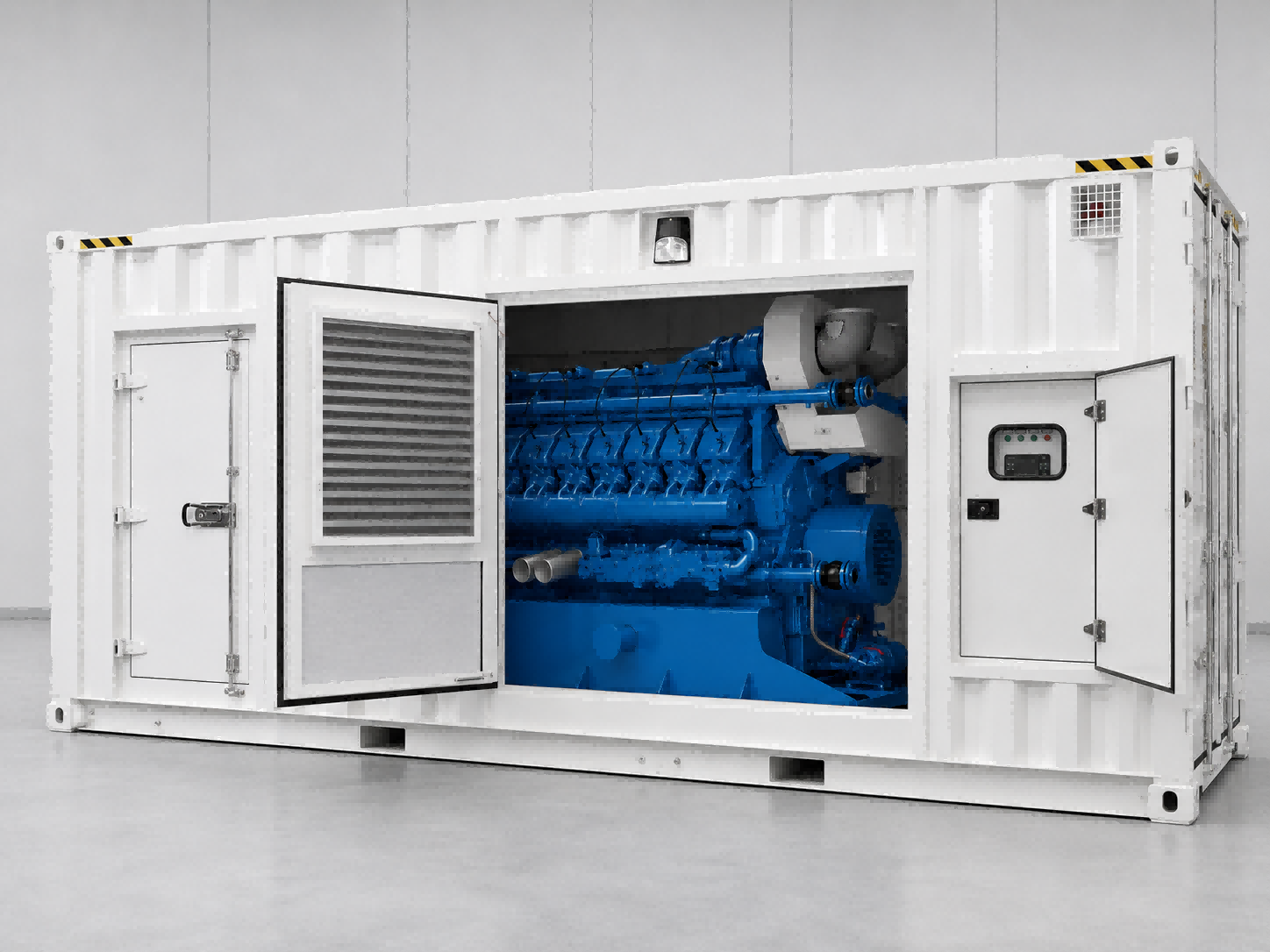
Leading companies such as SWT, Caterpillar, Cummins, Kohler, MTU, and Generac manufacture low-noise diesel generators for data centers. Quiet operation is essential in these facilities to protect sensitive equipment and maintain a safe working environment. Industry guidelines often set maximum daytime noise at 60 dBA and nighttime noise at 55 dBA. Limits for low-frequency noise also help reduce disturbances. Reliable power and minimal noise are critical for mission-critical operations.
Top Manufacturers of Low-Noise Diesel Generators
SWT
SWT stands out as a leading global manufacturer with over 30 years of experience in the power generation industry. The company specializes in generator sets and mobile lighting towers, serving data centers, oil and gas, and power plants. SWT offers a wide range of generator sets, from 8.3kVA to 3781kVA, which allows for tailored solutions in both standard and specialized applications. The company’s products are designed for reliability and high performance in mission-critical environments. SWT’s commitment to sustainability is evident in its eco-friendly practices and advanced engineering. With a manufacturing base covering more than 70,000 square meters and an annual production capacity exceeding 10,000 units, SWT can handle projects of any scale. The company’s global reach extends to over 100 countries, and each generator undergoes rigorous factory testing before shipment. SWT’s dedicated team works closely with clients to deliver customized, low-noise diesel generators that meet the unique needs of data centers.
Caterpillar
Caterpillar is a well-known name in the power generation sector. The company provides a broad range of generator sets designed for data centers and other mission-critical facilities. Caterpillar focuses on reducing operational noise through advanced noise suppression technologies. The table below highlights some of the key features Caterpillar has introduced to minimize noise in its diesel generators:
| Feature | Description |
|---|---|
| Noise Suppression | Reduced operational noise levels. |
Caterpillar’s generators are engineered for durability and efficiency. The company’s solutions help data centers maintain quiet environments while ensuring reliable backup power.
Cummins
Cummins is recognized for its innovative approach to noise reduction in generator sets. The company addresses noise concerns in several ways:
- Insulated enclosures minimize sound levels.
- Vibration dampening systems further reduce noise.
- Multi-layer acoustic designs significantly lower noise levels.
- Noise levels are maintained below 65 dBA at 7 meters, which is similar to normal conversation.
- Compliance with ISO 8528-5 standards ensures suitability for mission-critical environments.
- Noise emissions are reduced by up to 40% compared to open-frame models, as shown in recent field tests.
- The enclosure includes an outer steel shell with anti-drumming material, a middle layer of mineral wool, and an inner perforated aluminum facing.
Cummins’ low-noise diesel generators are trusted in data centers where quiet operation and reliability are essential.
Kohler
Kohler is a respected manufacturer of power solutions for data centers. The company’s KD Series includes models ranging from 800 to 4000 kW, such as the KD3000, which is specifically designed for mission-critical applications. These generators are UL 2200 listed and meet NFPA 110 Level 1 requirements when equipped with the right accessories. Kohler’s data center generator models use sound-attenuated aluminum enclosures. These enclosures protect the equipment from harsh conditions and significantly reduce operational noise, helping to minimize noise pollution in sensitive environments.
MTU
MTU, a brand of Rolls-Royce Power Systems, delivers high-performance generator sets for data centers worldwide. MTU’s solutions are known for their robust engineering and advanced noise attenuation features. The company uses precision-engineered enclosures and exhaust systems to keep noise levels low. MTU’s generators are designed for continuous operation and rapid response, making them suitable for the demanding needs of data centers. The company also offers scalable solutions that can be customized for different facility sizes and requirements.
Generac
Generac is a prominent supplier of backup power solutions for data centers. The company offers a range of generator models that combine reliability with low-noise operation. The table below outlines some of the most commonly used Generac models in data center environments and their key features:
| Model | Key Features |
|---|---|
| 2.75 MW | Engineered for reliability and faster deployment, suitable for hyperscale data centers. |
| 3 MW | Designed to meet stringent emissions requirements with low NOx emissions. |
| 2.25 MW | Supports scalable, redundant power solutions with high-end configurability. |
| 2.5 MW | Built for demanding applications with reliability and low reactance. |
| 3.25 MW | Features a redundant starting system to avoid single points of failure. |
Generac’s low-noise diesel generators are built to support scalable and redundant power solutions, which are critical for modern data centers.
Product Lines and Innovations
SWT Generator Sets and Mobile Lighting Towers
SWT offers generator sets and mobile lighting towers designed for data centers. The product range covers capacities from 8.3kVA to 3781kVA. SWT uses composite canopy materials that absorb most reflected sound waves. This technology enables operation up to 50% quieter than conventional models. Pressurized enclosures trap mechanical noises, achieving noise levels as low as 52 dBA at 7 meters. Vibration optimized mounts prevent unwanted sounds from traveling through building structures. SWT’s generators comply with ISO 8528 and NFPA 110 standards. Remote monitoring features allow engineers to test and monitor systems without being onsite, minimizing noise disturbances.
| Feature | Benefit |
|---|---|
| Composite Canopy Materials | Absorb 95% of reflected sound waves, quieter operation |
| Pressurized Enclosures | Trap mechanical noises, achieve low noise levels |
| Vibration Optimized Mounts | Enhance overall noise control |
| Remote Monitoring | Minimize noise during operational checks |
Caterpillar Data Center Solutions
Caterpillar’s data center solutions focus on reliability and noise reduction. The company uses thick soundproof covers and mufflers to reduce noise to about 65 dBA. Diesel particulate filters and selective catalytic reduction technology help meet EPA Tier 4 and EU Stage V standards. Automatic transfer switches ensure quick response during power outages, typically under 10 seconds. Caterpillar’s generators are designed to meet local noise restrictions, which is essential for urban data centers.
Cummins Quiet Diesel Series
Cummins Quiet Diesel Series features insulated enclosures and vibration dampening systems. The series uses constrained layer damping, trapping high-damping material between metal sheets for efficient noise reduction. Active noise control technology counteracts unwanted sounds electronically. Cummins generators maintain noise emissions below 65 dBA at 7 meters and comply with ISO 3744:2010 standards.
Kohler Sound-Attenuated Generators
Kohler’s sound-attenuated generators use aluminum enclosures and advanced mufflers. The KD Series offers models from 800 to 4000 kW. Kohler designs its generators to meet NFPA 110 Level 1 requirements. Vibration isolation pads reduce noise by isolating vibrations from machinery. Kohler’s generators are suitable for mission-critical environments.
MTU Power Systems for Data Centers
MTU power systems use precision-engineered enclosures and exhaust systems. The company employs unconstrained layer damping and vibration isolation pads. MTU generators achieve uptime rates of 99.999% and transfer times under 10 seconds. These systems comply with NFPA 110 and ISO 3744:2010 standards.
| Performance Metric | Value | Compliance Standard |
|---|---|---|
| Uptime | 99.999% | NFPA 110 |
| Noise Emission | ≤65 dBA | ISO 3744:2010 |
| Transfer Time | ≤10 seconds | NFPA 110 Level 1 |
Generac Quiet Power Systems
Generac Quiet Power Systems combine reliability with advanced noise control. The company uses vibration isolation pads and active noise control technology. Generac’s generators support scalable and redundant power solutions. Remote monitoring features allow for operational checks with minimal onsite presence. Generac designs its low-noise diesel generators to meet strict noise and environmental regulations.
Note: Manufacturers use a variety of noise reduction technologies, including constrained layer damping, vibration isolation, and active noise control. These innovations help data centers maintain quiet environments and comply with local regulations.
Key Features of Low-Noise Diesel Generators
Soundproof Enclosures
Soundproof enclosures play a vital role in reducing noise from generators. Manufacturers use three-stage noise suppression methods to achieve quiet operation. These methods include pressurized enclosures, vibration-optimized mounts, and tuned exhaust diffusers. Thick composite casings with acoustic foam absorb most mechanical and electromagnetic sounds. Specially positioned baffles help control low-frequency vibrations. These features allow some generators to reach noise levels as low as 52 dBA at a distance of 7 meters. This technology helps data centers meet strict noise regulations and maintain a peaceful environment.
Advanced Exhaust and Cooling Systems
Exhaust and cooling systems are essential for controlling both noise and temperature. Tuned exhaust diffusers and advanced mufflers reduce the sound produced by engine exhaust. Cooling fans with aerodynamic blades operate quietly while keeping the generator at a safe temperature. Some systems use variable-speed fans that adjust their speed based on the generator’s load. This approach minimizes unnecessary noise during periods of low demand. Efficient cooling and exhaust systems also extend the lifespan of the equipment.
Vibration Isolation
Vibration isolation prevents unwanted sounds from traveling through building structures. Manufacturers use vibration-optimized mounts and damping materials to absorb movement. These mounts separate the generator from its base, reducing the transfer of vibrations. Acoustic pads and flexible connectors further limit noise caused by mechanical motion. Effective vibration isolation not only lowers noise but also protects sensitive equipment in data centers.
Compliance with International Noise Standards
Low-noise diesel generators must comply with international noise standards to be suitable for data centers. Standards such as ISO 8528 and ISO 3744 set limits for acceptable noise levels. Compliance ensures that generators do not disturb nearby communities or violate local regulations. Meeting these standards is important for data centers located in urban areas or close to residential zones.
Tip: Always check if a generator model meets the required noise standards before making a purchase. This step helps avoid future legal or operational issues.
Why Low-Noise Matters for Data Centers
Impact on Operations and Staff
Noise levels in data centers can have a significant effect on both staff and equipment. High noise from generators can reach up to 96 dBA inside a facility. This level of sound can cause hearing damage if staff are exposed for more than thirty minutes. The constant hum and vibration also affect how people work. Many staff members report lower productivity when working in noisy environments. Stress levels often rise because of the disruptive nature of loud generators.
Some common impacts of high noise in data centers include:
- Hearing loss risk for staff exposed to loud generators.
- Decreased focus and productivity during long shifts.
- Increased stress and discomfort, which can lead to higher turnover rates.
Low-noise diesel generators help create a safer and more comfortable workspace. They reduce the risk of hearing damage and support better mental health for employees. A quieter environment also allows staff to communicate more easily and respond quickly to emergencies.
Regulatory and Environmental Considerations
Data centers must follow strict rules about noise and emissions. These rules protect both workers and the surrounding community. Many regions require proof that noise reduction measures are in place before a data center can operate. Full acoustic enclosures can lower noise by up to 40 dBA. Routine testing of backup generators is often limited to weekdays to reduce disturbance.
| Requirement Type | Details |
|---|---|
| Noise Reduction Measures | Full acoustic enclosures can reduce noise impact by 40 dBA. |
| Compliance Proof | Proof must be provided prior to data center approval. |
| Testing Restrictions | Routine testing should be infrequent and limited to weekdays. |
| EPA Standards | Generators must meet EPA Tier-4 standards for noise and emissions. |
The Environmental Protection Agency (EPA) sets standards for diesel generator emissions, which also affect noise levels. Local air quality rules may be even stricter. Some districts have specific hours when generator testing is allowed. Meeting these requirements is essential to avoid penalties and maintain a good relationship with the community. Using low-noise diesel generators helps data centers comply with these regulations and operate responsibly.
Choosing the Right Manufacturer
Comparing Product Offerings
Manufacturers offer a wide range of generator models for data centers. Each company designs its products to meet specific operational needs. Some generators feature advanced noise reduction technologies, such as multi-layer sound insulation and vibration-damping bases. Others focus on optimized exhaust systems for quieter operation. When comparing product offerings, look at the available power capacities, noise ratings, and compliance with international standards. Data centers often require generators that can operate quietly and reliably under heavy loads.
Customization and Scalability
Customization and scalability are important for growing data centers. Leading manufacturers provide flexible solutions that adapt to changing requirements. For example:
- Cummins generators cover power capacities from 20kW to 3.5MW, suitable for small and large facilities.
- Modular designs allow for easy installation and future expansion.
- The ability to parallel multiple units increases redundancy and supports N+1 or 2N configurations.
- Kohler generators use multi-layer sound insulation and vibration-damping bases to minimize noise.
These features help data centers maintain uptime and optimize fuel efficiency as demands increase.
Reliability and Support
Reliability is essential for mission-critical environments. Manufacturers design generators with automatic failover features to ensure continuous power during interruptions. Support services enhance long-term reliability. Advanced monitoring systems provide real-time insights, helping operators track performance and prevent issues.
Uptime stands as the most critical factor when selecting a data center generator. Reliable generators ensure that operations do not stop during utility outages or unexpected disruptions.
A strong support network allows for quick maintenance and troubleshooting, reducing downtime.
Total Cost of Ownership
Total cost of ownership includes more than the initial purchase price. Consider maintenance, fuel efficiency, and support services. Generators with advanced monitoring systems may reduce operational costs by preventing failures. Low-noise diesel generators often require specialized enclosures and components, which can affect long-term expenses. Evaluate warranty terms and after-sales support to ensure value over the generator’s lifespan.
Additional Considerations
Certifications and Compliance
Certifications play a key role in the selection of low-noise diesel generators for data centers. These standards ensure that generators meet safety, performance, and environmental requirements. The following table highlights important certifications and what they mean:
| Standard/Certification | Description |
|---|---|
| NFPA 110 | Requires transfer times under ten seconds and checks on equipment weight capacity. |
| ISO 8528-5 | Evaluates system response to sudden load changes. |
| UL 2200 | Ensures safety in potentially explosive environments. |
| EPA Tier 4 | Limits nitrogen oxide output to 0.4 grams per kilowatt hour. |
| EU Stage V | Similar emissions control as EPA Tier 4, ensuring compliance with local laws. |
Data centers should also consider these requirements:
- Uptime Institute Tier III/IV continuous runtime mandates
- NFPA 110 10-second startup rules
- ISO 8528-1 Data Center Continuous (DCC) power ratings
Meeting these standards helps data centers operate safely and comply with local and international laws.
After-Sales Service and Maintenance
Reliable after-sales service is essential for long-term generator performance. Manufacturers often provide maintenance contracts, spare parts, and technical support. Regular maintenance checks help prevent unexpected failures. Many companies offer remote monitoring, which allows technicians to spot issues before they become serious. Quick access to replacement parts reduces downtime. A strong service network ensures that help is available when needed. Good after-sales support can extend the life of the generator and protect the data center’s investment.
Tip: Choose a manufacturer with a proven track record for responsive support and comprehensive maintenance plans.
Integration with Data Center Infrastructure
Integrating a low-noise diesel generator with existing data center systems can present challenges. The table below outlines common issues:
| Challenge Type | Description |
|---|---|
| Operational Constraints | Colocation data centers lack a single entity managing the entire facility, complicating integration. |
| Coordinated Power Management | Need for collaboration among different tenants to manage power effectively during grid stress. |
| Environmental Impact | Diesel generators can produce emissions, raising concerns about their use in data centers. |
Successful integration requires careful planning. Teams must coordinate with facility managers, IT staff, and local authorities. Environmental controls, such as emissions reduction systems, may be necessary. Proper integration ensures reliable backup power without disrupting daily operations.
Leading manufacturers such as SWT, Caterpillar, Cummins, Kohler, MTU, and Generac deliver low-noise diesel generators that support data center reliability. SWT’s global presence and expertise make it a trusted choice for mission-critical environments. Data center managers should assess their facility’s power needs, verify compliance, and consult with manufacturers for customized solutions.
Consider these steps when acquiring a generator:
- Confirm OEM engine authorization.
- Verify DCP and DCC ratings in writing.
- Demand FAT and load-bank documentation.
- Cross-check Tier alignment.
- Lock in spare parts inventory.
- Confirm emissions certification.
- Plan for lead times or containerized options.